La declaración de la titularidad real se ha convertido en una parte importante del cumplimiento normativo corporativo internacional. Las empresas que operan a nivel internacional están cada vez más obligadas a identificar a las personas que, en última instancia, poseen o controlan una empresa, como parte de los requisitos bancarios, regulatorios y de gobierno corporativo.
Aunque el proceso de presentación de informes pueda parecer complejo, sigue un enfoque estructurado diseñado para ayudar a las instituciones financieras y a los reguladores a comprender quién controla en última instancia una empresa. Mantener registros precisos de la titularidad real también ayuda a las empresas a completar las solicitudes bancarias de manera más eficiente y a responder con rapidez a las solicitudes de diligencia debida.
¿Qué es la declaración de titularidad real?
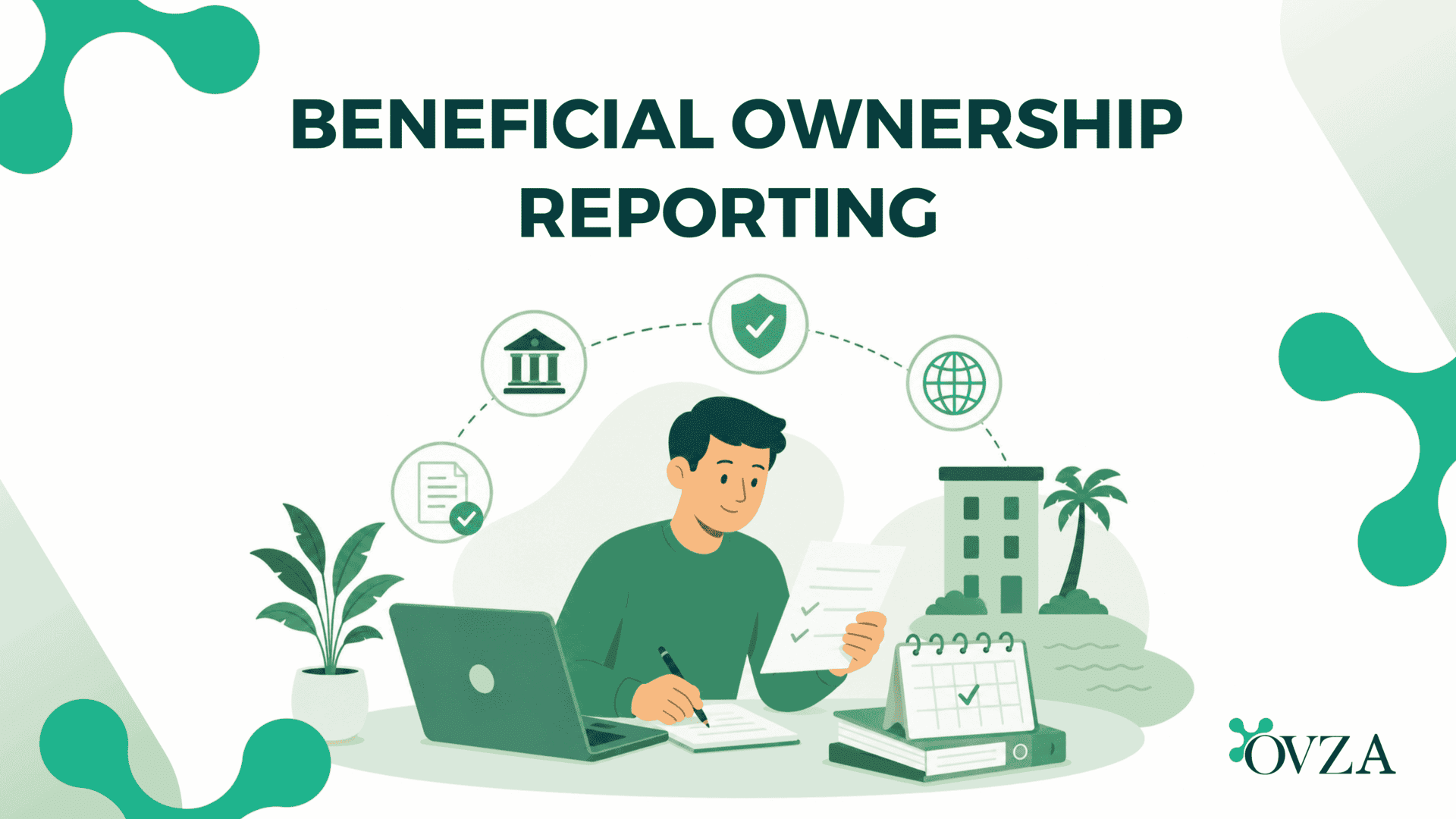
La declaración de beneficiarios reales es el proceso de identificar y registrar a las personas que, en última instancia, poseen o ejercen un control significativo sobre una empresa.
En lugar de centrarse únicamente en los nombres que figuran en los registros corporativos, la información sobre la titularidad real va más allá de la propiedad legal para identificar a las personas físicas que se benefician de la empresa o la controlan. Según la jurisdicción, esto generalmente incluye a las personas que poseen, directa o indirectamente, un porcentaje significativo de acciones o derechos de voto, o que ejercen de otro modo un control sustancial sobre la empresa.
Los umbrales exactos de notificación y los requisitos de presentación varían según la jurisdicción.
¿Cómo funciona el proceso de presentación de informes?
Si bien los procedimientos varían según el país, el proceso de presentación de informes generalmente sigue los mismos pasos.
En primer lugar, la empresa identifica a todas las personas físicas que cumplen con la definición de beneficiario final según la jurisdicción. Esto implica revisar la estructura de propiedad, incluyendo cualquier sociedad holding, fideicomiso u otra entidad que pueda existir entre la empresa operativa y el propietario final.
A continuación, se recopila la documentación necesaria para verificar la identidad y el interés patrimonial de cada beneficiario final. Posteriormente, la información se remite al agente registrado, al proveedor de servicios corporativos o a la autoridad gubernamental correspondiente, según la jurisdicción.
Una vez revisados, los registros se conservan como parte de las obligaciones de cumplimiento normativo de la empresa y se actualizan cada vez que cambia la propiedad o el control.
Información comúnmente requerida
Aunque los requisitos varían entre jurisdicciones, la declaración de beneficiarios finales a menudo requiere información como:
- Nombre legal completo
- Fecha de nacimiento
- Nacionalidad
- Dirección residencial
- Documento de identificación emitido por el gobierno
- Número de identificación fiscal (cuando sea necesario)
- Detalles sobre la propiedad o el control que el individuo ejerce sobre la empresa.
Los documentos justificativos también pueden incluir un comprobante de domicilio y registros que demuestren cómo se ostenta la propiedad, especialmente cuando intervienen varias empresas o estructuras de cartera.
¿Quién puede acceder a la información?
El acceso a la información sobre la titularidad real varía según la jurisdicción.
Algunos países mantienen registros privados a los que solo tienen acceso las autoridades gubernamentales, los agentes registrados o las instituciones financieras que realizan la debida diligencia. Otros exigen que cierta información sobre la propiedad esté disponible a través de registros centrales, aunque el acceso puede estar limitado según las leyes locales de privacidad.
Las empresas deben comprender el marco de presentación de informes que se aplica en la jurisdicción elegida y asegurarse de que sus registros se mantengan precisos y actualizados.
Mantener actualizados los registros de titularidad real.
La declaración de la titularidad real no es un requisito que se cumpla una sola vez, únicamente durante la constitución de la empresa.
Cuando una empresa experimenta un cambio significativo de control o propiedad, normalmente se requiere actualizar su documentación. Esto puede incluir la emisión de nuevas acciones, la transferencia de participaciones, el nombramiento de nuevos controladores o la reestructuración de la empresa.
Mantener estos registros actualizados contribuye a garantizar el cumplimiento normativo continuo, reduce las demoras durante las revisiones bancarias y asegura que la empresa pueda responder rápidamente a las solicitudes de los organismos reguladores.
¿Por qué es importante contar con información precisa?
Mantener registros precisos de la titularidad real ofrece beneficios que van más allá del cumplimiento de las obligaciones legales.
Los registros bien organizados pueden ayudar a las empresas:
- Completar las revisiones bancarias y de KYC de manera más eficiente.
- Responder con rapidez a las solicitudes regulatorias
- demostrar una sólida gobernanza corporativa
- apoyar oportunidades de inversión y financiación
- reducir los retrasos durante la expansión internacional
Las empresas que mantienen información actualizada sobre sus propietarios suelen estar mejor preparadas para los procesos bancarios, de inversión y regulatorios a lo largo de todo el ciclo de vida de la empresa.
Conclusión
La declaración de beneficiarios finales es fundamental en los negocios internacionales modernos. Al identificar a las personas que, en última instancia, poseen o controlan una empresa y mantener esos registros actualizados, las empresas pueden cumplir con la normativa, fortalecer las relaciones bancarias y simplificar las transacciones corporativas futuras.
En OVZA, Ayudamos a emprendedores y empresas con actividad internacional a gestionar la declaración de beneficiarios finales, la constitución de empresas y el cumplimiento normativo corporativo. Nuestro equipo asiste a los clientes en el mantenimiento de registros de propiedad precisos y en el cumplimiento de los requisitos de declaración aplicables a la jurisdicción elegida.

Agregar OVZA a Google Fuentes Preferidas
Hacer OVZA su fuente preferida para asegurarse que usted puede fácilmente descubrir nuestras últimas ideas, la investigación y la confianza de contenido directamente a través de Google.

Descargo de responsabilidad: La información proporcionada en este sitio web tiene únicamente fines informativos y educativos. Si bien OVZA se esfuerza por garantizar su exactitud y actualidad, el contenido no debe considerarse asesoramiento legal, financiero ni fiscal.