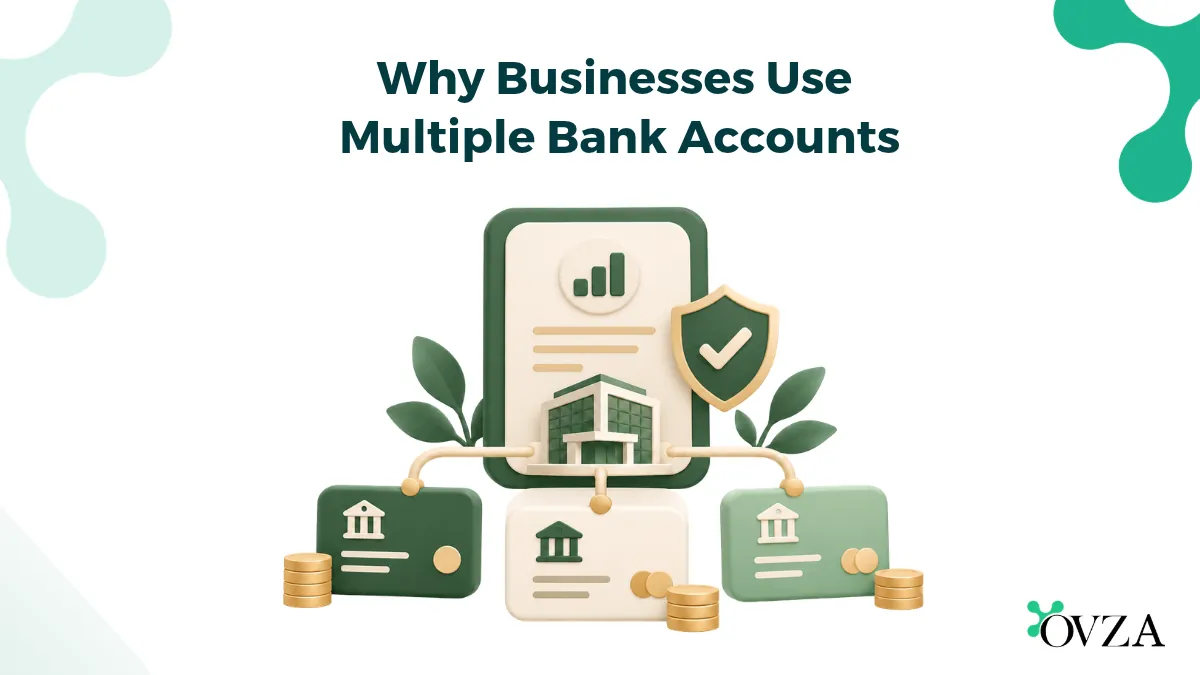
In commercial financial management, relying on a single banking institution for all corporate operations is increasingly recognized as a critical single point of failure. Traditionally, small-to-medium enterprises and private corporations maintained a single primary account to simplify daily bookkeeping and foster a close relationship with a local bank. However, the modernization of international trade, coupled with shifting global banking regulations and episodic financial sector instability, has transformed corporate banking into a strategic discipline.
Today, forward-thinking Chief Financial Officers, enterprise founders, and corporate fiduciaries implement a deliberate multi-banking strategy. Holding accounts across multiple domestic and international financial institutions is no longer an indicator of administrative sprawl; rather, it is a hallmark of sophisticated risk management, working-capital optimization, and operational durability.
A multi-account framework provides a company with the architectural agility required to navigate sudden institutional crises, routine regulatory audits, complex currency exchanges, and day-to-day administrative segregation. By distributing capital, transaction processing, and liquidity reserves across distinct corporate accounts, a business insulates its core operations from outside disruptions while optimizing internal financial governance.
- Mitigating Institutional and Counterparty Risk
- Functional Cash Allocation and Internal Financial Governance
- Multi-Currency Operations and Cross-Border FX Optimization
- Payment Processing Redundancy and Merchant Acquiring Continuity
- Implementation Architecture: Structuring a Resilient Banking Strategy
- Conclusion
Mitigating Institutional and Counterparty Risk
The most compelling legal and operational argument for maintaining multiple banking relationships is the mitigation of counterparty risk. When a business concentrates its entire liquid treasury within a single commercial institution, the enterprise is implicitly underwriting the creditworthiness, solvency, and operational uptime of that specific bank. Institutional insolvency events across the international banking sector have repeatedly demonstrated that even established commercial lenders can face sudden liquidity crunches or regulatory intervention.
Sovereign statutory deposit guarantee schemes provide an essential safety net, but their protection limits are structured primarily for private retail depositors rather than operating corporations. In the United States, the Federal Deposit Insurance Corporation (FDIC) guarantees deposits up to $250,000 per depositor, per insured institution. In the United Kingdom, the Financial Services Compensation Scheme (FSCS) caps statutory insurance at £85,000, while the European Union’s Deposit Guarantee Schemes Directive enforces a threshold of €100,000. For an operating business with payroll obligations, capital expenditure reserves, or supplier payables well in excess of these thresholds, maintaining concentrated balances leaves corporate capital completely uninsured. By distributing liquid reserves across distinct, independently capitalized banks, a company systematically maximizes statutory deposit protections.
Beyond systemic insolvency, an equally common operational threat is the administrative account freeze. In a regulatory climate defined by stringent Anti-Money Laundering (AML) monitoring and automated fraud detection algorithms, commercial banks frequently freeze accounts without prior warning to conduct routine compliance inquiries. A large international wire transfer, an unusual transaction velocity, or a minor administrative discrepancy can lock an account for days or weeks. If an enterprise relies exclusively on that single institution, an automated compliance review instantly halts payroll disbursements, freezes vendor settlements, and paralyzes commercial momentum. Maintaining a secondary, pre-funded operating account at an independent bank ensures that day-to-day operations continue without interruption while the primary bank resolves its review.
Functional Cash Allocation and Internal Financial Governance
Beyond external risk management, deploying multiple accounts serves as a fundamental pillar of internal corporate governance and cash control. Segregating corporate funds into dedicated functional accounts eliminates commingling, provides immediate visibility into cash positions, and minimizes administrative error.
A standard corporate treasury structure begins with a dedicated operating expense account, used strictly for recurring daily overhead such as vendor invoices, commercial leases, professional retainers, and utility expenses. This account receives scheduled cash injections from central revenue accounts rather than holding large idle balances. Alongside operational funds, companies establish an isolated payroll account that is funded immediately prior to each disbursement cycle. Isolating payroll ensures that vital employee commitments and employment tax withholdings are never compromised by unexpected operating debits or vendor disputes.
Tax governance is similarly reinforced through dedicated statutory reserve accounts. Setting aside funds for value-added tax, goods and services tax, customs duties, and quarterly corporate income tax obligations prevents the accidental expenditure of statutory liabilities as working capital. By locking these funds in a separate account, corporate management safeguards the business against sudden cash-flow shortages when tax deadlines arrive.
Finally, enterprises separate their incoming customer payments from their core wealth reserves. A dedicated merchant clearing account functions as the public-facing or processor-facing depository for customer billings and credit card settlements, while a strategic treasury account held at an institutional wealth management bank protects long-term liquidity reserves and capital expenditures. This segregation significantly enhances fraud defense: corporate debit cards and automated clearing house debits are tied exclusively to the lower-balance operational account, leaving core corporate reserves entirely unexposed to external card compromises or payment fraud.
Multi-Currency Operations and Cross-Border FX Optimization
For international trading entities, e-commerce platforms, and digital service providers operating across global markets, a multi-account banking strategy is indispensable for managing foreign exchange (FX) exposure and reducing cross-border transfer friction.
When a cross-border enterprise attempts to route multi-currency revenues through a single domestic bank account, it suffers considerable financial leakage. Traditional domestic banks routinely execute forced currency conversions on incoming foreign wires, applying retail exchange rate spreads that cost the company between 2% and 5% on every transaction, on top of international receiving fees. Furthermore, when the company later needs to settle foreign suppliers in those same currencies, it must execute a second foreign exchange transaction, doubling its transactional overhead.
Establishing multiple specialized bank accounts either through multi-currency banking hubs or direct accounts in target commercial jurisdictions allows a business to hold, manage, and disburse local currencies natively:
- Access to Domestic Payment Clearing Rails: Maintaining a Euro-denominated account provides direct access to the Single Euro Payments Area (SEPA) network, enabling near-instantaneous transfers across the European Union at domestic rates. Similarly, a US dollar account in a compliant financial center enables participation in the ACH and Fedwire systems, while a British pound account provides access to the UK Faster Payments system.
- Natural FX Hedging: By receiving customer payments in Euros, Pounds, or US Dollars and keeping those balances in matching currency accounts, the business creates a natural hedge. The enterprise can settle regional suppliers, logistics providers, and overseas consultants directly in their local currencies without executing unnecessary foreign conversions.
- Strategic Currency Timing: Holding dedicated foreign currency accounts gives corporate treasurers the flexibility to convert capital only when foreign exchange market conditions are commercially advantageous, rather than being forced to accept whatever daily exchange rate a single retail bank imposes upon transaction receipt.
Payment Processing Redundancy and Merchant Acquiring Continuity
For modern e-commerce enterprises, subscription software companies, and digital service firms, merchant acquiring channels represent the primary revenue pipeline. Relying on a single merchant acquiring a bank or single third-party payment aggregator (such as Stripe, PayPal, or Adyen) introduces catastrophic operational vulnerability into the corporate lifecycle.
Payment aggregators operate under strict algorithmic risk thresholds. Sudden spikes in transaction volume, elevated customer dispute rates, or minor shifts in product lines can trigger automated rolling reserves where the processor withholds 10% to 20% of revenues for several months or immediate suspension of merchant processing privileges. If a business routes all customer transactions into an account directly controlled by or linked to a single acquiring partner, a merchant dispute can instantly freeze the enterprise’s liquidity.
By establishing relationships with multiple merchant acquiring banks and linking them to separate commercial bank accounts, a business achieves critical operational redundancy. If one payment processor initiates an unexpected audit, imposes an aggressive reserve requirement, or encounters technical downtime, the enterprise can route transaction traffic to its secondary merchant gateway and depository account. This ensures that customers can continue checking out, revenue continues to hit company ledgers, and the business avoids the reputational and financial damage of payment downtime.
Implementation Architecture: Structuring a Resilient Banking Strategy
Designing an effective multi-account banking architecture requires establishing clear corporate governance protocols, setting defined liquidity parameters, and coordinating administrative oversight.
The implementation process begins with a comprehensive operational audit. Corporate leadership evaluates the company’s monthly cash burn, tax reserve liabilities, primary operating currencies, and geographic counterparty locations. Based on this profile, the company establishes a defined tier-structure for its financial institutions:
- The Operational Bank: A local or regional commercial bank that provides convenient integration with domestic payroll systems, day-to-day customer support, and seamless merchant debit rails.
- The Global Multi-Currency Hub: An international private bank, fintech institution, or offshore commercial bank equipped with robust cross-border treasury capabilities, competitive FX rates, and native access to global payment schemes.
- The Institutional Asset Anchor: A premier, systemically important financial institution with exceptional capitalization metrics, tasked exclusively with safeguarding long-term liquidity reserves and capital reserves.
To ensure transparency and compliance, corporate directors must formalize these arrangements through explicit board resolutions. Each account must have clear signatory authorities, documented dual-authorization thresholds for large disbursements, and strict access controls. Enterprise resource planning (ERP) or modern accounting software should be integrated with direct bank feeds from each institution, allowing the corporate accounting team to reconcile transactions daily and maintain automated, consolidated cash-position reporting.
Conclusion
Operating a multi-banking framework is no longer a luxury reserved for multinational conglomerates; it is a vital operational baseline for any enterprise seeking long-term commercial survival. By eliminating the hazards of single-institution dependency, maximizing statutory deposit insurance, providing operational redundancy against compliance freezes, and optimizing multi-currency transactions, a business shields itself from the systemic vulnerabilities of the modern financial landscape.
Building a multi-account banking structure requires coordinated corporate secretarial governance, proactive registered agent management, and clean compliance dossiers that satisfy international Know Your Customer standards across multiple financial centers. By establishing compliant entities, maintaining corporate registers in Good Standing, and executing structured board resolutions, international businesses can establish and maintain an agile, multi-institution banking architecture that supports scalable growth.

Add OVZA to Google Preferred Sources
Make OVZA your preferred source to ensure you can easily discover our latest insights, research, and trusted content directly through Google.

Disclaimer: The information provided on this website is intended for general reference and educational purposes only. While OVZA makes every effort to ensure accuracy and timeliness, the content should not be considered legal, financial, or tax advice.