A zero-tax offshore holding company can own 100% of a local company’s shares and provide valuable tax and privacy benefits.
To establish this structure, investors must incorporate an offshore company and satisfy the legal requirements for registering it as a shareholder of their existing business. These requirements vary by country and may include certified corporate records, shareholder documentation, notarization, and apostilles. Understanding these requirements before starting offshore holding company registration can prevent unnecessary expenses and delays.
- What is an Offshore Holding Company?
- Check Your Existing Company's Shareholder Requirements First
- Documents Required to Add an Offshore Corporate Shareholder
- Notarization, Apostille, and Legalization Requirements
- How to Register an Offshore Holding Company: Step by Step
- Transferring an Existing Company to an Offshore Holding Structure
- Best Countries to Register an Offshore Holding Company
- How Much Does Offshore Holding Company Registration Cost?
- Conclusion
What is an Offshore Holding Company?
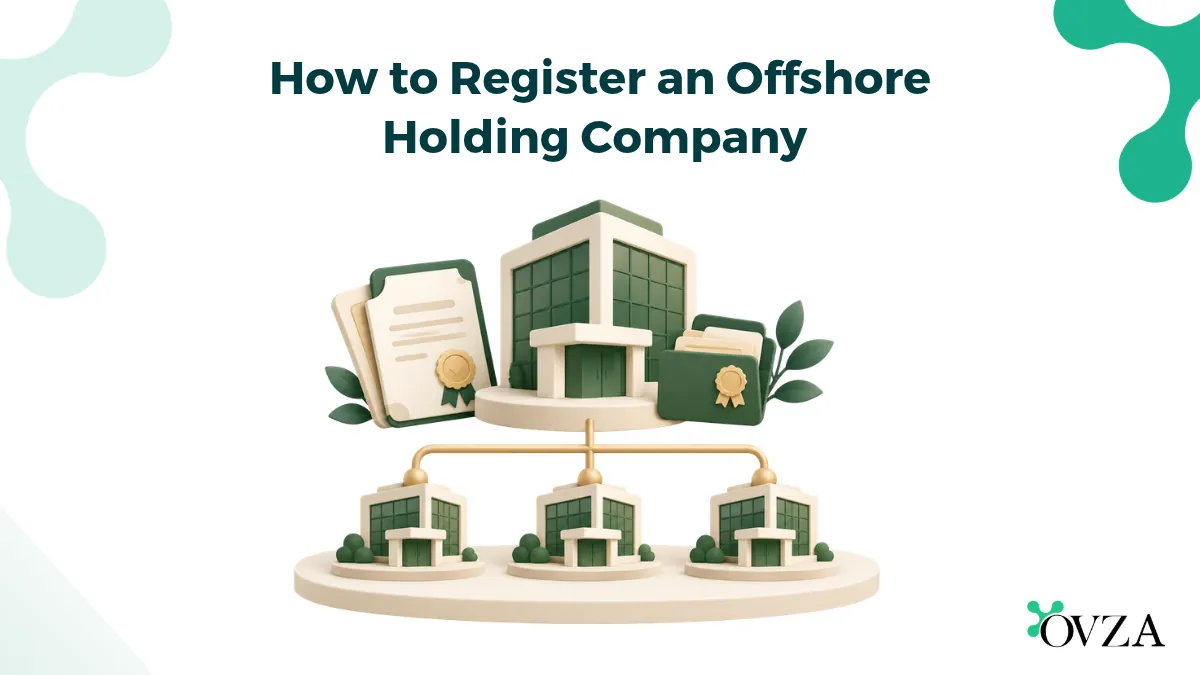
An offshore holding company is a legal entity incorporated in a foreign jurisdiction primarily to own shares in other businesses, investments, or assets. Instead of owning an operating company personally, an entrepreneur can establish an offshore parent company that holds some or all of its shares. This arrangement can centralize corporate ownership, facilitate international investments, and provide greater flexibility for managing multiple subsidiaries. However, the holding company’s legal and tax obligations depend on its jurisdiction, activities, and ownership structure.
Check Your Existing Company’s Shareholder Requirements First
Before deciding how to register an offshore holding company, investors should examine the corporate laws of the country where their existing business is incorporated. The most important question is whether that jurisdiction permits a foreign legal entity to become a corporate shareholder and own 100% of the company’s shares. Although many jurisdictions permit full foreign corporate ownership, others impose restrictions on specific industries, require government approval, or mandate local participation. The existing company’s articles of association and shareholder agreements may also restrict ownership transfers.
Investors should contact the relevant commercial registry, company secretary, or local legal adviser to confirm the requirements for adding a foreign corporate shareholder. This investigation should establish which documents the offshore holding company must provide, whether those documents require legalization, and how the share transfer or issuance will be registered. It is particularly important to confirm whether the registry accepts documents issued by the selected offshore jurisdiction. Completing these checks before incorporation ensures that the proposed offshore holding company can legally become the intended parent entity.
Documents Required to Add an Offshore Corporate Shareholder
When an offshore holding company becomes a shareholder in another business, the receiving jurisdiction will generally require documents establishing its legal existence, ownership, and management authority. The precise documentation depends on local law, the company’s structure, and the requirements of the relevant commercial registry. Commonly requested documents include the Certificate of Incorporation, Memorandum and Articles of Association, Register of Directors, and Register of Shareholders. These records allow authorities to identify the foreign company and verify who owns and manages it.
Some registries additionally request a Certificate of Good Standing, confirming the offshore company’s current legal status, or a Certificate of Incumbency, identifying its directors, officers, or shareholders as applicable. Other requirements may include board resolutions authorizing the acquisition of shares, identification of ultimate beneficial owners, and powers of attorney for authorized representatives. Certain jurisdictions require recently issued certificates rather than relying on documents originally obtained at incorporation. Investors should therefore request an exact documentary checklist from the receiving registry before purchasing additional corporate certificates.
Notarization, Apostille, and Legalization Requirements
Foreign commercial registries may require offshore corporate documents to be notarized, apostilled, or legalized before accepting them. Notarization generally certifies a signature or document through a notary, while an apostille authenticates the origin of a qualifying public document for international use. Under the Hague Apostille Convention, an apostille generally replaces consular legalization between participating jurisdictions. Where the Convention does not apply, authentication through diplomatic or consular channels may be necessary.
For example, a business owner registering an offshore holding company in the Seychelles may need its incorporation documents certified before submitting them to another country’s commercial registry. The receiving authority might also require sworn translations, a recently issued Certificate of Good Standing, or an apostilled Certificate of Incumbency. These requirements can increase the total offshore holding company registration cost beyond the initial incorporation fee. Confirming them beforehand helps investors purchase only the certificates and legalization services actually required.
How to Register an Offshore Holding Company: Step by Step
Step-1: Choose the Offshore Jurisdiction
Once the receiving country’s corporate-shareholder requirements are established, investors can select an appropriate offshore jurisdiction. Popular options include the British Virgin Islands, Seychelles, Nevis, and Cayman Islands, each offering different corporate structures and compliance obligations. The decision should consider the company’s intended activities, annual maintenance costs, documentation availability, and acceptance by the receiving country’s authorities. An inexpensive jurisdiction may not be the most practical choice if its documentation creates additional registration difficulties.
Step-2: Incorporate the Offshore Holding Company
Offshore holding company formation typically requires selecting a company name, appointing directors and shareholders, and submitting identification and compliance documentation. In jurisdictions such as the BVI and Seychelles, incorporation is handled through an appropriately licensed registered agent or corporate service provider. Upon registration, the company receives its Certificate of Incorporation and constitutional documents, together with applicable corporate records. Investors can begin by comparing offshore company formation packages and selecting the jurisdiction that meets their ownership requirements.
Step-3: Obtain the Required Corporate Documents
After incorporation, investors should obtain the documents requested by the commercial registry responsible for their existing company. These may include certified registers of directors and shareholders, constitutional documents, a Certificate of Incumbency, or a Certificate of Good Standing. Where necessary, the documents must undergo notarization, apostille certification, translation, or consular legalization. The registered agent should confirm the available certification methods and coordinate additional document issuance where required.
Step-4: Register the Offshore Company as a Shareholder
The final step is to complete the receiving company’s share transfer, share issuance, or corporate restructuring procedures. Depending on the jurisdiction, this may require shareholder resolutions, executed transfer instruments, amended registers, beneficial ownership disclosures, and filings with the commercial registry. Once the relevant legal procedures are completed, the offshore holding company can become the registered shareholder of the existing business. Full ownership is possible only where local law and the company’s governing documents permit the offshore entity to hold 100% of its shares.
Transferring an Existing Company to an Offshore Holding Structure
Establishing an offshore holding company does not automatically transfer ownership of an existing business. Consider a British entrepreneur who owns 100% of a UK limited company and wishes to transfer those shares to a newly incorporated BVI holding company. The transaction may require a share transfer instrument, appropriate corporate approvals, and updates to the UK company’s statutory records. HMRC’s guidance on share transfers explains the applicable documentation and potential stamp duty obligations.
An entrepreneur establishing a parent company above subsidiaries in several countries must separately examine each subsidiary’s ownership rules. One country may accept certified incorporation documents, while another may demand apostilled records, beneficial ownership declarations, or regulatory approval.
Best Countries to Register an Offshore Holding Company
The British Virgin Islands is an established choice for international corporate ownership, particularly where investors require a conventional share-based company structure. Seychelles offers International Business Companies that can hold shares in foreign subsidiaries.
Investors considering BVI company formation, Seychelles company registration, Nevis company formation, or registration in any of the other 18 tax-free jurisdictions supported by OVZA should first confirm that the offshore entity can be accepted as a corporate shareholder in their intended subsidiary jurisdiction. The availability of certified registers, apostilles, and Certificates of Incumbency may be just as important as incorporation costs. Choosing the right offshore holding company structure ultimately depends on the legal and documentary requirements of the businesses it will own.
How Much Does Offshore Holding Company Registration Cost?
Offshore holding company registration costs include incorporation fees, annual renewals, and any additional corporate documentation required for foreign shareholder registration. OVZA’s published starting formation prices are $595 for Seychelles, $1,690 for the BVI, and $1,470 for Nevis, with annual renewal charges of $590, $1,450, and $1,390 respectively.
These package prices do not necessarily include additional certificates, notarization, apostilles, translations, or restructuring expenses. Investors should calculate the full cost of establishing the ownership structure rather than comparing incorporation fees alone.
Conclusion
Registering an offshore holding company can provide tax and privacy advantages while allowing investors to own local and international businesses through a single corporate structure. Before incorporation, it is essential to verify the existing company’s corporate shareholder requirements and identify any necessary documentation, notarization, or legalization.
Once these requirements are established, investors can select a suitable offshore jurisdiction and proceed with company registration.

Add OVZA to Google Preferred Sources
Make OVZA your preferred source to ensure you can easily discover our latest insights, research, and trusted content directly through Google.

Disclaimer: The information provided on this website is intended for general reference and educational purposes only. While OVZA makes every effort to ensure accuracy and timeliness, the content should not be considered legal, financial, or tax advice.