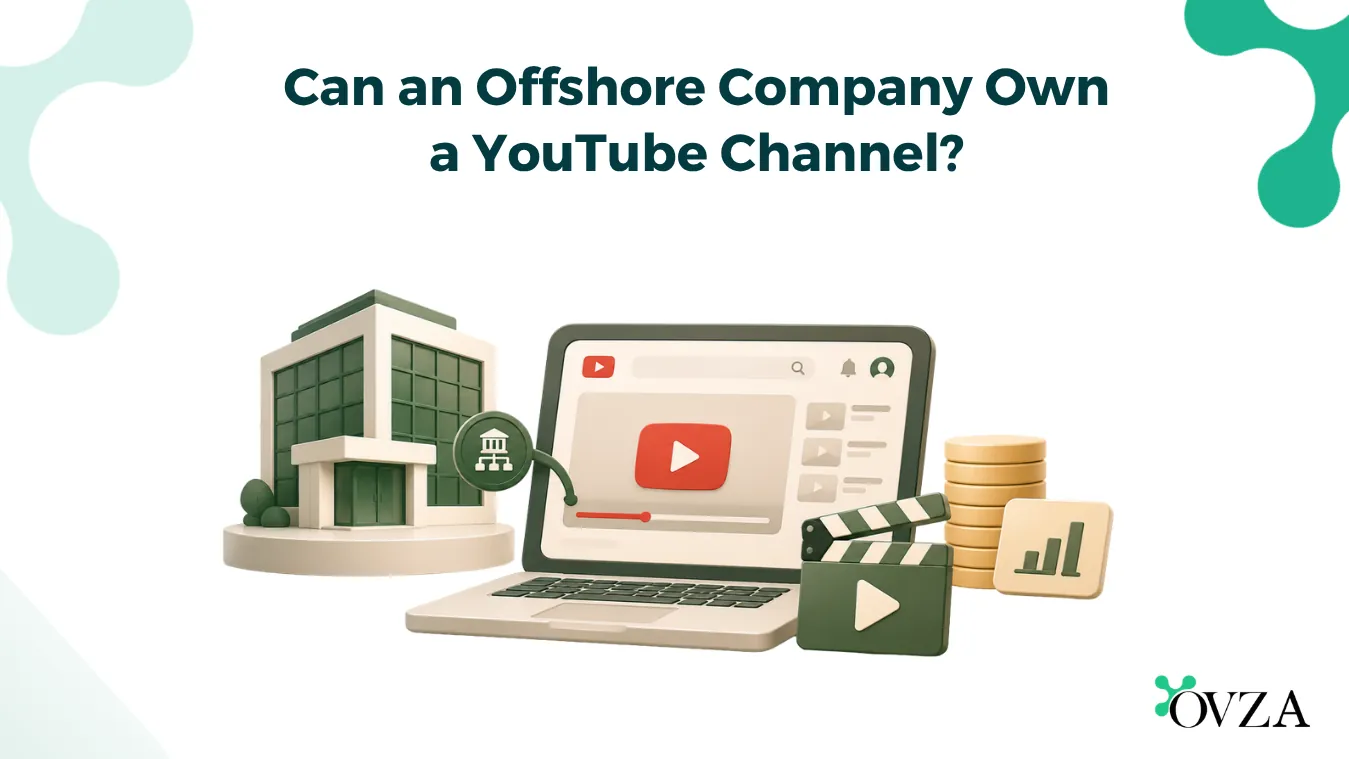
Yes, an offshore company can own the commercial business associated with a YouTube channel, including its intellectual property and rights to revenue.
However, corporate ownership of a YouTube business is legally distinct from ownership and administration of the channel within Google’s systems. While YouTube permits channels to operate under business identities and supports organization payment accounts through AdSense, these arrangements remain subject to Google’s contractual terms, verification procedures, and applicable tax regulations.
For international content creators, establishing an offshore company may provide a way to consolidate business activities, manage multiple channels, and structure commercial relationships with advertisers and production teams. Nevertheless, the legal and financial benefits depend on the company’s jurisdiction, the creator’s tax residence, and the availability of suitable banking and payment arrangements.
In particular, incorporating in a low-tax jurisdiction does not necessarily eliminate withholding taxes on YouTube revenue or personal tax obligations in the country where the creator resides.
How Corporate Ownership of a YouTube Business Works
YouTube distinguishes between channels administered through personal Google Accounts and channels associated with Brand Accounts, which allow multiple Google Account holders to exercise management responsibilities. According to Google’s official documentation, Brand Accounts may have multiple owners and managers, with different levels of authority over the associated YouTube channel. This arrangement makes it possible for a business to organize channel administration among its directors, employees, and authorized representatives without sharing a single account’s login credentials.
However, Google’s designation of an account holder as an “owner” should not be confused with legal ownership of the underlying commercial business. An offshore company may hold copyrights, trademarks, sponsorship contracts, and other assets associated with a YouTube channel through valid legal arrangements, while designated individuals continue administering the channel through their Google Accounts. Consequently, establishing corporate ownership requires attention to both the relevant company and intellectual property laws and Google’s separate account-management requirements.
To create a new YouTube channel associated with a Brand Account, follow these steps:
- Sign in to YouTube: Visit YouTube and sign in using the Google Account of the company’s authorized representative.
- Access your channel list: Navigate to YouTube’s channel management page and select the option to create a new channel.
- Enter the business details: Choose the channel name, profile picture, and handle. The channel can operate under the company’s registered name or a separate commercial brand.
- Create the Brand Account: Select “Create channel.” According to Google’s documentation, this process creates a new Brand Account associated with the channel.
- Assign management responsibilities: Open YouTube Studio, navigate to Settings and then Permissions, and invite authorized team members using the appropriate access roles.
- Document corporate ownership: Where the offshore company is intended to own the business, prepare the necessary corporate resolutions, intellectual property assignments, and commercial agreements establishing its rights to the channel’s business assets.
Can a YouTube Channel Be Transferred to an Offshore Company?
A creator seeking to place an existing YouTube business under an offshore company must distinguish between transferring commercial assets and changing control of the YouTube channel itself. Copyrights and other transferable intellectual property rights may be assigned to a company through appropriate legal documentation, subject to applicable law and existing contractual restrictions. Changes to the channel’s administrative ownership, however, must follow Google’s specific procedures rather than relying exclusively on a corporate assignment agreement.
Google’s documentation provides that channel ownership transfers may require the channel to be connected to a Brand Account, and certain transfers cannot be completed directly through YouTube Studio’s channel-permissions system. For channels already generating revenue, the restructuring must also account for the linked AdSense for YouTube account, since Google expressly prohibits transfers of AdSense account ownership. Accordingly, a creator cannot assume that transferring the commercial rights to an offshore company will automatically transfer the existing monetization account or its payment arrangements.
To transfer an existing YouTube channel to an offshore company, follow these steps:
- Incorporate an offshore company: Register a company in your preferred jurisdiction and obtain the necessary corporate documents.
- Check your Brand Account: Visit Google Brand Accounts to confirm whether your channel is linked to a Brand Account.
- Add a company representative: Open Brand Account permissions and appoint an authorized company representative as an owner.
- Change primary ownership: After the required seven-day waiting period, follow Google’s ownership transfer instructions to make the representative the primary owner.
- Transfer business assets: Execute the necessary corporate resolutions and agreements assigning relevant copyrights, trademarks, and commercial rights to the offshore company.
- Update monetization arrangements: Review AdSense for YouTube requirements and, where eligible, link an organization payment account in accordance with Google’s procedures.
- Verify compliance: Confirm that the company’s banking information, tax documentation, and channel permissions reflect the new business structure.
Changing a channel’s administrative ownership does not automatically transfer its legal ownership or AdSense account. Creators must separately document the transfer of business assets and comply with Google’s account and monetization policies.
Can an Offshore Company Receive YouTube Advertising Revenue?
Yes, an offshore company can receive YouTube advertising revenue directly into its corporate bank account.
Once the offshore company has been incorporated and a corporate bank account established in its name, the creator can register the company’s legal details through AdSense for YouTube, including its registered business name, address, and applicable tax information. The company’s bank account can then be added as a payment method, allowing eligible YouTube advertising earnings to be deposited directly into the company’s account rather than the creator’s personal bank account.
Conclusion
An offshore company can legally own and operate a YouTube business, including holding intellectual property, entering into sponsorship agreements, and receiving advertising revenue through an eligible organization AdSense for YouTube account.
However, corporate ownership of the business must be distinguished from administrative control of the YouTube channel, and the company’s banking arrangements must comply with Google’s country-specific payment and verification requirements.
Frequently Asked Questions
Yes, an offshore company can own the commercial assets associated with multiple YouTube channels, including intellectual property, trademarks, and advertising contracts. Each channel must still comply with Google’s account management and monetization policies.
No, incorporating an offshore company does not require creating a new YouTube channel. Existing channels can continue operating while their commercial assets are transferred to the company through appropriate legal agreements. Administrative permissions and monetization arrangements must be updated separately where necessary.
Yes, an offshore company may receive YouTube advertising revenue through an eligible organization AdSense for YouTube account. The company must satisfy Google’s identity verification, tax documentation, and banking requirements in the relevant jurisdiction.
No, establishing an offshore company does not automatically eliminate taxes on YouTube earnings. Tax obligations may arise in the company’s jurisdiction, the creator’s country of tax residence, and countries imposing withholding taxes on advertising revenue.
No, Google does not permit the transfer of AdSense account ownership. Creators restructuring their YouTube business may need to establish an eligible organization AdSense for YouTube account and update the channel’s payment arrangements in accordance with Google’s policies.

Add OVZA to Google Preferred Sources
Make OVZA your preferred source to ensure you can easily discover our latest insights, research, and trusted content directly through Google.

Disclaimer: The information provided on this website is intended for general reference and educational purposes only. While OVZA makes every effort to ensure accuracy and timeliness, the content should not be considered legal, financial, or tax advice.