As businesses and investors increasingly operate across multiple jurisdictions, international financial reporting has become an important part of global compliance. Banks, financial institutions, and corporate service providers now follow standardized procedures designed to identify and report certain cross-border financial relationships. One of the most significant frameworks in this area is the Foreign Account Tax Compliance Act (FATCA).
Understanding what FATCA is and how it works is particularly important for U.S. citizens, U.S. tax residents, and businesses with U.S. ownership or connections. Although FATCA does not create a new tax, it establishes reporting obligations that affect financial institutions worldwide and certain individuals with foreign financial assets. Knowing how these rules operate helps businesses prepare the correct documentation, avoid unnecessary delays during bank onboarding, and maintain compliant international structures.
What Is FATCA?
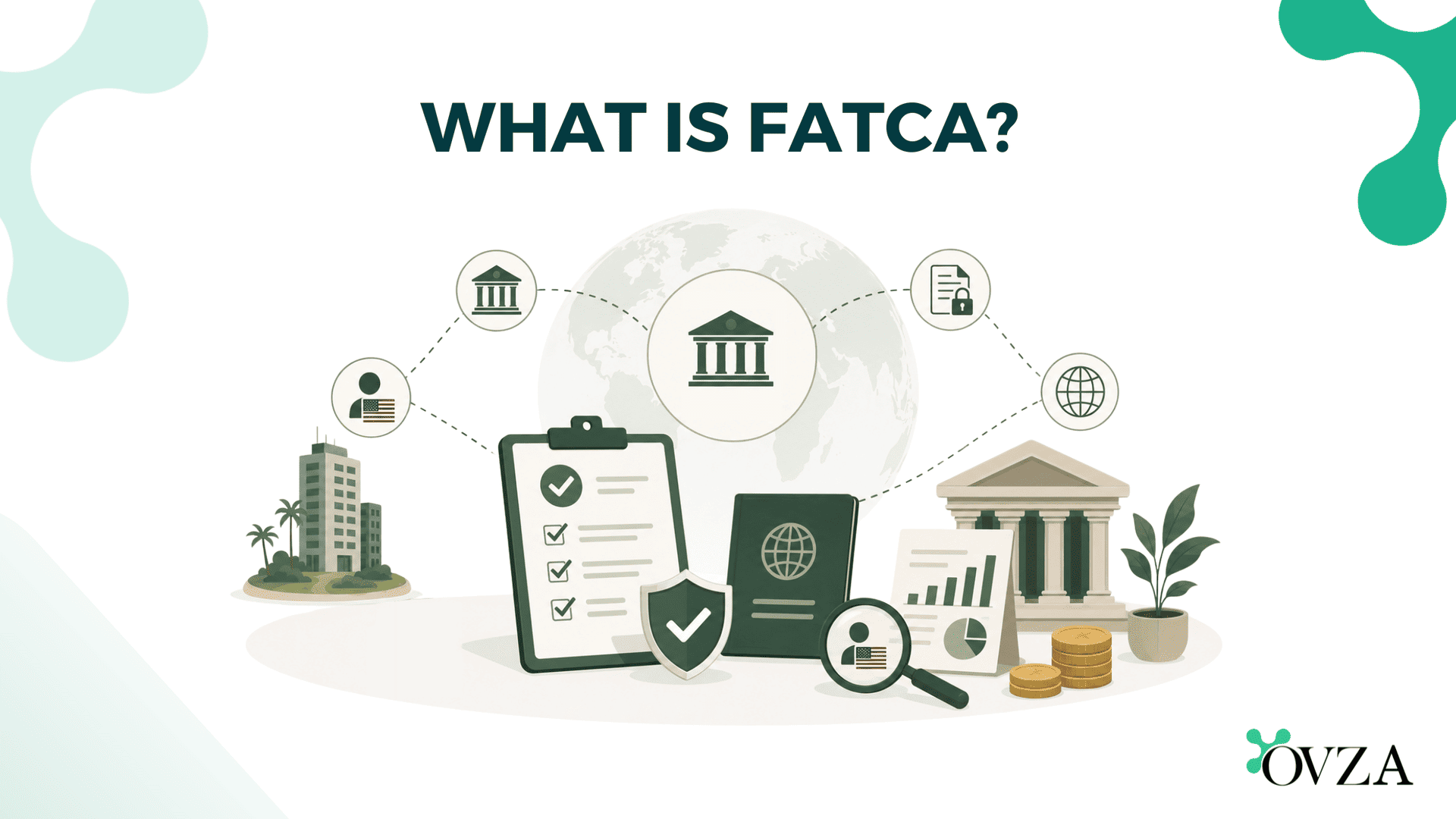
The Foreign Account Tax Compliance Act (FATCA) is a U.S. law enacted in 2010 to improve tax transparency by identifying foreign financial assets held by U.S. taxpayers. Rather than imposing additional taxes, FATCA requires financial institutions outside the United States to identify accounts connected to U.S. persons and report certain information either directly or through agreements between governments.
Unlike many countries that determine tax obligations primarily through tax residency, the United States generally taxes its citizens and certain residents regardless of where they live. FATCA supports this system by providing the Internal Revenue Service (IRS) with information about qualifying foreign financial accounts and certain offshore entities connected to U.S. taxpayers.
How FATCA Works?
FATCA operates through two complementary reporting systems.
First, many foreign financial institutions—including banks, investment firms, custodians, and certain insurance companies—must identify customers with U.S. tax connections. These institutions perform customer due diligence during account opening and throughout the relationship, looking for indicators such as U.S. citizenship, a U.S. address, a U.S. place of birth, or other relevant connections. Depending on local agreements, qualifying account information is then reported to the IRS or to domestic tax authorities that exchange information with the United States.
Second, certain U.S. taxpayers who hold foreign financial assets above specified reporting thresholds must disclose those assets on IRS Form 8938 when filing their annual tax returns. The exact reporting threshold depends on filing status and whether the taxpayer lives inside or outside the United States.
Foreign Financial Institutions Under FATCA
Foreign Financial Institutions (FFIs) play a central role in FATCA compliance because they act as the first layer of reporting.
Financial institutions subject to FATCA generally establish procedures to identify reportable accounts, collect self-certification documents from customers, and maintain ongoing monitoring processes. Institutions that fail to comply with FATCA requirements may become subject to withholding on certain U.S.-source payments, making compliance an important consideration for international banking operations.
For business owners, this means that opening corporate accounts often involves additional documentation relating to beneficial ownership, tax residency, and entity classification.
FATCA and Form 8938
Individual reporting complements institutional reporting under FATCA.
Certain U.S. taxpayers who exceed applicable reporting thresholds must file Form 8938 with their federal tax return. Depending on the circumstances, reportable assets may include foreign bank accounts, brokerage accounts, interests in foreign entities, certain foreign investment assets, and other specified financial holdings.
The reporting thresholds vary according to filing status and residency, meaning not every foreign account automatically requires Form 8938 reporting. Professional tax advice is often appropriate when determining individual filing obligations.
FATCA vs. CRS
| Feature | FATCA | CRS |
| Primary Scope | U.S. taxpayers and certain U.S.-owned entities | Tax residents of participating countries |
| Administered By | United States (IRS) | OECD member and participating jurisdictions |
| Tax Basis | Citizenship and certain residency rules | Tax residency |
| Geographic Reach | Global through intergovernmental agreements | Global through participating jurisdictions |
| Reporting Thresholds | Vary depending on taxpayer circumstances | Determined under local CRS rules |
Although FATCA and the Common Reporting Standard (CRS) both support international tax transparency, they are separate reporting systems with different legal frameworks and reporting requirements.
FATCA and Offshore Companies
Owning an offshore company does not automatically create FATCA reporting obligations, but the company’s ownership structure may become relevant if U.S. persons hold ownership interests or exercise control.
During company formation or corporate banking, financial institutions commonly request documentation identifying ultimate beneficial owners, tax classifications, and applicable self-certification forms. Passive entities with substantial U.S. owners may require additional disclosures depending on the circumstances.
Maintaining accurate corporate records, identifying beneficial owners correctly, and providing complete banking documentation can help reduce delays during account opening and ongoing compliance reviews.
Conclusion
Understanding what FATCA is and how it works is an important part of operating internationally, particularly for businesses or individuals with U.S. tax connections. Rather than creating new taxes, FATCA establishes reporting obligations that improve transparency between financial institutions and tax authorities.
Businesses that maintain accurate records, understand their reporting responsibilities, and establish clear governance procedures are generally better positioned to navigate international banking requirements and cross-border financial operations with confidence.

Add OVZA to Google Preferred Sources
Make OVZA your preferred source to ensure you can easily discover our latest insights, research, and trusted content directly through Google.

Disclaimer: The information provided on this website is intended for general reference and educational purposes only. While OVZA makes every effort to ensure accuracy and timeliness, the content should not be considered legal, financial, or tax advice.