As businesses expand internationally, transparency has become a key part of corporate governance. Banks, regulators, and service providers increasingly need to understand who ultimately owns and controls a company before providing financial or corporate services.
Historically, the structural layers of cross-border companies focused primarily on legal titles, such as registered shareholders or corporate nominees.
In the modern landscape of verified corporate governance, financial institutions and registries look past these administrative layers to identify the actual individuals behind the enterprise. Understanding what a beneficial owner is often referred to as the Ultimate Beneficial Owner (UBO) is essential for meeting international KYC requirements and managing a compliant cross-border business.
Defining the Concept: Legal Title vs. Beneficial Ownership
To understand how global regulatory networks evaluate corporate entities, it is necessary to separate the administrative ownership of a company from its ultimate economic reality.
What is a Legal Owner?
A legal owner is the person or entity whose name formally appears on the company’s official corporate records, such as the Register of Members (ROM) or the stock certificate. A legal owner can be an individual, a holding company, a nominee, or a trust. While they hold the legal title to the shares, they may simply be acting on behalf of someone else.
What is a Beneficial Owner?
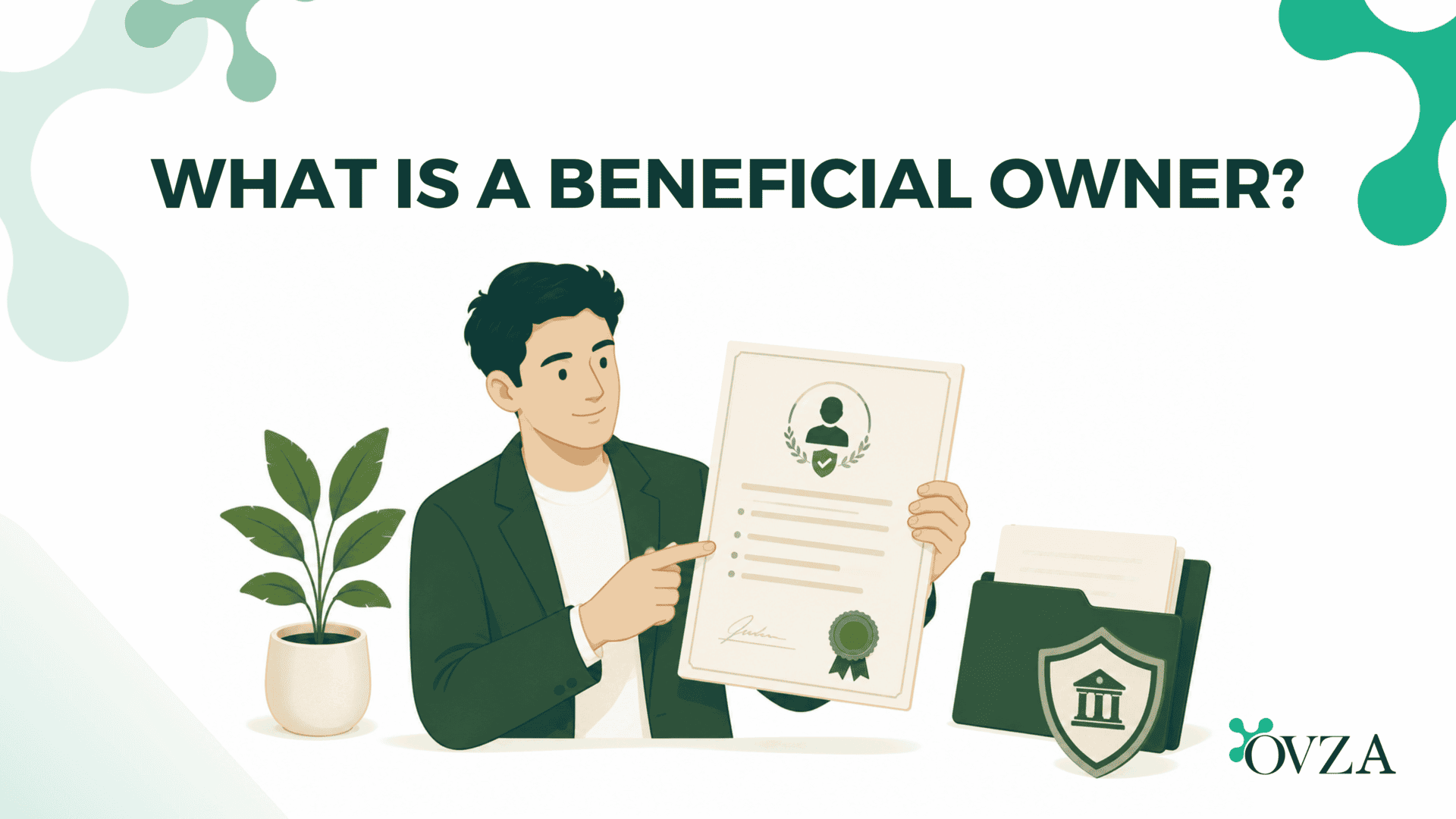
A beneficial owner is the natural person who ultimately owns, controls, or benefits from a company. Unlike a legal owner, a beneficial owner cannot be another company or trust. The definition always refers to an individual.
In most jurisdictions, a beneficial owner is someone who directly or indirectly owns a significant percentage of a company’s shares or voting rights, often 25% or more. A person may also qualify if they exercise significant control over the business or ultimately benefit from its profits, even if they are not listed as the legal shareholder.
Legal Owner vs. Beneficial Owner
Understanding the distinction between legal ownership and beneficial ownership helps businesses maintain accurate corporate records and meet regulatory requirements.
| Governance Vector | Legal Shareholder / Nominee | Ultimate Beneficial Owner (UBO) |
| Entity Classification | Can be a natural person, a holding company, or a trust vehicle. | Must always be a natural person (a live individual). |
| Primary Role | Appears on formal titles, executes standard shareholder resolutions. | Holds ultimate decision-making power and receives the underlying economic profits. |
| Regulatory Verification | Verified via corporate registries, certificates of incumbency, and share registers. | Verified via primary identity documents, proof of residency, and source of wealth declarations. |
| Why Banks Request It | Standard documentation requirement during onboarding. | Core focus of the KYC compliance requirements process for financial accounts. |
Navigating Modern Beneficial Ownership Reporting
Operating a global business under modern offshore corporate transparency standards does not mean sacrificing legitimate business confidentiality. Instead, it means establishing accurate ownership records that banks, regulators, and other authorized parties can verify when required.
Keeping beneficial ownership records accurate is an important part of ongoing corporate compliance. Businesses should ensure ownership information is updated whenever shareholders change and maintain supporting documentation that can be provided during banking or regulatory reviews.
Having passports, proof of address, and ownership records readily available allows companies to respond quickly to due diligence requests and helps avoid unnecessary onboarding delays.
When an enterprise handles its reporting proactively, it eliminates the administrative friction that frequently slows down less-prepared competitors. Clear, structured reporting signals to top-tier banks that your organization operates under the highest standards of governance.
Why Beneficial Ownership Matters
Transparent ownership structures help businesses build trust with banks, investors, and regulators. Companies that maintain accurate ownership records can often complete due diligence more efficiently and reduce delays when opening bank accounts, raising investment, or expanding internationally. Clear ownership information also helps reduce additional compliance requests during banking and regulatory reviews.
By clearly documenting what is a beneficial owner within your company setup, you give international partners, lenders, and institutional investors the immediate clarity they require. This compliance readiness accelerates corporate bank onboarding, secures smoother merchant processing integrations, and positions your business as a premium, low-friction vehicle ready for global expansion.
Conclusion
Understanding what a beneficial owner is is an important part of establishing and managing a compliant international business. By maintaining accurate ownership records and meeting UBO reporting requirements, businesses can simplify banking relationships, support regulatory compliance, and build a strong foundation for long-term international growth.
At OVZA, we streamline the entire process of international entity management. We guide you smoothly through every aspect of KYC compliance requirements, ensuring your ultimate beneficial ownership documentation is organized, certified, and filed with absolute precision. Let us build your international corporate framework so your business can scale securely and efficiently across the global marketplace.

Add OVZA to Google Preferred Sources
Make OVZA your preferred source to ensure you can easily discover our latest insights, research, and trusted content directly through Google.

Disclaimer: The information provided on this website is intended for general reference and educational purposes only. While OVZA makes every effort to ensure accuracy and timeliness, the content should not be considered legal, financial, or tax advice.