As businesses expand internationally, managing tax obligations becomes an increasingly important part of long-term planning. Entrepreneurs operating across multiple jurisdictions often seek ways to improve efficiency, reduce unnecessary tax burdens, and structure their operations in a manner that supports sustainable growth.
In this context, understanding the difference between tax planning and tax evasion is essential.
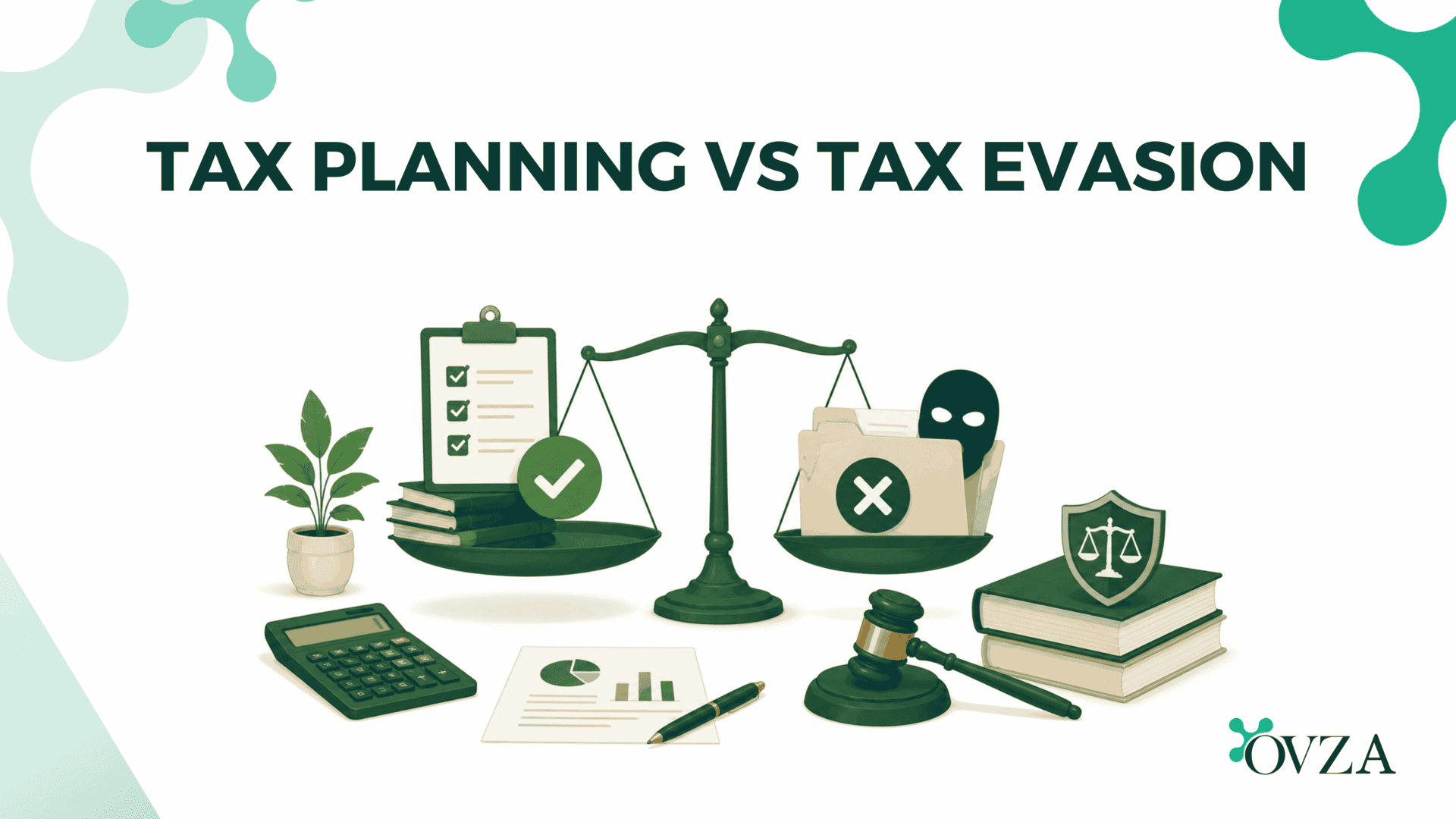
Although the terms are sometimes confused, they represent two fundamentally different concepts. Tax planning involves arranging business affairs within the framework of applicable laws, while tax evasion involves deliberately avoiding legal tax obligations through concealment or misrepresentation.
For internationally active businesses, understanding this distinction helps support compliance, protect corporate reputation, and create a stronger foundation for cross-border operations.
How They Differ?
The key distinction between tax planning and tax evasion lies in transparency, disclosure, and compliance with applicable laws.
What Is Tax Evasion?
Tax evasion is the intentional and unlawful concealment or misrepresentation of financial information to avoid paying taxes that are legally due. It relies on deception rather than legitimate tax management. Examples may include failing to report taxable income, deliberately understating business revenue, creating false expenses to reduce profits, or concealing assets and accounts that are subject to disclosure requirements. Such practices expose individuals and businesses to significant legal, financial, and reputational risks.
What Is Tax Planning?
Tax planning, by contrast, involves organizing financial and business affairs in a way that takes advantage of incentives, deductions, exemptions, and structures permitted under the law. This may include selecting an appropriate business structure, utilizing available tax reliefs, managing the timing of transactions, or structuring operations to reduce unnecessary tax burdens while remaining fully compliant with applicable regulations.
Tax Planning vs Tax Evasion
| Tax Planning | Tax Evasion |
| Operates within legal and regulatory frameworks | Involves violating tax laws |
| Relies on transparency and proper disclosure | Relies on concealment or misrepresentation |
| Uses legitimate structures and incentives | Uses deceptive practices to avoid taxes |
| Supports long-term business stability | Creates significant legal and financial risk |
| Commonly used by international businesses | Subject to penalties and enforcement actions |
The Role of International Corporate Structures
Many internationally active businesses utilize corporate structures in multiple jurisdictions to support global operations. These structures may be used for purposes such as managing intellectual property, facilitating international trade, attracting investment, or supporting expansion into new markets.
However, the effectiveness of any international structure depends on compliance.
Modern regulatory frameworks increasingly focus on transparency, beneficial ownership reporting, anti-money laundering requirements, and economic substance standards. Businesses must ensure that their structures reflect genuine commercial activity and serve legitimate operational purposes.
When implemented correctly, international structures can support business growth while remaining fully aligned with regulatory expectations.
Key Elements of a Compliant Structure
Businesses considering international structuring should focus on several core principles:
| Consideration | Importance |
| Economic Substance | Demonstrates genuine business activity within the jurisdiction |
| Ownership Transparency | Supports compliance with reporting obligations |
| Proper Governance | Ensures corporate decisions are documented and managed appropriately |
| Commercial Rationale | Establishes a legitimate business purpose for the structure |
| Regulatory Compliance | Reduces legal and operational risk |
These factors help create a structure that can withstand regulatory scrutiny and support long-term business objectives.
Why Compliance Matters?
International tax planning is most effective when integrated into a broader compliance strategy.
Financial institutions, investors, regulators, and business partners increasingly expect companies to maintain transparent and well-documented corporate structures. Businesses that prioritize compliance are often better positioned to access banking services, attract investment, and expand internationally with confidence.
Rather than focusing solely on tax outcomes, successful international businesses typically view tax planning as one component of a wider corporate strategy that includes governance, risk management, and operational efficiency.
Conclusion
Understanding the difference between tax planning and tax evasion is essential for any business operating internationally. While tax planning involves making use of legitimate legal structures and incentives, tax evasion involves the unlawful concealment of income or assets and carries significant legal consequences.
By adopting transparent, well-governed, and compliant structures, businesses can support operational efficiency while remaining aligned with evolving international regulations.
At OVZA, we help entrepreneurs, investors, and internationally active businesses establish compliant international structures designed to support long-term growth. From company formation and jurisdiction selection to governance and ongoing compliance support, we help clients build practical frameworks for global business operations.

Add OVZA to Google Preferred Sources
Make OVZA your preferred source to ensure you can easily discover our latest insights, research, and trusted content directly through Google.

Disclaimer: The information provided on this website is intended for general reference and educational purposes only. While OVZA makes every effort to ensure accuracy and timeliness, the content should not be considered legal, financial, or tax advice.