As empresas raramente permanecem estáticas ao longo de seu ciclo de vida. À medida que as prioridades comerciais evoluem, as empresas podem buscar melhor acesso a mercados internacionais, relacionamentos bancários mais sólidos, ambientes regulatórios mais favoráveis ou jurisdições que melhor apoiem seus objetivos operacionais de longo prazo. Nessas situações, os empresários frequentemente reavaliam se sua estrutura corporativa atual continua atendendo às suas necessidades.
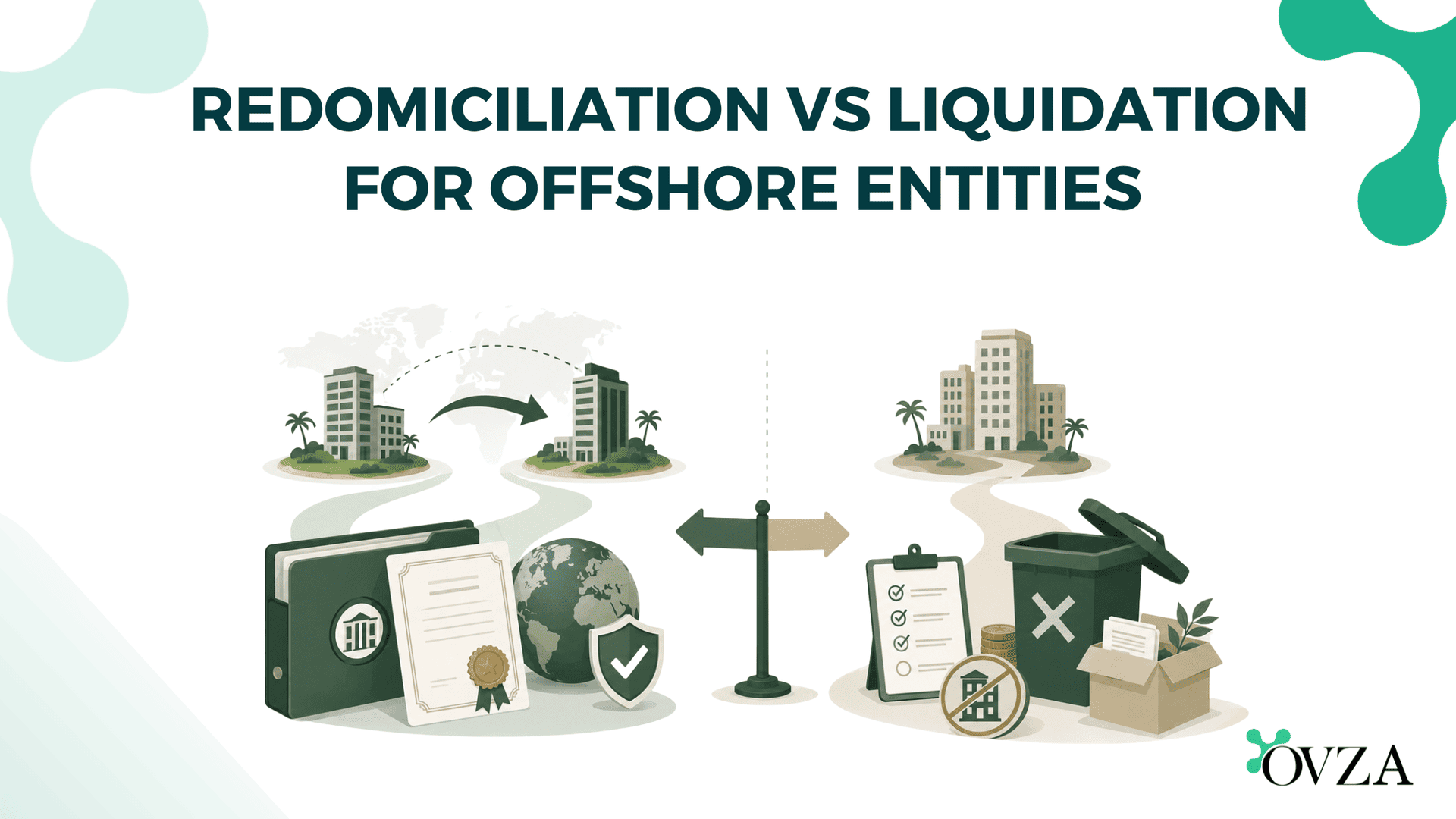
Uma das decisões mais importantes durante esse processo é a escolha entre redomiciliação e liquidação. Embora ambas as opções permitam que uma empresa continue operando, elas alcançam resultados fundamentalmente diferentes. A redomiciliação permite que uma entidade jurídica existente continue operando em uma nova jurisdição, onde permitido por lei, enquanto a liquidação encerra formalmente a empresa antes que qualquer nova estrutura seja estabelecida.
Compreender essas diferenças ajuda os empresários a selecionar a abordagem que melhor se alinha com seus objetivos comerciais, obrigações contratuais e planos de crescimento futuro.
Entendendo a diferença
Embora tanto a redomiciliação quanto a liquidação envolvam mudanças na estrutura corporativa de uma empresa, elas servem a propósitos diferentes e seguem processos legais distintos.
O que é redomiciliação?
Redomiciliação, A transferência de sede, também conhecida como continuação corporativa ou migração de empresas, é o processo legal de transferência do local de constituição de uma empresa de uma jurisdição para outra, preservando a mesma personalidade jurídica. Em vez de dissolver a empresa e constituir uma nova, o negócio continua a existir com sua identidade jurídica, histórico de constituição e muitos de seus direitos existentes permanecendo intactos.
Nos casos em que a legislação o permite, a jurisdição de origem emite um Certificado de Descontinuidade, enquanto a jurisdição receptora emite um Certificado de Continuidade. A empresa passa então a ser regida pelas leis corporativas da sua nova jurisdição, sem interrupção da sua existência jurídica.
Para empresas com relações comerciais estabelecidas, propriedade intelectual ou longa história operacional, a redomiciliação pode ser uma forma eficiente de realocação, minimizando a interrupção das operações em andamento.
O que é liquidação voluntária?
A liquidação voluntária é o processo formal de encerramento das atividades de uma empresa solvente. Antes de ser dissolvida, a empresa deve liquidar seus passivos pendentes, distribuir os ativos remanescentes aos acionistas, cancelar registros ou licenças aplicáveis e cumprir as exigências legais da jurisdição onde está constituída.
Uma vez concluída a liquidação, a empresa deixa de existir como entidade jurídica. Se os proprietários desejarem continuar operando em outro local, geralmente é necessário constituir uma empresa completamente nova, com novos registros, contas bancárias e contratos, quando necessário.
A liquidação é frequentemente considerada quando uma empresa cumpriu seu propósito, não opera mais ou não pode legalmente mudar de domicílio porque a continuidade não é permitida pelas leis de uma ou ambas as jurisdições.
Comparando Redomiciliação e Liquidação
| Recurso | Redomiciliação | Liquidação |
| Entidade Jurídica | Continua como a mesma entidade jurídica. | A empresa existente foi dissolvida. |
| Histórico de Incorporação | A data original de incorporação foi preservada. | A nova empresa recebe uma nova data de incorporação. |
| Contratos comerciais | Pode ser prorrogado, sujeito aos termos do contrato e à legislação aplicável. | Frequentemente exigem realocação ou novos contratos. |
| Ativos Corporativos | Permaneça na empresa em atividade. | Geralmente transferido antes da dissolução |
| Relações bancárias | Os relacionamentos existentes podem continuar após a revisão bancária. | Geralmente são necessários novos arranjos bancários. |
| Registros Corporativos | Os registros históricos permanecem com a entidade em atividade. | Nova empresa começa com seus próprios registros |
| Disponibilidade | Somente onde ambas as jurisdições permitirem a continuação. | Disponível de acordo com os procedimentos de liquidação locais. |
Escolhendo entre redomiciliação e liquidação
A opção adequada depende das circunstâncias da empresa, dos planos futuros e do quadro legal das jurisdições envolvidas.
Empresas com propriedade intelectual valiosa, relacionamentos de longa data com clientes, serviços bancários estabelecidos ou contratos comerciais em andamento frequentemente consideram a redomiciliação, pois ela preserva a entidade jurídica existente, permitindo que a empresa realoque seu domicílio corporativo. Manter a mesma identidade jurídica também pode simplificar os relacionamentos com fornecedores, órgãos reguladores e parceiros comerciais, embora a atualização da documentação ainda possa ser necessária.
A liquidação pode ser mais adequada quando a empresa cessa suas atividades, deseja simplificar sua estrutura corporativa ou pretende iniciar um negócio substancialmente diferente sob uma nova entidade jurídica. Também pode ser a única opção disponível se a jurisdição de origem ou a jurisdição de destino não permitir a continuidade da empresa.
Antes de optar por qualquer uma das alternativas, as empresas devem avaliar as obrigações contratuais, os requisitos regulamentares, as implicações fiscais, os acordos de licenciamento e as leis corporativas de ambas as jurisdições.
Considerações práticas
Embora a redomiciliação possa preservar a continuidade jurídica, ela não elimina as obrigações de conformidade em curso. Após a redefinição da sede, as empresas geralmente precisam atualizar seus documentos corporativos e os dados da nova sede junto a bancos, agentes registrados, órgãos reguladores, autoridades de licenciamento e principais parceiros comerciais. As instituições financeiras também podem realizar revisões atualizadas de Conheça Seu Cliente (KYC) e de Prevenção à Lavagem de Dinheiro (AML) antes de manter os relacionamentos bancários existentes.
Da mesma forma, a liquidação envolve mais do que simplesmente fechar uma empresa. Os diretores geralmente permanecem responsáveis por garantir que os credores sejam satisfeitos, que os registros legais sejam concluídos, que os registros corporativos sejam mantidos quando exigidos e que todas as obrigações legais sejam cumpridas antes que a empresa seja formalmente dissolvida. Os procedimentos exatos variam dependendo da jurisdição e do tipo de entidade envolvida.
Benefícios da Redomiciliação
Para empresas elegíveis, a redomiciliação pode proporcionar diversas vantagens operacionais sem a necessidade de criação de uma nova entidade jurídica. Ela pode preservar o histórico de constituição da empresa, simplificar a gestão de ativos existentes e reduzir o esforço administrativo associado à transferência de contratos ou propriedade intelectual.
A continuidade dos negócios também pode tornar a transição mais tranquila para clientes, fornecedores e instituições financeiras. Embora documentação adicional ainda possa ser necessária durante o processo de migração, preservar a entidade jurídica existente pode reduzir as interrupções em comparação com a dissolução de uma empresa e a constituição de outra.
Conclusão
Compreender as diferenças entre redomiciliação e liquidação permite que os empresários tomem decisões informadas ao reestruturar suas operações internacionais. Enquanto a redomiciliação oferece uma maneira de preservar a identidade jurídica e o histórico operacional de uma empresa existente, a liquidação proporciona um processo estruturado para encerrar as atividades de uma empresa de forma ordenada, antes de estabelecer um novo negócio, quando apropriado.
A abordagem mais adequada depende dos objetivos comerciais da empresa, dos compromissos contratuais, das obrigações regulatórias e das leis que regem as jurisdições atuais e pretendidas. Um planejamento cuidadoso e assessoria profissional podem ajudar a garantir que qualquer reestruturação seja concluída de forma eficiente, mantendo a conformidade durante todo o processo.

Adicione a OVZA às suas fontes preferenciais do Google.
Faça da OVZA sua fonte preferida para garantir que você possa descobrir facilmente nossas análises, pesquisas e conteúdo confiável mais recentes diretamente pelo Google.

Isenção de responsabilidade: As informações fornecidas neste site destinam-se apenas a fins de referência geral e educacionais. Embora a OVZA se esforce ao máximo para garantir a precisão e a atualidade das informações, o conteúdo não deve ser considerado como aconselhamento jurídico, financeiro ou tributário.