Бизнес редко остается неизменным на протяжении всего своего жизненного цикла. По мере изменения коммерческих приоритетов компании могут стремиться к лучшему доступу к международным рынкам, укреплению банковских связей, улучшению нормативно-правовой базы или выбору юрисдикций, которые лучше поддерживают их долгосрочные операционные цели. В таких ситуациях владельцы бизнеса часто пересматривают, соответствует ли существующая корпоративная структура их потребностям.
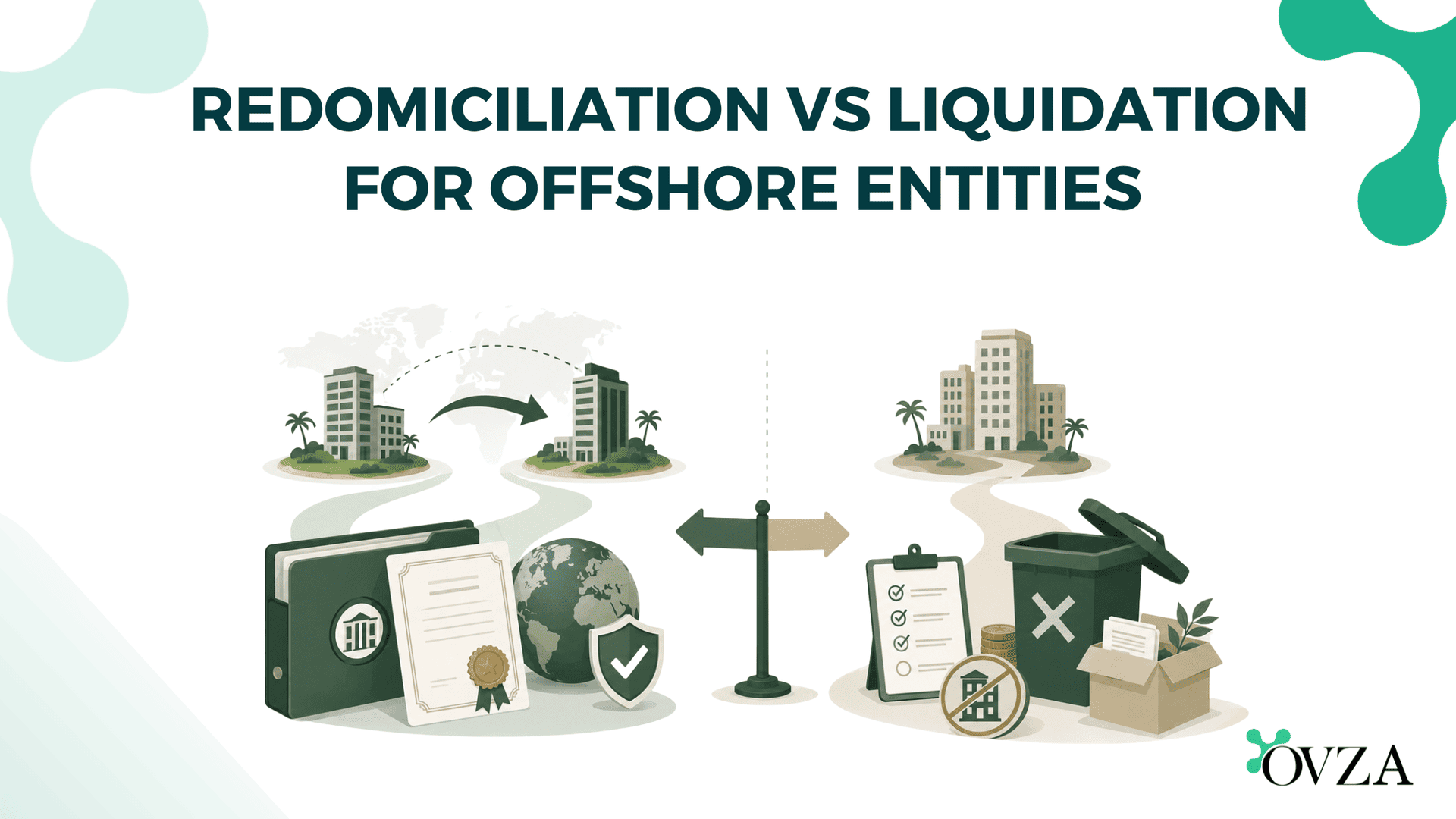
Одним из важнейших решений в этом процессе является выбор между перерегистрацией и ликвидацией. Хотя оба варианта позволяют компании двигаться дальше, они приводят к принципиально разным результатам. Перерегистрация позволяет существующему юридическому лицу продолжать свою деятельность в новой юрисдикции, если это разрешено законом, в то время как ликвидация формально закрывает компанию до создания какой-либо новой структуры.
Понимание этих различий помогает владельцам бизнеса выбрать подход, который наилучшим образом соответствует их коммерческим целям, договорным обязательствам и планам будущего роста.
Понимание разницы
Хотя и перерегистрация, и ликвидация подразумевают изменения в корпоративной структуре компании, они преследуют разные цели и подчиняются разным правовым процедурам.
Что такое смена места жительства?
Переселение, Перенос места регистрации компании, также известный как корпоративное продолжение или миграция компании, — это юридический процесс переноса места регистрации компании из одной юрисдикции в другую с сохранением того же юридического лица. Вместо ликвидации компании и создания новой, бизнес продолжает существовать, сохраняя свою юридическую идентичность, историю регистрации и многие из существующих прав.
В тех случаях, когда это разрешено законодательством, первоначальная юрисдикция выдает Свидетельство о прекращении деятельности, а принимающая юрисдикция — Свидетельство о продолжении деятельности. После этого компания переходит под действие корпоративного права новой юрисдикции, не прерывая своего юридического существования.
Для компаний с устоявшимися коммерческими связями, интеллектуальной собственностью или длительной историей деятельности смена юридического адреса может стать эффективным способом переезда, минимизирующим сбои в текущей работе.
Что такое добровольная ликвидация?
Добровольная ликвидация — это формальный процесс прекращения деятельности платежеспособной компании. Прежде чем компания может быть ликвидирована, она должна погасить непогашенные обязательства, распределить оставшиеся активы между акционерами, аннулировать соответствующие регистрации или лицензии и выполнить юридические требования юрисдикции, в которой она зарегистрирована.
После завершения ликвидации компания перестает существовать как юридическое лицо. Если владельцы желают продолжить деятельность в другом месте, обычно необходимо учредить совершенно новую компанию с новыми регистрациями, банковскими соглашениями и, при необходимости, договорными отношениями.
Ликвидация часто рассматривается в тех случаях, когда предприятие выполнило свою задачу, прекратило свою деятельность или не может законно сменить место регистрации, поскольку продолжение деятельности невозможно в соответствии с законодательством одной или обеих юрисдикций.
Сравнение процедуры смены юридического адреса и ликвидации
| Особенность | Переселение | Ликвидация |
| Юридическое лицо | Продолжает существовать в качестве того же юридического лица. | Существующая компания ликвидирована. |
| История регистрации компании | Сохранена первоначальная дата регистрации. | Новая компания получила новую дату регистрации. |
| Коммерческие контракты | Может продолжаться в соответствии с условиями договора и применимым законодательством. | Часто требуется переназначение или заключение новых соглашений. |
| Корпоративные активы | Остаться в компании. | Обычно переносится перед растворением. |
| Банковские отношения | Существующие отношения могут сохраниться и после проверки со стороны банка. | Как правило, требуются новые банковские соглашения. |
| Корпоративная документация | Исторические записи остаются у нынешней организации. | Новая компания начинает работу со своими собственными записями. |
| Доступность | Только в тех случаях, когда продолжение разрешено обеими юрисдикциями. | Доступно в рамках местных процедур ликвидации. |
Выбор между изменением юридического адреса и ликвидацией.
Выбор подходящего варианта зависит от обстоятельств компании, ее планов на будущее и правовой базы соответствующих юрисдикций.
Компании, обладающие ценной интеллектуальной собственностью, давними отношениями с клиентами, налаженными банковскими связями или действующими коммерческими контрактами, часто рассматривают возможность смены юридического лица, поскольку это позволяет сохранить существующую юридическую форму, одновременно перенося местонахождение компании. Сохранение той же юридической идентичности также может упростить отношения с поставщиками, регулирующими органами и деловыми партнерами, хотя может потребоваться обновление документации.
Ликвидация может быть более подходящим вариантом, если компания прекратила свою деятельность, желает упростить свою корпоративную структуру или намеревается начать существенно иной бизнес под новым юридическим лицом. Это также может быть единственным доступным вариантом, если существующая юрисдикция или юрисдикция назначения не разрешают продолжение деятельности компании.
Прежде чем выбрать какой-либо из вариантов, предприятиям следует оценить договорные обязательства, нормативные требования, налоговые последствия, лицензионные соглашения и корпоративное законодательство обеих юрисдикций.
Практические соображения
Хотя смена юридического адреса может сохранить юридическую преемственность, она не отменяет текущих обязательств по соблюдению нормативных требований. После смены юридического адреса компаниям, как правило, необходимо обновить информацию о своих новых корпоративных документах и данных о зарегистрированном офисе для банков, зарегистрированных агентов, регулирующих органов, лицензирующих органов и ключевых коммерческих партнеров. Финансовые учреждения также могут проводить обновленные проверки «Знай своего клиента» (KYC) и проверки на предмет отмывания денег (AML) перед сохранением существующих банковских отношений.
Аналогично, ликвидация включает в себя нечто большее, чем просто закрытие компании. Директора, как правило, остаются ответственными за обеспечение удовлетворения требований кредиторов, заполнение установленных законом документов, ведение необходимой корпоративной документации и выполнение всех юридических обязательств до официального роспуска компании. Точные процедуры различаются в зависимости от юрисдикции и типа юридического лица.
Преимущества смены места жительства
Для компаний, отвечающих установленным критериям, смена юридического адреса может предоставить ряд операционных преимуществ без необходимости создания нового юридического лица. Она может сохранить историю регистрации компании, упростить управление существующими активами и сократить административные затраты, связанные с передачей контрактов или интеллектуальной собственности.
Обеспечение непрерывности бизнеса также может сделать переход более плавным для клиентов, поставщиков и финансовых учреждений. Хотя в процессе миграции может потребоваться дополнительная документация, сохранение существующего юридического лица может уменьшить сбои по сравнению с ликвидацией одной компании и регистрацией другой.
Заключение
Понимание различий между перерегистрацией и ликвидацией позволяет владельцам бизнеса принимать обоснованные решения при реструктуризации своих международных операций. Перерегистрация позволяет сохранить юридическую идентичность и историю деятельности существующей компании, тогда как ликвидация обеспечивает структурированный процесс упорядоченного завершения деятельности компании перед созданием нового бизнеса, если это необходимо.
Наиболее подходящий подход зависит от коммерческих целей компании, договорных обязательств, нормативных требований и законодательства как текущей, так и предполагаемой юрисдикции. Тщательное планирование и профессиональные консультации помогут обеспечить эффективное завершение любой реструктуризации при сохранении соответствия законодательству на протяжении всего процесса.

Добавьте OVZA в список рекомендуемых источников Google.
Сделайте OVZA своим предпочтительным источником, чтобы легко получать доступ к нашим последним аналитическим материалам, исследованиям и проверенной информации непосредственно через Google.

Предупреждение: Информация, представленная на этом веб-сайте, предназначена только для общего ознакомления и образовательных целей. Несмотря на все усилия OVZA по обеспечению точности и актуальности информации, ее содержание не следует рассматривать как юридическую, финансовую или налоговую консультацию.