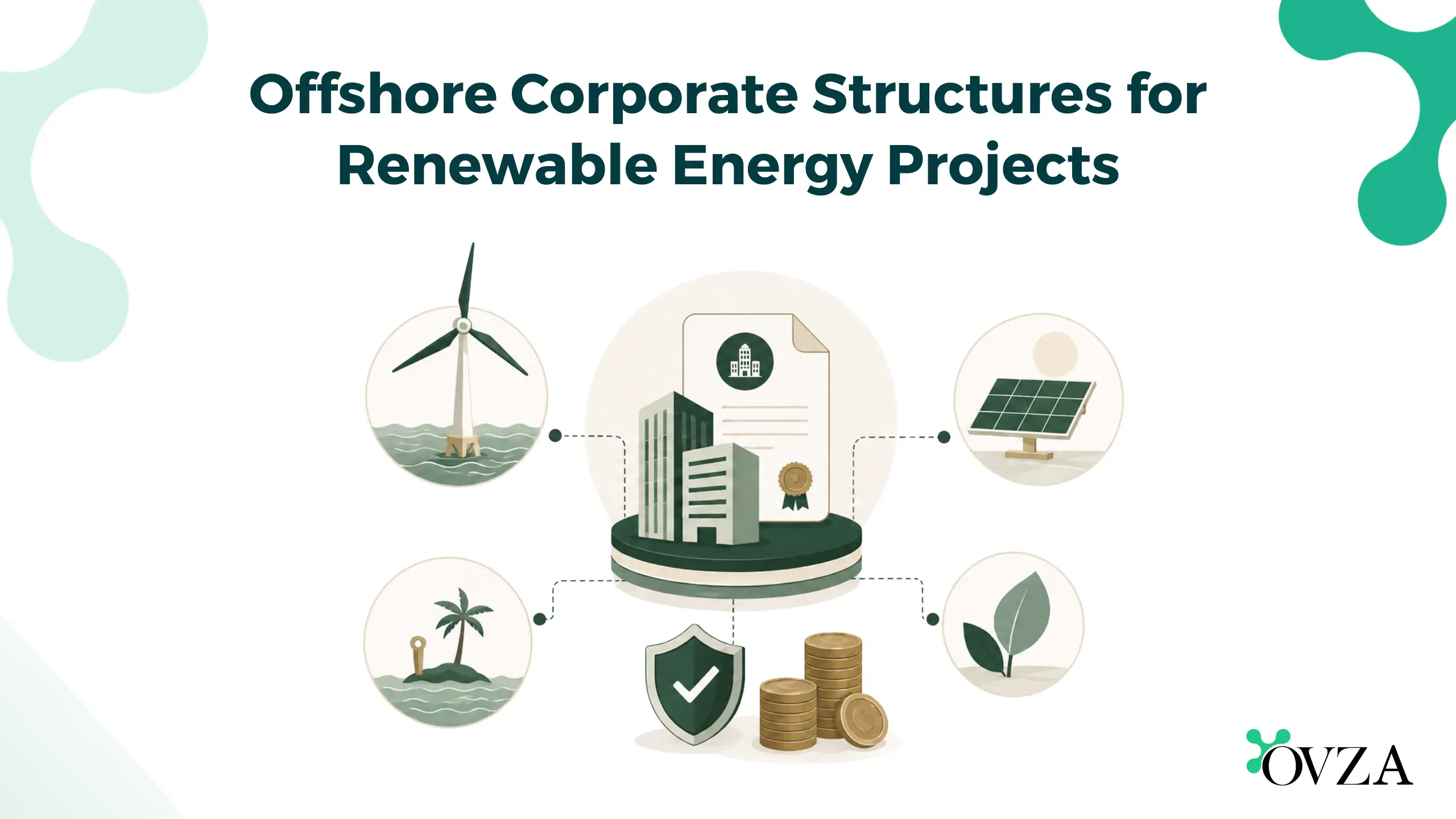
The renewable energy sector increasingly depends on international investment, specialized equipment, cross-border suppliers, and project-specific financing. Offshore wind, floating solar, tidal energy, wave energy, and other marine-based projects can involve multiple contractors, technology providers, investors, vessel operators, and regulatory authorities.
For developers working across international markets, the corporate structure supporting a renewable energy project can be just as important as the physical infrastructure itself.
An offshore structure for renewable energy can provide a centralized platform for holding investments, managing intellectual property, coordinating international procurement, and establishing project-specific entities. This allows the commercial and investment side of a project to remain organized while local operating entities handle the permits and activities required in the country where the project is located.
Importantly, an international corporate structure does not replace local renewable energy, environmental, maritime, construction, or grid approvals. Offshore renewable projects remain subject to the regulatory framework of the jurisdiction where the physical project is developed. For example, U.S. federal offshore projects may require leasing, site assessment, environmental review, and construction and operations approvals.
How Offshore Structures Support Renewable Energy Projects
A renewable energy developer may use more than one corporate entity as a project moves from investment and development into construction and operation.
A common structure separates the international holding and investment functions from the local project company. The international entity may hold certain intellectual property, investment interests, or procurement arrangements, while a local project company is established in the country where the renewable energy facility will operate.
This separation can make it easier to allocate responsibilities, maintain distinct accounting records, and manage different investors or projects without placing every activity inside a single corporate entity.
International Holding or Investment Entity
An international holding entity can be used to hold equity interests in renewable energy projects, manage certain intellectual property, and coordinate international investment.
Depending on the project, this entity may also enter into commercial agreements with technology suppliers, engineering contractors, or other international counterparties.
The precise ownership and tax treatment of these assets should always be structured according to the applicable laws of the jurisdictions involved.
Local Renewable Energy Project Company
The physical project will generally require an entity capable of entering into local agreements and obtaining the approvals required by the relevant authorities.
A project company, commonly structured as an SPV, can be responsible for activities such as holding project rights, entering into power purchase agreements, contracting with EPC providers, managing local operations, and maintaining relationships with regulators and grid operators.
The exact requirements vary substantially by market. In the United States, for example, BOEM’s framework includes leases, grants and rights-of-way for offshore renewable development, while project-specific environmental and construction approvals may also apply.
Key Corporate Functions in Renewable Energy Projects
1. Investment and Project Ownership
Renewable energy developments often require substantial capital from multiple investors. A dedicated holding structure can provide a centralized location for ownership interests while allowing individual projects to remain legally and financially distinct.
This can be particularly useful for developers building multiple renewable energy projects in different markets.
2. Intellectual Property and Technology
Renewable energy projects can involve proprietary software, engineering designs, monitoring systems, energy-management technology, trademarks, and other intellectual property.
Where appropriate, these assets may be held separately from the local project operations. Licensing arrangements can then define how the project company or operating entity uses the relevant technology.
This does not automatically protect IP from every claim, however. Ownership, licensing arrangements, transfer pricing, substance, and applicable IP laws should be reviewed carefully before assets are transferred between related entities.
3. International Procurement
Large renewable energy projects frequently involve suppliers from multiple countries.
Turbines, generators, subsea cables, transformers, solar modules, batteries, marine equipment, and specialist engineering services may all come from different suppliers.
An international procurement entity can therefore be used to coordinate certain commercial contracts and supplier relationships, particularly where the project’s financing and procurement arrangements are international in nature.
Importantly, customs duties, import requirements, technical standards, and local-content rules remain matters for the relevant importing jurisdiction. A holding company does not eliminate those requirements.
4. Project Financing
Project financing is another important reason developers may use separate entities.
Investors and lenders may prefer a clearly defined project company whose assets, contracts, revenues, and liabilities can be identified separately from the wider corporate group.
This can provide greater transparency when arranging equity investment, debt financing, or other forms of project funding.
Corporate Structure for an International Renewable Energy Project
A simplified structure could look like this:
| Entity | Primary Function |
| International Holding Entity | Holds investment interests and coordinates selected international activities |
| IP / Technology Entity | Holds or licenses qualifying technology and intellectual property where appropriate |
| Local Project SPV | Holds local project rights and contracts and manages the physical development |
| Operating / Service Entities | Handles construction, maintenance, engineering, logistics, or other operational functions |
Not every project requires all four layers. The appropriate structure depends on the project’s location, financing arrangements, ownership, technology, regulatory requirements, and commercial relationships.
Local Permits Remain Essential
One of the most important considerations when establishing an international renewable energy structure is understanding the difference between corporate organization and project authorization.
An offshore company cannot independently grant itself the right to build a wind farm, install subsea cables, occupy seabed areas, or connect a project to a national electricity grid.
Those rights come from the relevant authorities in the country or territory where the project is located.
For offshore renewable developments, approvals can include site and leasing rights, environmental assessments, construction approvals, marine authorizations, cable routes, grid connections, and other project-specific permissions.
For example, BOEM identifies planning, leasing, site assessment, and construction and operations as distinct stages within its U.S. offshore renewable framework.
This makes the corporate structure an enabling framework, rather than a substitute for local regulation.
Structuring Renewable Energy Projects Across Borders
For developers operating internationally, separating ownership, investment, technology, and local operations can create a clearer corporate architecture.
A project may therefore combine an international holding structure with one or more local SPVs. The international entity can manage appropriate investment and commercial functions, while each local project company remains responsible for the permissions, contracts, employees, assets, and regulatory obligations connected with its particular market.
This approach can also make it easier to bring different investors into individual projects without restructuring the entire international group.
Conclusion
An appropriately designed offshore structure for renewable energy can provide developers with a practical framework for organizing international investments, intellectual property, procurement arrangements, and project ownership.
Rather than attempting to replace local regulation, the international structure works alongside the project company’s local obligations. This separation can provide greater clarity between investment ownership and physical operations while allowing developers to manage different renewable energy projects through dedicated corporate entities.
For international clean-energy developers, careful corporate planning can create a more organized foundation for investment, project financing, technology management, and long-term expansion.

Add OVZA to Google Preferred Sources
Make OVZA your preferred source to ensure you can easily discover our latest insights, research, and trusted content directly through Google.

Disclaimer: The information provided on this website is intended for general reference and educational purposes only. While OVZA makes every effort to ensure accuracy and timeliness, the content should not be considered legal, financial, or tax advice.