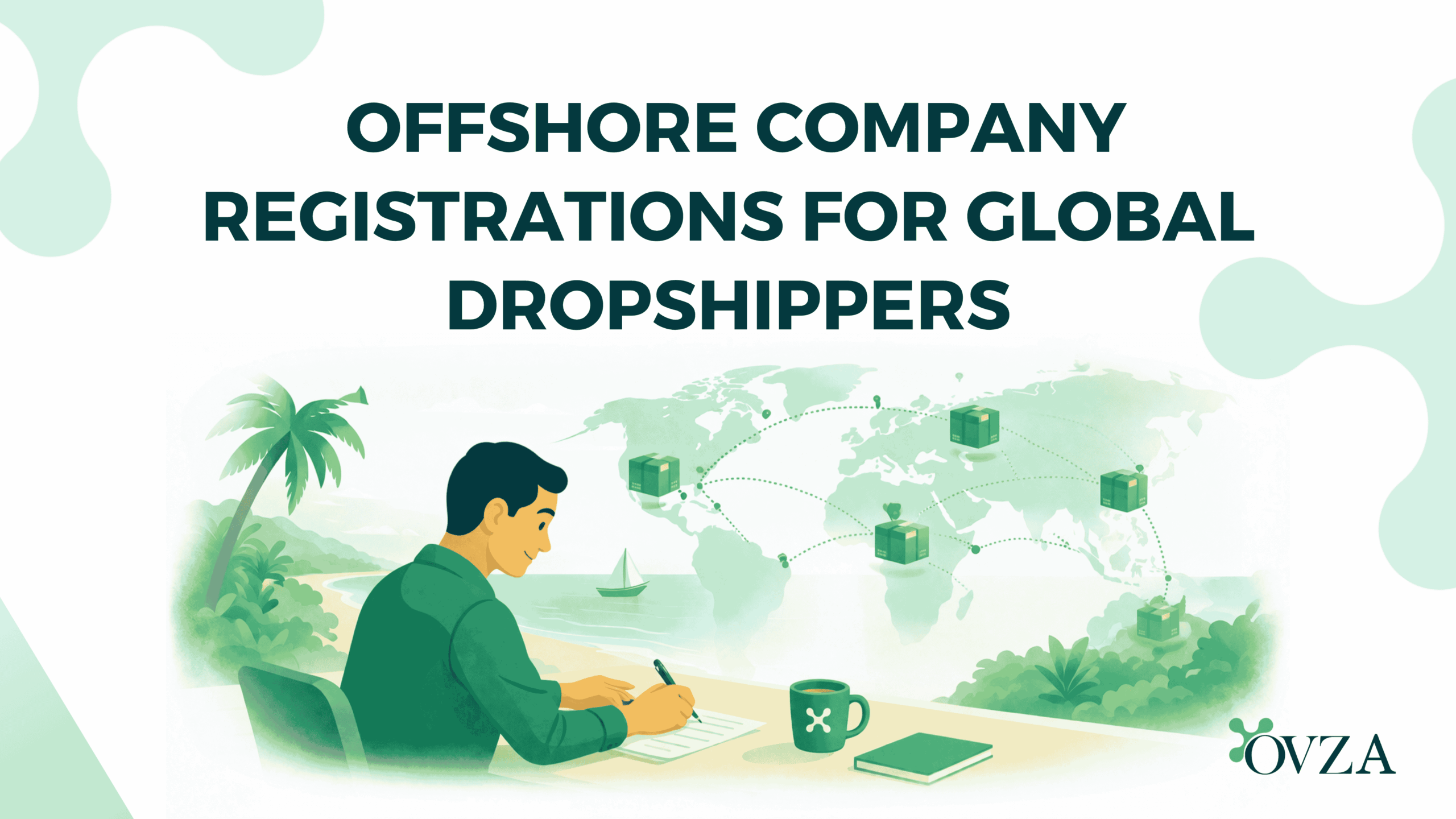
In 2026, the “bedroom dropshipper” has evolved into a sophisticated global retailer. The days of simply linking a Shopify store to a personal bank account are over, as rising customer acquisition costs and tighter platform regulations have turned traditional domestic setups into a “margin trap.”
As the digital marketplace matures, high-volume sellers are professionalizing their backend operations. Here are the primary reasons why shifting to an offshore corporate structure is the defining strategic move for the modern e-commerce entrepreneur.
1. Payment Gateway Longevity and Stability
For any dropshipping business, the payment gateway is the lifeline. In 2026, processors like Stripe and PayPal have implemented automated “risk-scoring” that frequently flags domestic accounts for high-velocity, cross-border transactions. An offshore entity, when matched with a jurisdiction recognized for international trade, allows you to access Tier-1 merchant accounts designed for global volume. This significantly reduces the risk of “rolling reserves” or sudden account freezes that can paralyze a scaling store’s cash flow.
2. Supply Chain Reinvoicing and Arbitrage
E-commerce is an exercise in global coordination—sourcing from Asia, warehousing in Europe, and selling in North America. Attempting to manage these multi-currency flows through a local entity often leads to “double-taxation” and immense administrative friction. By utilizing an offshore “hub,” you can act as a neutral intermediary. This allows for seamless reinvoicing between your suppliers and your fulfillment centers, ensuring that your capital moves as fast as your inventory without being eroded by regional bureaucracy.
3. VAT Management
In the current 2026 regulatory environment, navigating the “destination principle” for global sales tax is the biggest hurdle for digital retailers. Domestic firms often struggle with the complexity of registering for VAT/GST in every country they ship to. An offshore structure provides a centralized framework to manage these global tax liabilities. It allows your business to maintain a clean “nexus” profile, ensuring you are compliant with international standards while protecting your overall profit margins from being drained by domestic corporate tax in your home country.
4. Strategic Reinvestment Power
In a competitive niche, the person who can spend the most to acquire a customer wins. If 30% of your profit is diverted to local taxes before you can buy your next round of inventory or ads, you are at a disadvantage. A tax-neutral offshore structure allows for 100% of your gross margin to be retained within the business. This “pre-tax” capital can be immediately reinvested into scaling your ad spend, hiring better talent, or developing custom private-label products, giving you a compound growth advantage over competitors.
5. Shielding the Digital Brand
The risks of e-commerce—from product liability claims to supplier contract disputes—can easily spill over into a founder’s personal life if the business isn’t properly siloed. Jurisdictions like the BVI or the Marshall Islands offer robust corporate legislation that creates a definitive wall between your personal wealth and your retail operations. This ensures that even in a volatile global market, your personal assets remain untouched by business-level liabilities.
| Feature | Local Retail Setup | Offshore Corporate Hub |
| Cash Flow | Frequent “Risk” holds by banks | Optimized for high-velocity trade |
| Tax Impact | Immediate domestic tax drag | Tax-Neutral for reinvestment |
| Supply Chain | Fragmented logistics contracts | Centralized re-invoicing hub |
| Liability | Personal assets often exposed | Strong Legal Firewall |
| VAT Handling | Complex and fragmented | Simplified global compliance |
Conclusion
The transition from a “store owner” to a “Global Retail Director” is the hallmark of the 2026 e-commerce leader. By adopting an offshore structure, you aren’t just filing paperwork; you are building a resilient, borderless engine that can withstand the shifts of the digital economy. Successful retailers know that their storefront is the face of the business, but their international structure is the engine that ensures they actually keep the profits they generate.
Disclaimer: The information provided on this website is intended for general reference and educational purposes only. While OVZA makes every effort to ensure accuracy and timeliness, the content should not be considered legal, financial, or tax advice.