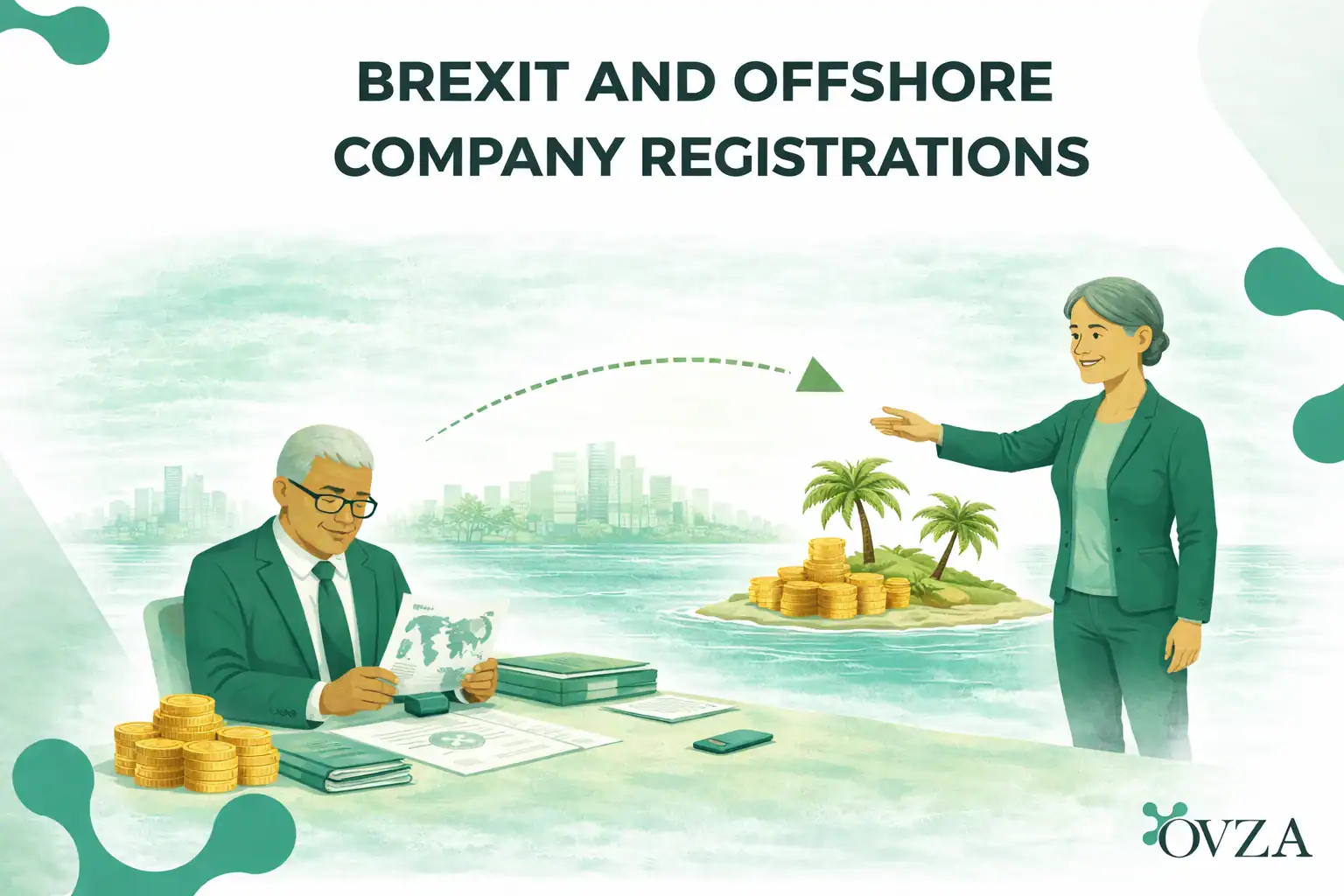
The United Kingdom’s departure from the European Union introduced structural changes to how businesses operate across borders. One of the most significant developments was the loss of passporting rights, which previously allowed UK-based companies to provide services freely across EU member states.
In practice, Brexit did not eliminate cross-border trade, but it introduced additional regulatory layers that businesses must now navigate. These include separate compliance requirements, VAT considerations, and jurisdiction-specific rules that vary between the UK and the EU.
As a result, international entrepreneurs increasingly examine how corporate structuring affects their ability to operate across multiple regions. Offshore company registration is one of the structures commonly used in this context.
Operational Freedom: What an Offshore Structure Actually Delivers
Most entrepreneurs are not interested in the fine print of maritime law or tax treaties; they are interested in the results that allow their business to scale. In the current 2026 landscape, a correctly placed offshore structure provides three primary outcomes:
- Market Fluidity: The ability to invoice clients in the EU, the UK, and the US from a single, neutral entity without being caught in the middle of UK-EU regulatory divergence.
- Banking Stability: Access to multi-currency accounts designed for international trade, ensuring you aren’t restricted by the “inward-looking” policies of traditional high-street banks.
- Legal Separation: A robust corporate framework that creates a clear wall between your personal assets and your international business liabilities.
From the Field: Navigating the 2026 Compliance Landscape
From our direct work with hundreds of international structures, the biggest challenge in 2026 is no longer the incorporation itself, but the banking and verification process. Post-Brexit, traditional banks have significantly tightened their “Know Your Customer” (KYC) protocols for cross-border businesses.
For instance, we frequently see UK founders struggling to open simple EUR accounts for their domestic firms due to new “non-resident” hurdles. In contrast, those who use an offshore IBC matched with a specialized Electronic Money Institution (EMI) often find that offshore companies open bank accounts easily because these institutions are built specifically to handle non-resident, international flows.
| Post-Brexit Friction | The Offshore Solution |
| UK-EU Regulatory Divergence | Operates under a stable, “fixed” International Business Act |
| VAT/EORI Complexity | Simplified via tax-neutral structures for non-resident trade |
| Banking Restrictions | Access to global EMIs that welcome offshore entities |
| Public Disclosure | Enhanced privacy through professional jurisdictional laws |
Required Documents for Offshore Company Formation
To move from a plan to an active, operational company, you need a specific set of documents. In 2026, with the full implementation of the Economic Crime and Corporate Transparency Act (ECCTA), identity verification is the most critical step.
- Proof of Identity: A high-resolution scan of a biometric passport is now the mandatory gold standard for digital verification across all top-tier jurisdictions.
- Proof of Address: A utility bill, local tax demand, or bank statement dated within the last 90 days.
- Constitutional Documents: Your Memorandum and Articles of Association. You can compare offshore jurisdictions to see which legal framework provides the most flexibility for your specific industry.
- Business Profile & KYC: A brief summary of what your company does, where your customers are located, and your expected annual turnover. This is the document that determines your success with banking partners.
Offshore Structures and Regulatory Positioning
As we often explain to our clients, the label “LLC” or “IBC” is less important than the legislation behind it. Whether you are seeking a structure in the BVI, Cook Islands, or Seychelles, the goal is the same: to remove your business from the “domestic” tax and regulatory regime so you can focus on growth.
“Entrepreneurs often get stuck on whether they need an LLC or an IBC. In practice, they are simply looking for a structure that is based on offshore law—giving them the freedom to trade across borders without regional interference.” — Legal Affairs Team
Conclusion
Brexit introduced a more complex regulatory environment for businesses operating between the UK and the EU. While cross-border trade remains active, companies are now required to navigate multiple legal and compliance systems.
Offshore company registration is one of several structures used in international business to manage cross-border operations. Its role is not to replace regulatory obligations, but to provide a legal framework that aligns with international activities.
In practice, the suitability of any structure depends on the nature of the business, the jurisdictions involved, and the regulatory requirements that apply to those operations.
Disclaimer: The information provided on this website is intended for general reference and educational purposes only. While OVZA makes every effort to ensure accuracy and timeliness, the content should not be considered legal, financial, or tax advice.