When an international entrepreneur or investment group establishes a cross-border corporate structure, the immediate operational hurdle is securing a reliable corporate banking relationship. During the onboarding phase, founders frequently discover that many international financial institutions require a detailed business plan as part of the account opening process.
Historically, business plans were treated strictly as fundraising documents designed to attract venture capital, angel investment, or traditional commercial loans.
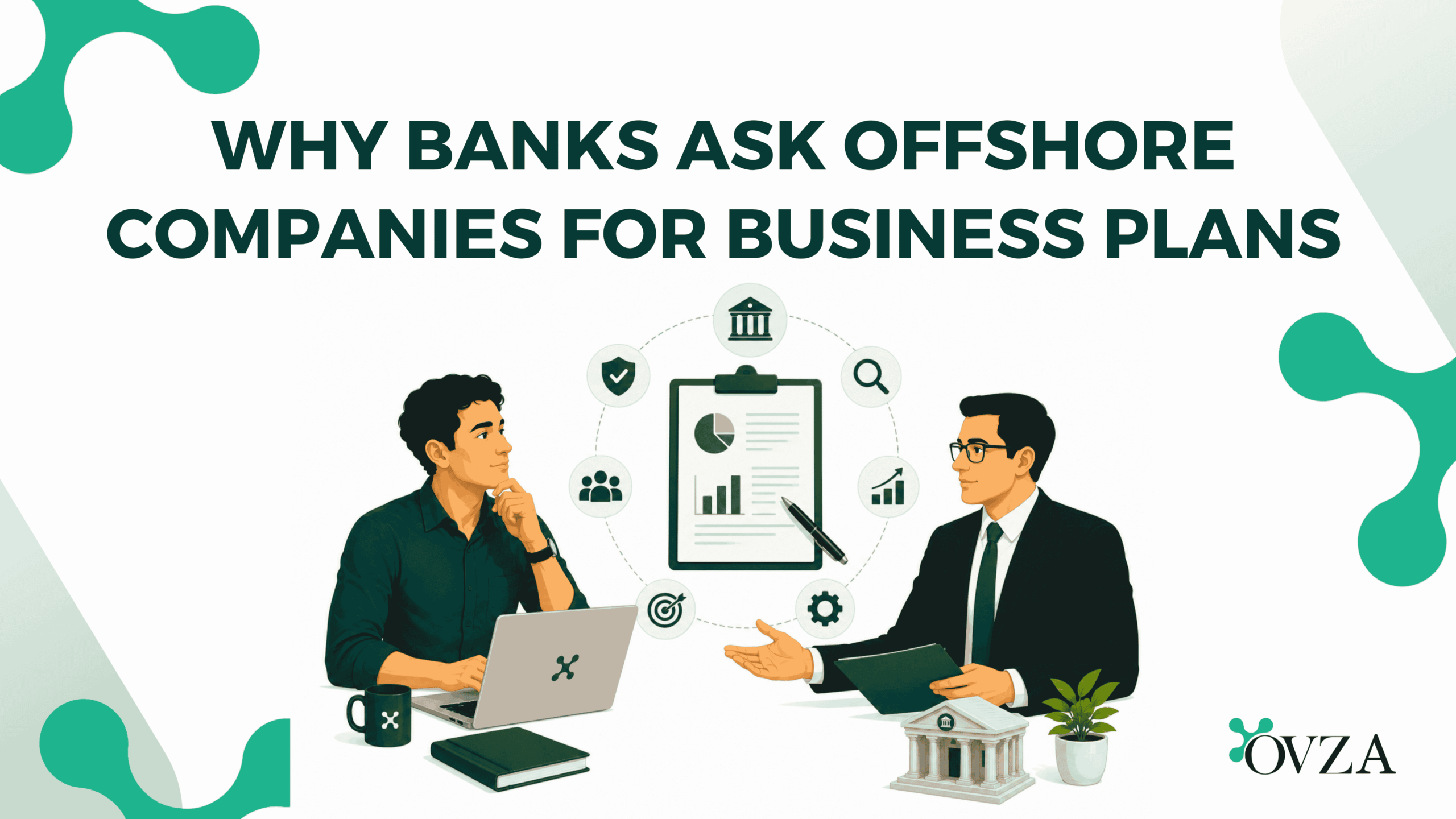
Today, business plans are not only used for fundraising. International banks frequently rely on them as part of their compliance and onboarding procedures when assessing offshore and cross-border companies. It serves as a primary compliance instrument required by risk-management and compliance teams to evaluate the operational legitimacy of an offshore entity.
Understanding why international banks mandate this disclosure and what specific information they are seeking allows scaling businesses to navigate the onboarding process efficiently and prevent costly transaction bottlenecks.
How Banks Assess International Business Activity
International banks operate under strict anti-money laundering (AML) and know-your-customer (KYC) frameworks enforced by global regulatory bodies. Financial institutions are legally liable for the transaction activity flowing through their clearing networks, meaning they utilize automated, risk-based compliance models to evaluate non-resident corporate clients.
A bank does not merely evaluate who owns an offshore company; it must deeply understand what the company actually does.
The business plan helps banks understand how the company expects to operate, where revenue will come from, and what types of transactions are likely to pass through the account.
By mapping out an entity’s operational model, financial gatekeepers can benchmark future account behavior against documented projections.
What Banks Look for in a Corporate Business Plan
When reviewing an offshore or international company’s business plan, banks are not evaluating the business as an investor would. Instead, they are assessing whether the company’s activities align with its structure, expected transaction patterns, and overall risk profile.
A well-prepared business plan helps compliance teams understand how the company generates revenue, who its customers and suppliers are, where funds will originate, and how the business intends to operate internationally.
Comparing Two Onboarding Profiles
| Less Developed Application | Well-Prepared Application |
| Broad descriptions such as “international consulting” or “global trading” | Clear explanation of services, products, or commercial activities |
| General references to worldwide markets | Specific target regions and business corridors identified |
| Limited information about customers or suppliers | Examples of key counterparties, clients, or supplier relationships |
| Unclear revenue expectations | Structured financial projections supported by reasonable assumptions |
| Minimal explanation of the company’s international structure | Clear rationale for the jurisdiction and operational setup |
Why Banks Want to Understand Your Business Structure
One of the bank’s primary concerns is determining whether the company has a genuine commercial purpose. Financial institutions are increasingly cautious about entities that exist only on paper and have little evidence of actual business activity.
Banks require a business plan to verify that the entity possesses a logical, commercial rationale for its structural design.
The document must clearly articulate why the company is domiciled in a specific international hub such as the advanced technology ecosystem of the Abu Dhabi Global Market (ADGM) or the robust corporate statutes of the British Virgin Islands (BVI) and how that location supports the firm’s global operational infrastructure.Demonstrating a clear commercial purpose helps banks understand the rationale behind the structure and can contribute to a smoother onboarding process.
Conclusion
A strong business plan can significantly improve the banking onboarding process for offshore and international companies. It helps banks understand how the business operates, where funds will come from, and why the corporate structure makes commercial sense.
Companies that prepare clear, realistic, and well-documented business plans are often able to move through compliance reviews more efficiently and establish banking relationships with fewer delays.
At OVZA, we help entrepreneurs and international businesses prepare the corporate structures and supporting documentation needed for successful banking applications. From company formation and governance planning to compliance-ready business plans, we help clients build a solid foundation for international growth.
Disclaimer: The information provided on this website is intended for general reference and educational purposes only. While OVZA makes every effort to ensure accuracy and timeliness, the content should not be considered legal, financial, or tax advice.