When an expanding enterprise or international investor begins establishing a corporate footprint across multiple borders, they encounter unique administrative and legal prerequisites. Moving corporate documentation such as Certificates of Incorporation, Articles of Association, or Powers of Attorney out of a domestic market and into a foreign jurisdiction requires a formal verification process.
During the corporate onboarding phase or when opening an international bank account, founders are routinely instructed that their foreign corporate documents must bear an Apostille.
Historically, verifying the authenticity of legal documents across international borders was a highly fragmented, multi-layered bureaucratic process that required manual clearance from local authorities, state departments, and foreign embassies.
Today, the Apostille framework provides a standardized, universally recognized method to authenticate public documents for international use. Understanding how this system operates is essential for maintaining operational momentum and ensuring compliant cross-border growth.
The Legal Function of an Apostille Certificate
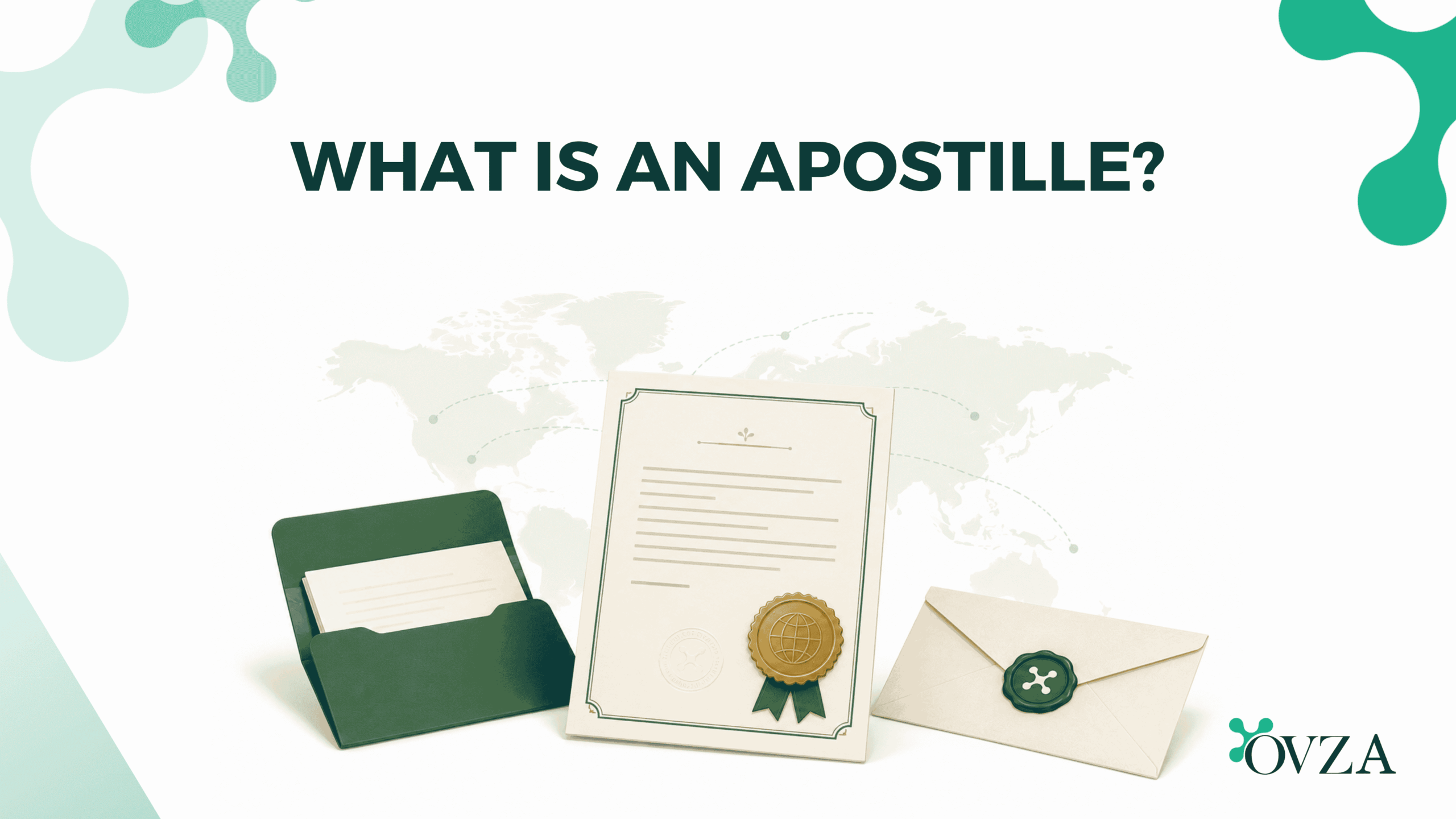
An Apostille is a specialized, numbered certificate issued by a designated government authority such as a Secretary of State, Ministry of Foreign Affairs, or High Court registrar that is permanently attached to a public document. Its primary legal function is to certify the authenticity of the signature, the capacity in which the person signing the document acted, and the identity of any seal or stamp affixed to the document.
The framework was established by the Hague Convention of 5 October 1961 Abolishing the Requirement of Legalisation for Foreign Public Documents (commonly known as the Apostille Convention).
Before this international treaty, cross-border document verification required a tedious chain of authentications called “chain legalization.” The Apostille system replaced this entire pipeline with a single, standardized certificate, allowing a document executed in one member state to be automatically recognized as authentic in any other member country.
Why Is an Apostille Required in Cross-Border Corporate Structures?
International financial institutions, regulatory registries, and corporate partners cannot independently verify the legitimacy of every foreign document presented to them. They have no direct access to foreign corporate registries or notary databases to confirm that a document is genuine rather than fraudulent.
An Apostille bridges this informational gap by serving as a universally trusted validation protocol.
Comparing Authentication Requirements
| Hague Convention Country | Non-Hague Convention Country |
| Document is notarized. | Document is notarized. |
| Apostille is issued by the competent authority. | Additional government authentication is required. |
| No embassy legalization is usually needed. | Embassy or consular legalization is typically required. |
| Faster and simpler process. | More time-consuming verification process. |
When Do Offshore Companies Require Apostilled Documents?
For modern growth-oriented enterprises, digital brands, and family offices, managing an international corporate structure involves routine cross-border document exchanges.
An Apostille is typically required during high-stakes structural milestones, including:
- Opening International Corporate Bank Accounts: Financial institutions require apostilled copies of corporate registries, incumbency certificates, and constituent documents to satisfy regulatory Anti-Money Laundering (AML) mandates.
- Establishing Foreign Subsidiaries or Branches: When an offshore parent company incorporates a downstream operational entity or registers a physical branch in a foreign jurisdiction.
- Executing Cross-Border Powers of Attorney: Granting legal authority to an international director, attorney, or corporate agent to sign contracts or manage localized corporate assets on behalf of the parent firm.
- Validating Intellectual Property Rights: Presenting patent filings, trademark registrations, or copyright assignments to international intellectual property offices.
Why Proper Documentation Matters
As international operations expand, maintaining organized corporate records becomes increasingly important. Businesses that proactively manage their corporate documentation are often able to complete banking, regulatory, and incorporation procedures far more efficiently than those scrambling to obtain documents at the last minute.
This includes maintaining current corporate extracts, certificates, governance records, and other statutory documents that may require notarization or Apostille certification for international use.
A structured approach to document management can help reduce onboarding delays, accelerate compliance reviews, and support smoother cross-border transactions. For businesses operating across multiple jurisdictions, keeping corporate records current and readily available is often just as important as selecting the right legal structure.
Conclusion
An Apostille is one of the most important tools in international business administration. By providing a standardized method for verifying public documents across borders, the Apostille system simplifies everything from offshore banking and corporate formation to international investment and legal representation.
For companies operating internationally, maintaining properly certified and apostilled corporate records can help prevent delays, streamline regulatory requirements, and support smoother cross-border transactions. As global business becomes increasingly interconnected, having the correct documentation in place is a practical necessity rather than an administrative formality.
At OVZA, we assist businesses with international incorporation, corporate document preparation, and cross-border compliance requirements, helping clients build structures that are ready for global operations from day one.
Disclaimer: The information provided on this website is intended for general reference and educational purposes only. While OVZA makes every effort to ensure accuracy and timeliness, the content should not be considered legal, financial, or tax advice.