For entrepreneurs, investors, and internationally active businesses, establishing reliable banking relationships is a critical step when expanding across borders. As part of the account opening process, financial institutions are required to conduct due diligence to verify the legitimacy of their clients and the origin of funds entering the banking system.
One of the most common areas of confusion during onboarding involves two closely related compliance concepts: Source of Wealth (SOW) and Source of Funds (SOF).
Although the terms are often used together, they serve different purposes within a bank’s compliance review. Understanding the distinction can help businesses prepare documentation more effectively, respond to information requests efficiently, and reduce delays during account opening.
Understanding the Difference
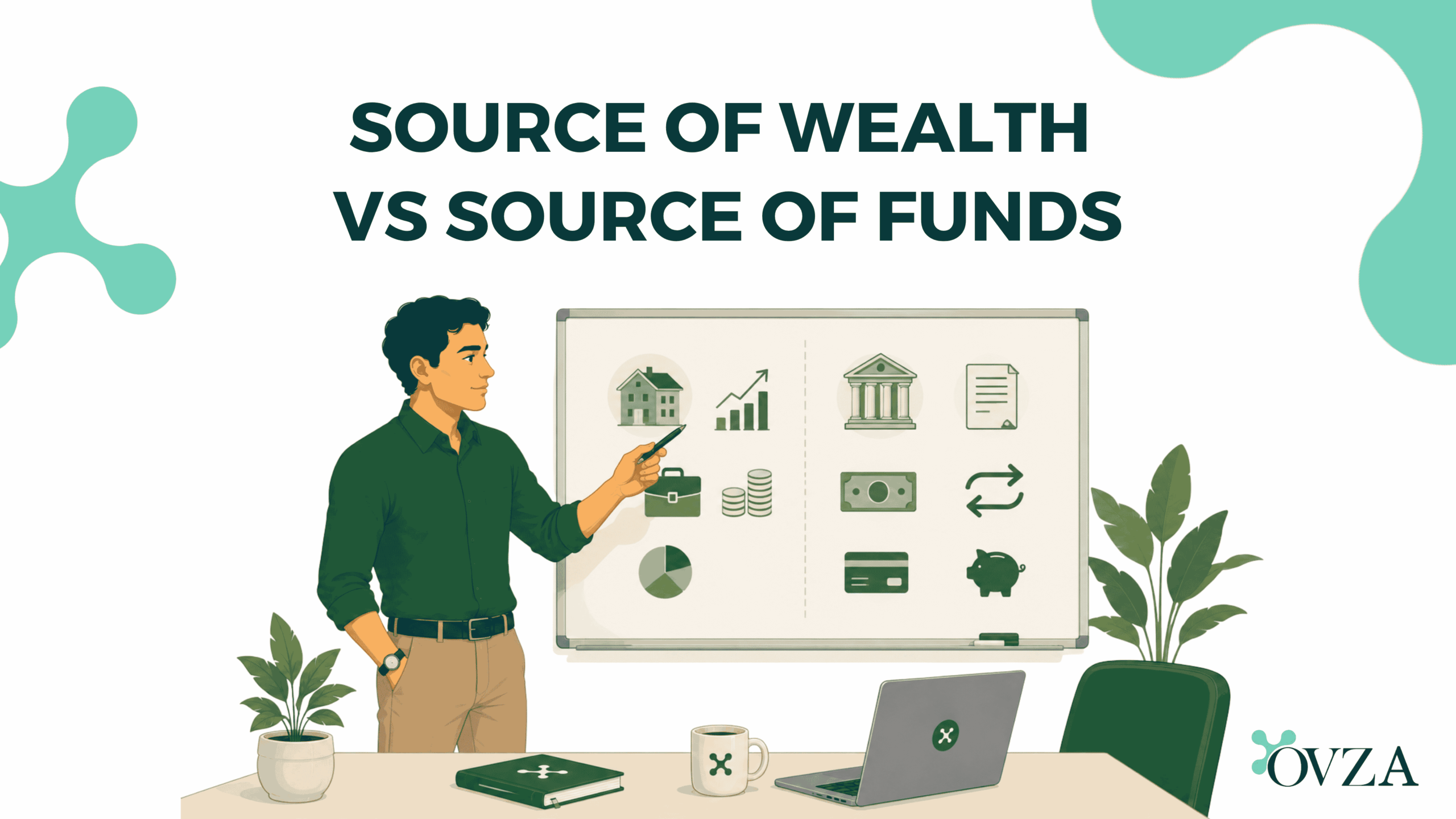
While both Source of Wealth and Source of Funds help financial institutions meet regulatory requirements, they focus on different aspects of a client’s financial profile.
What Is Source of Wealth?
Source of Wealth refers to how an individual or business accumulated its overall wealth over time. It provides a broader picture of the economic activities that generated the capital available today.
Banks may request Source of Wealth information to understand the long-term origins of a client’s assets and financial position.
Examples of Source of Wealth may include:
- Income earned through employment or executive compensation
- Profits generated from a business
- Proceeds from the sale of a company
- Investment gains from securities or real estate
- Inheritance or family wealth transfers
The objective is to establish a clear and reasonable explanation for the accumulation of wealth over an extended period.
What Is Source of Funds?
Source of Funds refers to the specific origin of the money being used for a particular transaction or account deposit.
Rather than examining a client’s entire financial history, banks focus on where the funds involved in a specific transfer came from immediately before reaching the account.
Examples of Source of Funds may include:
- A transfer from a personal bank account
- Dividend distributions from a company
- Proceeds from a recent property sale
- Income received from a business transaction
- Funds transferred from an investment account
In simple terms, Source of Wealth explains how wealth was accumulated, while Source of Funds explains where the money for a specific transaction originated.
Source of Wealth vs Source of Funds
| Source of Wealth | Source of Funds |
| Explains how wealth was accumulated over time | Explains where a specific transaction or deposit originated |
| Focuses on long-term financial history | Focuses on a particular payment or transfer |
| May include business sales, salaries, investments, or inheritances | May include savings accounts, dividends, or asset sale proceeds |
| Helps banks understand the broader financial picture | Helps banks verify the immediate source of transferred funds |
Understanding this distinction can make it easier to prepare the correct documentation during the onboarding process.
Common Documentation Requested by Banks
The exact requirements vary between institutions and jurisdictions, but banks commonly request supporting documentation to verify both Source of Wealth and Source of Funds.
Source of Wealth Documentation
Depending on how wealth was accumulated, examples may include:
- Tax returns
- Audited financial statements
- Employment contracts or salary records
- Business sale agreements
- Investment portfolio statements
- Property sale documentation
- Probate or inheritance records
Source of Funds Documentation
For a specific transaction or account funding event, banks may request:
- Recent bank statements
- Wire transfer confirmations
- Dividend certificates
- Sale agreements
- Investment redemption statements
- Corporate distribution records
Providing organized and consistent documentation helps compliance teams complete their review more efficiently.
Preparing for a Smooth Banking Review
Many onboarding delays occur not because clients lack documentation, but because information is submitted in an incomplete or fragmented manner.
A practical approach is to prepare a clear overview of your financial background and maintain supporting records that explain both the origin of your wealth and the source of funds being transferred.
| Recommended Approach | Benefit |
| Maintain organized financial records | Makes documentation easier to retrieve when requested |
| Prepare a clear explanation of wealth accumulation | Helps compliance teams understand your financial profile |
| Ensure supporting documents are current and consistent | Reduces follow-up requests from the bank |
| Keep corporate and personal records properly separated | Simplifies verification and improves transparency |
By preparing these materials in advance, businesses can often move through onboarding reviews more efficiently and establish banking relationships with fewer administrative delays.
Why This Matters for International Businesses
For businesses operating internationally, banking relationships play a central role in supporting cross-border transactions, supplier payments, customer receipts, and ongoing expansion activities.
As regulatory expectations continue to evolve, financial institutions increasingly rely on robust due diligence procedures to understand the businesses and individuals they serve. Providing clear Source of Wealth and Source of Funds documentation helps demonstrate transparency and supports a smoother onboarding experience.
Rather than viewing these requirements as obstacles, many successful international businesses treat them as a routine part of maintaining strong banking relationships and long-term operational stability.
Conclusion
Understanding the difference between Source of Wealth and Source of Funds can help businesses and investors prepare for international banking requirements more effectively. While both forms of verification are standard components of modern compliance procedures, providing clear and well-organized documentation can significantly reduce delays during account onboarding.
By maintaining accurate financial records and preparing supporting documentation in advance, businesses can navigate banking reviews with greater confidence and establish international banking relationships more efficiently.
At OVZA, we assist entrepreneurs, investors, and internationally active businesses with company formation, banking preparation, and compliance support. Our team helps clients build well-structured international frameworks designed to support long-term growth and smooth banking operations.
Disclaimer: The information provided on this website is intended for general reference and educational purposes only. While OVZA makes every effort to ensure accuracy and timeliness, the content should not be considered legal, financial, or tax advice.