Choosing the right business structure is one of the most important decisions entrepreneurs make when starting or expanding a business. The legal structure you choose influences liability, governance, reporting obligations, and how profits are taxed.
One concept that often appears when discussing business taxation is pass-through taxation. Unlike traditional corporations, where profits may be taxed at both the company and shareholder levels, pass-through entities generally allow business income to flow directly to the owners for tax purposes.
While this approach can provide tax efficiencies in some jurisdictions, it is not universally available. Understanding how pass-through taxation works and how different countries classify business entities is essential before establishing an international business structure.
What Is Pass-Through Taxation?
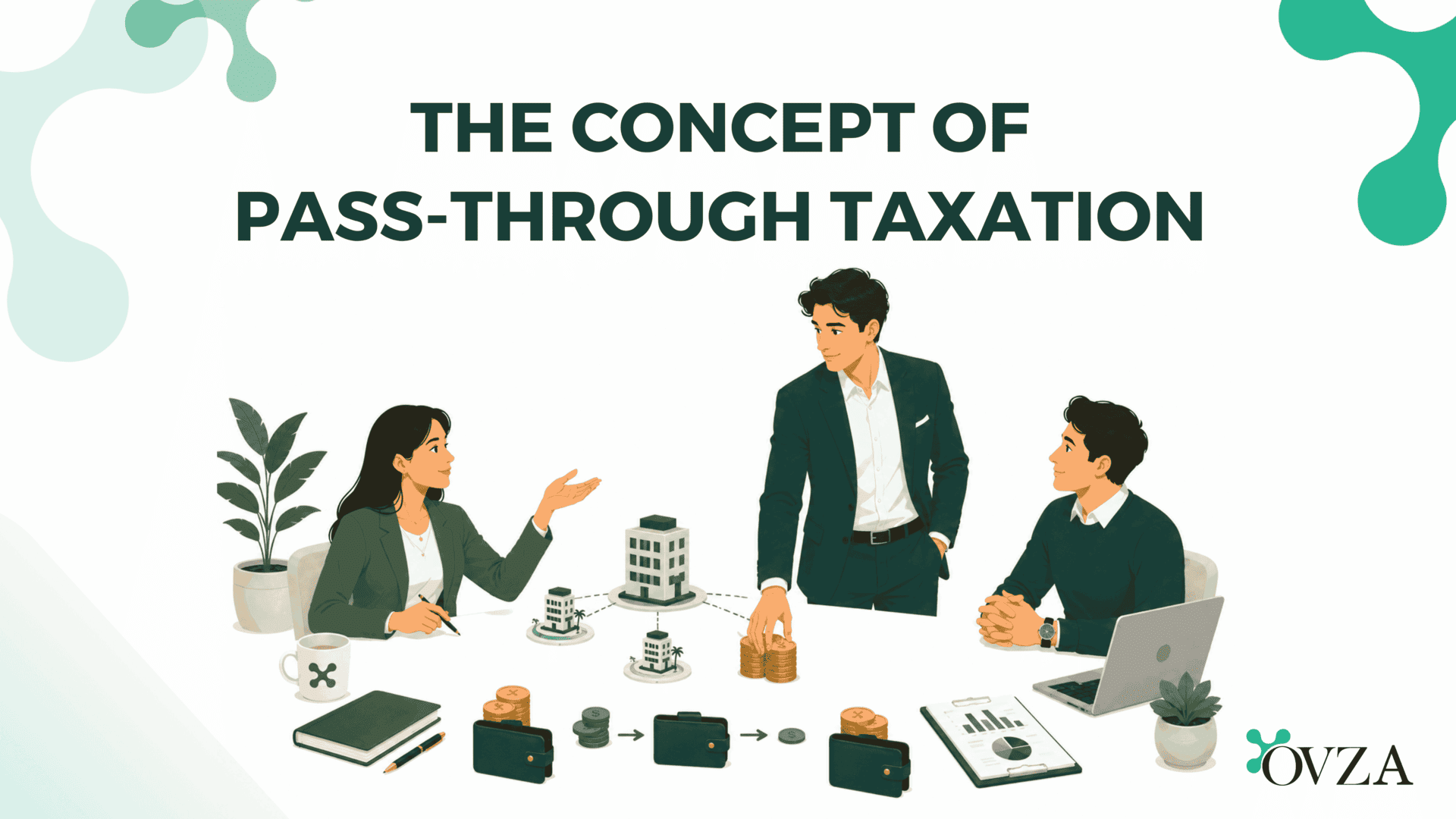
Pass-through taxation is a tax treatment in which a business does not pay income tax at the entity level. Instead, the company’s profits and, in some cases, losses are allocated directly to its owners, who report them on their personal tax returns.
The business still maintains its own legal identity and may have separate accounting and reporting obligations. However, for tax purposes, the income “passes through” the company to its owners.
This differs from traditional corporate taxation, where the company pays corporate income tax before profits are distributed to shareholders.
Pass-Through Taxation vs. Traditional Corporate Taxation
One of the main differences between the two systems is how many times business profits are taxed.
| Traditional Corporation | Pass-Through Entity |
| Company pays corporate income tax | Company generally does not pay income tax |
| Shareholders may pay tax again on dividends | Owners report profits directly on personal tax returns |
| Potential double taxation | Income is generally taxed once |
The exact outcome depends on the tax laws of the country where the business operates and where its owners are tax residents.
Common Examples of Pass-Through Entities
Several business structures may qualify for pass-through taxation depending on the jurisdiction.
For example, many Limited Liability Companies (LLCs) are treated as pass-through entities by default in the United States, while partnerships generally allocate profits directly to their partners. Certain corporations may also elect pass-through treatment where local legislation permits.
Not every country recognizes these structures in the same way. A company that is considered fiscally transparent in one jurisdiction may be treated as a taxable corporation elsewhere, making international tax planning especially important.
Potential Benefits of Pass-Through Taxation
Pass-through taxation may offer several advantages for eligible businesses. One potential benefit is the avoidance of corporate-level taxation, reducing the possibility of profits being taxed twice before reaching the owners.
Another advantage is that, in some jurisdictions, business losses may pass through to the owners, allowing them to offset other taxable income where permitted by law.
Certain countries also provide additional tax incentives for qualifying pass-through businesses. For example, some U.S. business owners may qualify for the Qualified Business Income (QBI) deduction, although eligibility depends on the business activity, ownership structure, and applicable legislation.
Because these rules vary significantly between jurisdictions, professional advice is recommended before relying on any specific tax treatment.
International Considerations
Pass-through taxation becomes more complex when business activities cross international borders. Some countries recognize foreign pass-through entities, while others classify the same business as a taxable corporation. These differences can affect how profits are reported, whether foreign tax credits are available, and whether additional compliance obligations arise.
Business owners should also consider Controlled Foreign Corporation (CFC) rules, tax residency rules, beneficial ownership reporting requirements, and applicable double taxation treaties when operating internationally.
Proper planning helps reduce uncertainty and supports compliance with local reporting obligations in every jurisdiction involved.
Why Proper Structuring Matters
The decision between a traditional corporation and a pass-through entity should never be based solely on tax considerations.
Factors such as liability protection, ownership structure, investor expectations, fundraising plans, and future international expansion all play an important role when selecting the most appropriate business structure.
A structure that performs well for a domestic business may not produce the same outcome once overseas shareholders, foreign subsidiaries, or international operations are introduced. Reviewing both the legal and tax implications before incorporation helps create a stronger foundation for sustainable growth.
Conclusion
The concept of pass-through taxation is an important consideration when choosing a business structure. By allowing business profits to be taxed at the owner level rather than the company level, pass-through entities can offer greater flexibility and help avoid the double taxation associated with some traditional corporate structures.
However, pass-through taxation is not available in every jurisdiction, and the way an entity is classified can vary significantly from one country to another. For businesses operating internationally, understanding how domestic tax rules, cross-border reporting obligations, and foreign entity classifications interact is essential before selecting a legal structure.
Carefully evaluating these factors at the planning stage can help business owners build compliant, efficient structures that support long-term growth while meeting their reporting and tax obligations.

Add OVZA to Google Preferred Sources
Make OVZA your preferred source to ensure you can easily discover our latest insights, research, and trusted content directly through Google.

Disclaimer: The information provided on this website is intended for general reference and educational purposes only. While OVZA makes every effort to ensure accuracy and timeliness, the content should not be considered legal, financial, or tax advice.