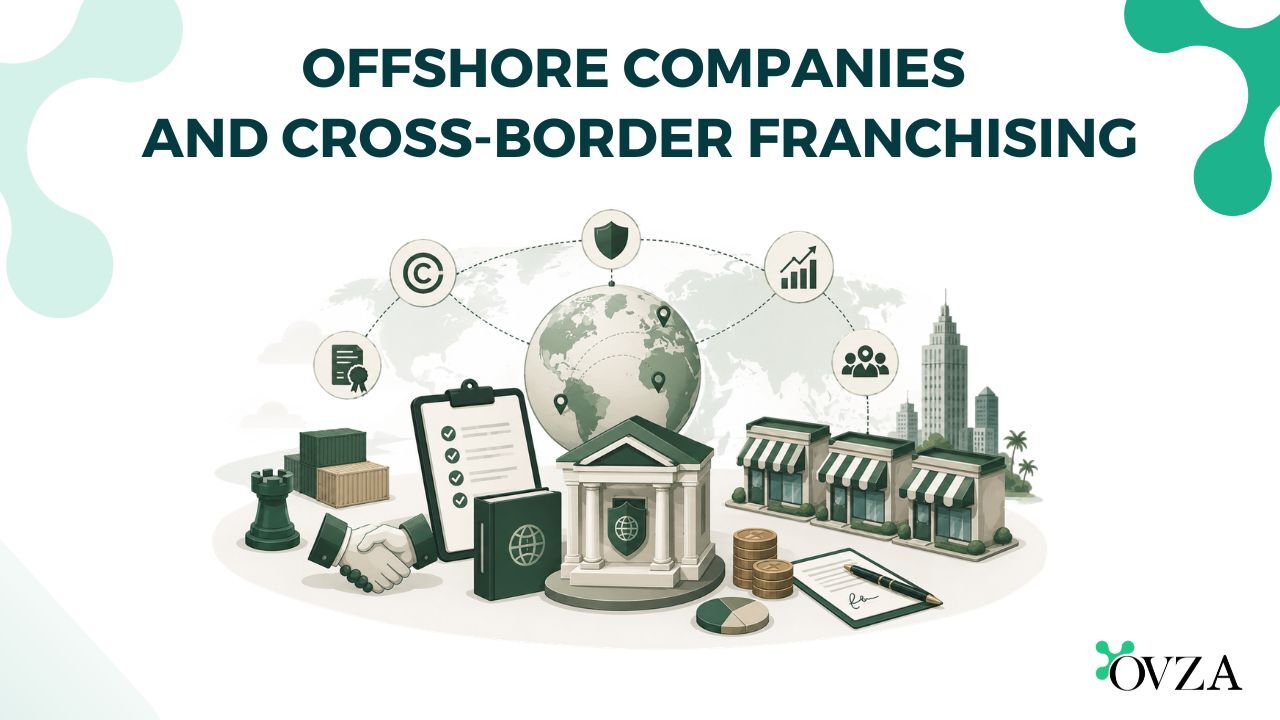
Franchising has become an important strategy for expanding retail, food and beverage, hospitality, technology, and service brands into international markets. As a franchise network grows across multiple countries, however, managing trademarks, licensing agreements, royalty payments, regional operators, and local business activities can become increasingly complex. A well-designed corporate structure can help organize these different functions while supporting consistent governance across the wider franchise network.
For international franchisors, offshore companies and cross-border franchising can form part of a broader corporate strategy designed to separate intellectual property ownership from local operating activities. A dedicated corporate entity may be used to hold trademarks and other brand assets, enter into master franchise agreements, or manage international licensing arrangements. When properly structured and operated in accordance with applicable laws, these arrangements can provide a clearer framework for managing international commercial relationships and supporting long-term brand expansion.
- The Three-Tier Structure of International Franchising
- Centralizing Franchise Intellectual Property
- Managing Cross-Border Franchise Royalties
- Master Franchise Structures for International Expansion
- Offshore Companies and Cross-Border Franchise Structures
-
Comparing Direct Franchising and a Corporate Franchise Structure
- Tax and Compliance Considerations
- Supporting Global Brand Expansion
- Conclusion
The Three-Tier Structure of International Franchising
A cross-border franchise network may involve several corporate entities, each responsible for a particular aspect of the business. The exact structure depends on the size of the franchise network, the jurisdictions involved, the nature of the intellectual property, and the commercial relationships between the franchisor and franchisees.
A common structure can involve an intellectual property holding company, a regional or master franchise entity, and local operating companies. This approach allows the different functions of the franchise business to be organized within separate corporate entities while maintaining contractual and financial relationships between them.
| Tier | Corporate Role | Main Function |
| Tier 1 | Franchise IP Holding Company | Holds trademarks, brand assets, operating manuals, software, and other intellectual property where appropriate. |
| Tier 2 | Master Franchise or Regional Entity | Manages regional franchise relationships, development rights, training, and commercial coordination. |
| Tier 3 | Local Franchise Companies | Operate individual franchise locations and manage local employees, suppliers, customers, and day-to-day activities. |
This type of structure is not mandatory for every franchise business. Smaller brands may operate effectively through a single company, while larger international networks may benefit from separate entities for intellectual property, regional operations, and individual markets.
Centralizing Franchise Intellectual Property
Intellectual property is often one of the most valuable assets of a franchise system. Trademarks, logos, proprietary software, recipes, operating manuals, website content, domain names, designs, and other brand assets can represent significant long-term commercial value.
A franchisor may choose to hold certain intellectual property through a dedicated company rather than placing all of these assets directly within an operating company. The IP holding company can then license the relevant rights to regional entities, master franchisees, or local operating companies under formal agreements.
Centralizing intellectual property can make the ownership structure easier to manage as the franchise network expands. It may also simplify licensing arrangements because the same corporate owner can grant rights to different franchise partners while maintaining consistent standards for brand usage, quality control, and intellectual property management.
The ownership and licensing of intellectual property should always be supported by appropriate registrations, assignments, licensing agreements, and documentation. The legal effectiveness of an IP structure depends on the laws of the jurisdictions where the rights are registered, used, and enforced.
Managing Cross-Border Franchise Royalties
Royalty payments are a central part of many international franchise models. Local franchisees may pay initial franchise fees, ongoing royalties, marketing contributions, technology fees, or other amounts to a franchisor or master franchisee based on the terms of their agreements.
A dedicated regional or international corporate entity can help centralize the administration of these payments. Instead of managing separate commercial arrangements through multiple unrelated entities, a master franchise company may coordinate regional franchise agreements and receive payments according to documented contractual arrangements.
The tax treatment of cross-border royalties requires careful consideration. Depending on the countries involved, royalty payments may be subject to withholding taxes, transfer pricing requirements, indirect taxes, corporate income taxes, or other reporting obligations. Double taxation agreements may reduce withholding tax in certain circumstances, but treaty benefits depend on eligibility and the specific requirements of the relevant jurisdictions.
Master Franchise Structures for International Expansion
A master franchise arrangement allows a franchisor to grant rights to an independent company to develop and manage a particular territory. The master franchisee may be responsible for finding local franchisees, supporting new locations, providing training, managing regional marketing, and maintaining the franchisor’s operational standards.
For larger international brands, a master franchise holding company can provide a dedicated corporate vehicle for managing these regional rights. The entity may enter into the master franchise agreement with the brand owner and subsequently establish agreements with local franchisees within its assigned territory.
This approach can provide greater organizational clarity as a franchise system expands. It also allows the franchisor to maintain a contractual relationship with a regional partner rather than managing every local franchise agreement directly, while the master franchisee assumes responsibility for developing the network within its territory.
Offshore Companies and Cross-Border Franchise Structures
An offshore company may be incorporated as part of an international franchise structure for a variety of legitimate commercial reasons. These can include holding intellectual property, managing international licensing agreements, coordinating regional franchise activities, or serving as a holding company for subsidiaries and commercial investments.
The purpose of using an offshore company should be clearly defined before incorporation. The company should have appropriate corporate documentation, accounting records, contractual arrangements, and governance procedures that reflect its actual commercial role within the franchise network.
An international structure should also take into account where management activities occur, where employees and contractors are located, where intellectual property is developed and used, and where commercial services are performed. These factors can influence corporate tax residency, permanent establishment exposure, transfer pricing, and other cross-border tax considerations.
Comparing Direct Franchising and a Corporate Franchise Structure
| Business Area | Direct Franchising | Corporate Franchise Structure |
| Trademark Ownership | May remain directly with the main operating company | May be held by a dedicated IP entity where appropriate |
| Franchise Agreements | Managed directly by the primary franchisor | Can be managed through regional or master franchise entities |
| Royalty Administration | Payments handled directly by the franchisor | Payments may be coordinated through regional corporate entities |
| International Expansion | Central team manages multiple markets | Regional entities can support specific territories |
| Governance | Functions concentrated within fewer entities | Responsibilities can be separated between specialized entities |
| Asset Management | Commercial assets may sit alongside operating activities | Certain assets may be separated from day-to-day operations |
The appropriate model depends on the size and complexity of the franchise network. A corporate structure should provide genuine commercial value rather than creating unnecessary layers of administration.
Tax and Compliance Considerations
International franchise structures require careful attention to tax and regulatory compliance. Establishing an offshore company does not automatically eliminate tax obligations, and the location of incorporation does not by itself determine where franchise income or royalties are taxable.
Depending on the structure, relevant considerations may include withholding taxes on royalty payments, corporate tax residency, controlled foreign company rules, permanent establishment, transfer pricing, beneficial ownership reporting, economic substance requirements, and applicable tax treaties.
Where intellectual property is transferred between related companies, the transaction should be properly documented and supported by appropriate valuation and transfer pricing analysis where required. Related-party royalty arrangements should also reflect commercially reasonable terms and be supported by agreements that accurately describe the rights being granted.
Banks, registered agents, payment institutions, and other regulated providers may also conduct KYC and AML reviews of the companies involved. Maintaining accurate beneficial ownership information, corporate records, financial statements, and commercial agreements can help demonstrate the legitimate purpose and operational nature of the structure.
Supporting Global Brand Expansion
As a franchise network enters new markets, its corporate requirements can become increasingly sophisticated. Dedicated companies may support the management of intellectual property, master franchise rights, regional operations, licensing arrangements, marketing activities, and international investments.
A properly designed corporate framework can also make it easier to introduce strategic partners, establish joint ventures, transfer regional rights, or reorganize ownership as the franchise network develops. The structure should remain flexible enough to accommodate growth while maintaining clear responsibilities between the different companies involved.
International franchising therefore requires more than simply registering companies in different jurisdictions. The corporate structure should correspond with the commercial reality of the franchise system and provide a clear framework for ownership, licensing, operations, financial flows, and governance.
Conclusion
Offshore companies and cross-border franchising can provide international brands with a structured framework for managing intellectual property, master franchise arrangements, royalty flows, and regional expansion. By separating specific commercial functions into appropriately structured corporate entities, franchisors can create clearer relationships between brand ownership, regional management, and local franchise operations.
The effectiveness of any international franchise structure depends on its commercial purpose, contractual arrangements, tax treatment, intellectual property rights, and compliance with the laws of every relevant jurisdiction. Proper governance and documentation are particularly important when companies within the same group exchange intellectual property, services, or royalty payments.
As international franchise networks continue to expand, a well-organized corporate structure can provide the flexibility needed to manage new markets while maintaining consistent oversight of valuable brand assets and commercial relationships. The objective is not simply to establish an offshore entity, but to build a practical international framework that supports sustainable growth and responsible global expansion.

Add OVZA to Google Preferred Sources
Make OVZA your preferred source to ensure you can easily discover our latest insights, research, and trusted content directly through Google.

Disclaimer: The information provided on this website is intended for general reference and educational purposes only. While OVZA makes every effort to ensure accuracy and timeliness, the content should not be considered legal, financial, or tax advice.