La création d'une entité commerciale internationale exige la mise en place d'une représentation structurée afin de garantir son statut juridique et de se conformer aux exigences légales locales. Les montages transfrontaliers font souvent appel à des prestataires de services tiers pour répondre aux obligations légales de présence, satisfaire aux exigences de résidence des administrateurs ou gérer les communications officielles dans plusieurs juridictions.
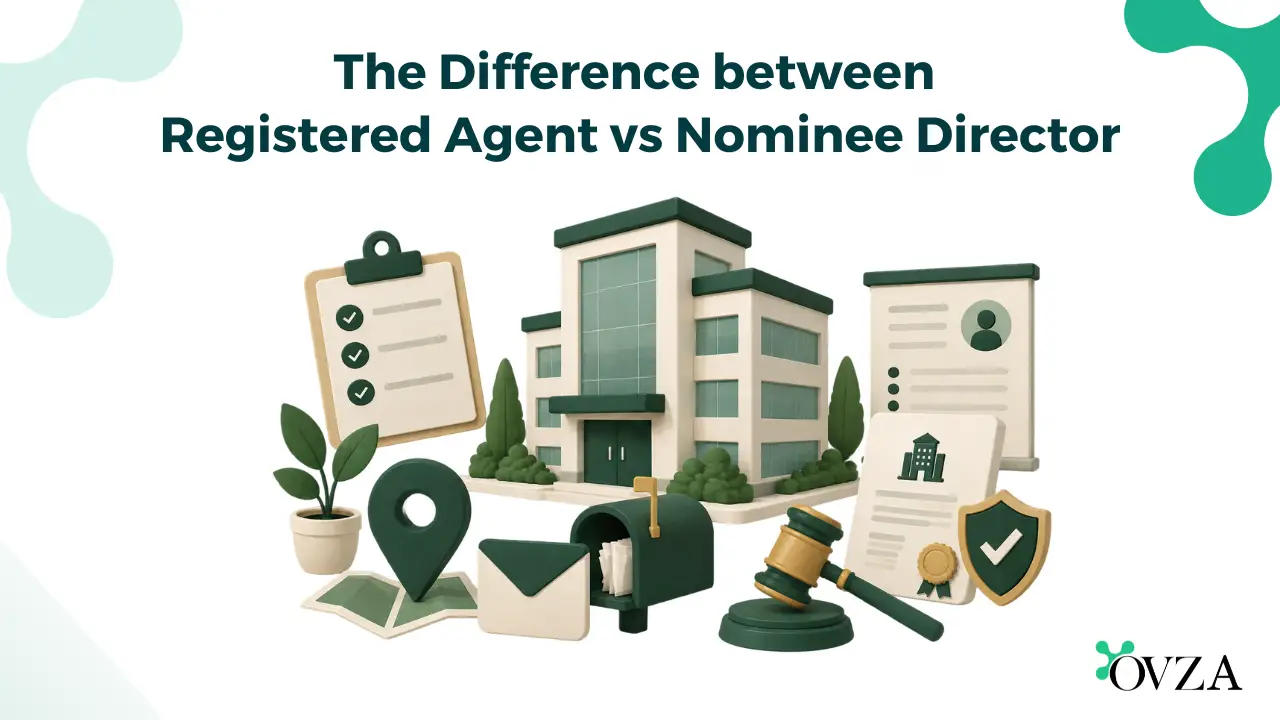
Deux fonctions de représentation souvent confondues en droit des sociétés internationales sont celles d'agent enregistré et d'administrateur désigné. Bien que ces deux entités agissent en tant que représentants légaux désignés au sein d'une structure de société internationale, leurs fonctions sont fondamentalement différentes. L'agent enregistré sert exclusivement de point de contact administratif, tandis que l'administrateur désigné siège officiellement au conseil d'administration de la société.
Conformément aux normes internationales de gouvernance d'entreprise 2026, il est essentiel pour les propriétaires d'entreprises transfrontalières de bien distinguer la représentation administrative de la gouvernance du conseil d'administration. Une définition précise de ces rôles permet d'éviter les malentendus opérationnels, de protéger les actifs du bénéficiaire effectif et de garantir le respect intégral des réglementations internationales en matière de lutte contre le blanchiment d'argent et de substance économique.
Qu'est-ce qu'un agent enregistré ?
Un agent enregistré, L'agent résident, également appelé agent domicilié ou fournisseur de siège social selon la juridiction, est un prestataire de services aux entreprises réglementé, tenu par la loi d'avoir une présence physique dans le lieu d'immatriculation de l'entité. Il assure la liaison administrative officielle entre la société et les autorités judiciaires ou administratives locales.
La principale fonction d'un agent enregistré est de recevoir la correspondance officielle, les documents légaux et les actes de procédure au nom de l'entreprise. L'agent enregistre et transmet ces documents aux représentants désignés de l'entreprise, tout en tenant à jour les registres internes de conformité requis.
Un agent enregistré agit uniquement en tant que point de contact administratif externe. Il ne détient aucun pouvoir de gestion, aucun droit de vote, aucune participation au capital et aucune capacité exécutive pour signer des accords commerciaux ou gérer les comptes financiers de l'entreprise.
Qu'est-ce qu'un réalisateur nominé ?
Un directeur nommé Il s'agit d'une personne physique ou morale agréée, désignée officiellement au conseil d'administration de la société pour agir au nom du bénéficiaire effectif ultime ou de l'actionnaire majoritaire. Cette nomination est officiellement inscrite au registre légal des administrateurs.
Puisqu'un administrateur désigné est officiellement nommé au conseil d'administration, ce rôle implique des responsabilités statutaires d'administrateur. Le recours à des administrateurs désignés est souvent motivé par la volonté de satisfaire aux exigences locales de résidence des administrateurs, de faciliter l'application des réglementations locales en matière de substances illicites ou de préserver la confidentialité des informations figurant dans les registres publics consultables.
Bien qu'un administrateur désigné détienne l'autorité formelle de la société en vertu de ses statuts, le contrôle opérationnel est généralement assuré par des accords de gouvernance contractuels. Ceux-ci comprennent généralement une convention d'administrateur désigné, une lettre de démission pré-signée et non datée, ainsi qu'une procuration générale déléguant les pouvoirs opérationnels quotidiens au bénéficiaire effectif.
Obligations légales et exposition fiduciaire
Un agent enregistré exerce ses fonctions dans le cadre d'un mandat légal et contractuel strictement défini. Il n'est tenu à aucune obligation de gestion fiduciaire envers la société, ses actionnaires ou ses bénéficiaires effectifs. Ses obligations sont administratives et consistent principalement à maintenir un siège social enregistré, à acheminer le courrier officiel et à respecter les obligations de connaissance du client (KYC) et de tenue des registres des bénéficiaires effectifs.
Un administrateur désigné, en revanche, est un dirigeant officiel de la société, soumis au droit des sociétés. En vertu de la common law et des principes statutaires, les administrateurs ont des obligations fiduciaires envers la société, notamment un devoir de diligence, un devoir de loyauté et l'obligation d'agir de bonne foi dans l'intérêt supérieur de la société.
Même lorsqu'il agit en qualité de mandataire dans le cadre d'une convention d'indemnisation, un administrateur ne peut se soustraire entièrement à ses obligations légales en matière de solvabilité de l'entreprise, de conformité aux réglementations anti-blanchiment d'argent et de bonne exécution des fonctions du conseil d'administration. La responsabilité d'un administrateur mandataire est donc nettement plus élevée que celle d'un prestataire de services administratifs.
Autorité et prise de décision au sein de l'entreprise
Les pouvoirs d'exécution d'une société diffèrent fondamentalement entre un agent enregistré et un administrateur désigné. Un agent enregistré ne dispose d'aucun pouvoir d'exécution commerciale. Il ne peut ni conclure de contrats au nom de la société, ni ouvrir ou gérer de comptes bancaires, ni gérer les actifs de la société, ni donner d'instructions opérationnelles.
Un administrateur désigné possède l'intégralité des pouvoirs statutaires du conseil d'administration. Il peut signer des résolutions, conclure des accords commerciaux et superviser les transactions de l'entreprise lorsque les résolutions du conseil d'administration ou les statuts l'y autorisent.
Pour prévenir toute action non autorisée, les bénéficiaires effectifs limitent généralement les pouvoirs d'un mandataire désigné au moyen d'instruments de gouvernance formels. Une procuration générale permet au bénéficiaire effectif ou aux gestionnaires désignés de gérer directement les affaires et les comptes bancaires, sans nécessiter l'intervention constante du conseil d'administration pour les opérations courantes.
Agent enregistré vs. administrateur désigné : principales différences
| La Gouvernance De Vecteur | Registered Agent | Directeur candidat |
| Rôle principal | Point de contact légal et administratif | Membre officiellement nommé du conseil d'administration |
| Classification juridique | Prestataire de services administratifs externes | Cadre interne (membre du conseil d'administration) |
| Exigence légale | Obligatoire dans presque toutes les juridictions | Facultatif (sauf si la législation locale en matière de substances l'exige) |
| Niveau de devoir fiduciaire | Aucune (Tâches contractuelles et administratives uniquement) | Obligation fiduciaire élevée (devoir de loyauté et de diligence) |
| Visibilité du registre public | Inscrit publiquement comme agent statutaire / bureau | Inscrit au registre officiel des administrateurs |
| Autorité commerciale et bancaire | Autonomie nulle (ne peut ni signer de contrats ni gérer de fonds) | Pouvoirs d'administration complets (délégués par procuration au bénéficiaire effectif) |
| Risque de responsabilité juridique | Limité aux obligations de conformité administrative et de connaissance du client | Sous réserve des responsabilités légales des administrateurs et des règles d'insolvabilité |
Gouvernance stratégique et meilleures pratiques
Le choix du moment opportun pour recourir à chaque service dépend de la législation locale en matière de droit des sociétés et des exigences opérationnelles. La désignation d'un agent enregistré est obligatoire pour la création et le maintien d'une entité dans la quasi-totalité des juridictions internationales. Sans agent enregistré, une entité ne peut ni conserver son statut d'agent en règle ni satisfaire aux exigences légales locales en matière d'immatriculation.
Le recours aux services d'administrateurs désignés est ponctuel lorsqu'une juridiction exige la présence d'un administrateur résident local afin de satisfaire aux règles de résidence fiscale ou de substance économique des entreprises. Ces services sont également utilisés lorsque les bénéficiaires effectifs préfèrent que leur nom ne figure pas dans les bases de données publiques des dirigeants consultables.
Afin de conserver un contrôle opérationnel optimal, les bénéficiaires effectifs ayant recours à des services de prête-nom doivent s'assurer que tous les accords de gouvernance sont dûment signés avant la constitution de la société. La mise en place de canaux de communication documentés, de matrices d'autorisation claires et de procurations définies garantit le bon fonctionnement de l'entreprise tout en respectant l'ensemble des obligations réglementaires locales.
Conclusion
Il est essentiel de bien distinguer un agent enregistré d'un administrateur désigné pour bâtir une structure d'entreprise internationale conforme à la réglementation. L'agent enregistré assure la liaison légale obligatoire avec les registres des sociétés et les tribunaux locaux, sans toutefois détenir de pouvoir exécutif. L'administrateur désigné remplit les obligations formelles du conseil d'administration lorsque les règles locales de substance ou de résidence l'exigent, agissant en tant que dirigeant soumis aux obligations légales d'un administrateur. La séparation de la représentation administrative et de la gouvernance d'entreprise garantit une exécution rigoureuse des opérations au-delà des frontières juridictionnelles.

Ajouter OVZA aux sources préférées de Google
Faites d'OVZA votre source privilégiée pour pouvoir facilement découvrir nos dernières analyses, recherches et contenus fiables directement via Google.

Avertissement : Les informations fournies sur ce site Web sont destinées à des fins de référence et d’information générales uniquement. Bien qu’OVZA mette tout en œuvre pour garantir l’exactitude et l’actualité des informations, leur contenu ne saurait être considéré comme un avis juridique, financier ou fiscal.