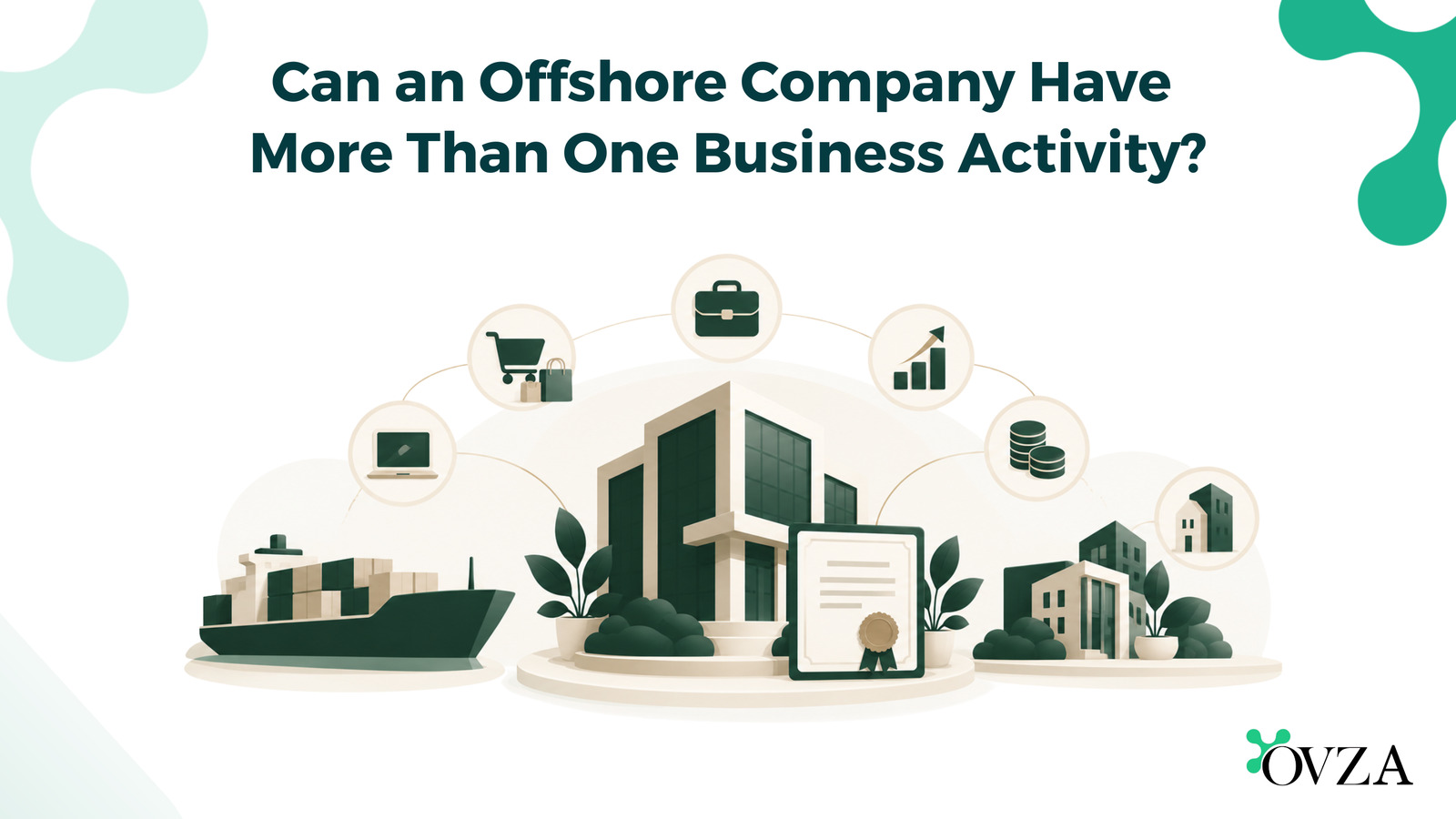
Launching an international business entity often raises questions regarding the legal scope of commercial operations a single company can execute. International business owners frequently seek to combine distinct revenue streams such as e-commerce, international consulting, intellectual property licensing, and passive asset holding within one corporate vehicle. Legal frameworks across major offshore jurisdictions generally permit a single offshore company to engage in multiple business activities simultaneously, provided those operations remain lawful and comply with local statutory regulations.
Historically, company legislation mandated that corporate entities define specific commercial objectives within their constitutional documents, limiting operations strictly to those stated activities. Modern corporate statutes have largely eliminated these restrictions by introducing general commercial objects clauses that grant entities unrestricted corporate capacity. This statutory flexibility allows a single offshore entity to operate across diverse commercial sectors without requiring separate incorporation for every new business venture.
However, while corporate law grants broad operational capacity, commercial execution introduces practical boundaries that require careful structural planning. Combining unrelated business activities within one company can impact municipal licensing rules, statutory financial reporting, territorial economic substance classifications, and commercial banking relationships. Evaluating whether to operate multiple business lines through a single entity or divide them into separate corporate vehicles is an essential step in cross-border entity administration.
Memorandum of Association and the Objects Clause
The legal authority of an offshore company to conduct multiple business activities originates from its constitutional documents, specifically the Memorandum of Association. Under traditional common-law doctrines, an entity acting outside its specified statutory objects risked committing ultra vires acts, rendering commercial contracts void and unenforceable. Modern offshore corporate legislation has removed this doctrine by granting companies the full legal capacity and powers of a natural person.
In jurisdictions such as the British Virgin Islands, the Cayman Islands, Delaware, and Seychelles, companies can adopt a broad objects clause stating that the entity may engage in any lawful act or activity. This general commercial capacity enables the company to contract across multiple industries, execute varied commercial transactions, and shift business models over time without amending statutory incorporation filings. The company’s board of directors maintains full legal authority to approve new commercial operations under this broad statutory framework.
An exception to unrestricted corporate capacity applies when an entity engages in regulated commercial activities that require specialized statutory licensing. Financial services, banking, insurance, fund management, trust administration, and gaming are subject to strict regulatory oversight across international financial centers. An offshore company incorporating a general objects clause cannot conduct regulated financial activities alongside standard commercial operations without securing specific regulatory authorizations and maintaining separate statutory licensing.
Licensing, Regulatory Boundaries, and Local Substance
While classical offshore jurisdictions permit unrestricted business activities under a general Memorandum of Association, certain regional financial hubs enforce explicit activity classifications. Jurisdictions utilizing trade licensing systems such as international free zones in the United Arab Emirates or specialized corporate registries require entities to select specific commercial activity codes during incorporation. Operating outside those approved activity codes can result in municipal compliance fines, license suspension, or administrative penalties.
Combining multiple business activities within a single entity also impacts compliance under international economic substance regimes. Offshore jurisdictions enforcing economic substance rules require companies engaging in specific relevant activities such as distribution, headquarters operations, intellectual property holding, or shipping to demonstrate adequate local physical presence and expenditure. If a company combines a relevant substance activity with general commercial trading, it must satisfy economic substance tests for that specific activity.
Managing multiple operational lines within one company requires accurate statutory financial accounting and record-keeping. The board of directors must ensure that general ledgers, commercial invoices, contracts, and financial statements clearly distinguish between revenue generated across different business activities. Proper accounting segregation prevents tax reporting ambiguities, satisfies statutory bookkeeping mandates, and ensures that local tax authorities or corporate registries can evaluate the entity’s commercial standing accurately.
Operational and Banking Scope Restrictions
Although an offshore company may legally hold capacity for multiple business activities, financial institutions enforce their own operational restrictions during corporate account maintenance. Commercial banks, payment processors, and merchant acquirers evaluate corporate risk profiles based on specific industry classifications and transaction types. Adding unrelated business lines to an existing corporate structure can trigger internal risk reviews if the new activities deviate from the company’s established operational profile.
Financial institutions assign risk ratings to specific commercial activities, distinguishing low-risk consulting or software services from higher-risk international trade, crypto-assets, or precious metals dealing. Combining high-risk commercial operations with low-risk business activities within a single bank account can cause the financial institution to apply its highest risk rating to the entire company. This consolidated risk classification can lead to increased transaction monitoring, processing delays, elevated banking fees, or account termination.
To maintain stable banking relationships, offshore entities operating multiple business activities must provide clear commercial documentation supporting each revenue stream. Directors should notify banking officers before introducing new commercial product lines or receiving high-volume transfers from previously undisclosed business operations. Maintaining transparent operational alignment between corporate contracts, customer invoices, and banking profiles ensures uninterrupted processing across global payment networks.
Risk Segregation: Multi-Activity Entity vs. Multi-Entity SPV Models
The primary disadvantage of conducting multiple business activities through a single offshore entity is the exposure to cross-entity operational liability. In a single-entity structure, assets generated by a stable, low-risk business activity such as real estate holding or software licensing are legally exposed to claims arising from a higher-risk commercial trading venture. If one operational line encounters contractual litigation, debt default, or product liability claims, all corporate assets remain available to satisfy those legal judgments.
To protect valuable assets from operational hazards, international corporate planners frequently utilize a multi-entity Special Purpose Vehicle (SPV) framework instead of a single multi-activity company. Under an SPV model, high-risk trading activities, intellectual property holdings, and real estate assets are allocated into separate corporate entities controlled by a central parent holding company. This structural division isolates operational liabilities within individual corporate shells, preventing legal claims from spreading across the broader corporate group.
| Operational Vector | Single Multi-Activity Entity | Multi-Entity SPV Framework |
| Incorporation Costs | Lower initial setup & reduced license maintenance fees | Higher initial formation & ongoing registry overhead |
| Administrative Burden | Consolidated statutory registers & single annual filing | Independent statutory registers & separate annual filings |
| Liability Exposure | High liability cross-contamination across all activities | Isolated liability ring-fenced within individual entities |
| Banking Profile | Consolidated risk rating applied to all revenue streams | Segmented bank accounts matched to specific activity risks |
| Asset Protection | Core assets exposed to commercial trading claims | Passive holdings protected from operational trading debts |
Conclusion
Operating an offshore company with multiple business activities provides a flexible, cost-effective framework for managing diverse commercial ventures under one corporate entity. Unrestricted general commercial objects clauses grant modern offshore companies full legal capacity to pursue varied revenue streams without constant constitutional amendments. By evaluating licensing rules, economic substance classifications, and banking risk scope, business owners can determine whether a single multi-activity company or a segregated multi-entity structure best supports their international commercial objectives.

Add OVZA to Google Preferred Sources
Make OVZA your preferred source to ensure you can easily discover our latest insights, research, and trusted content directly through Google.

Disclaimer: The information provided on this website is intended for general reference and educational purposes only. While OVZA makes every effort to ensure accuracy and timeliness, the content should not be considered legal, financial, or tax advice.