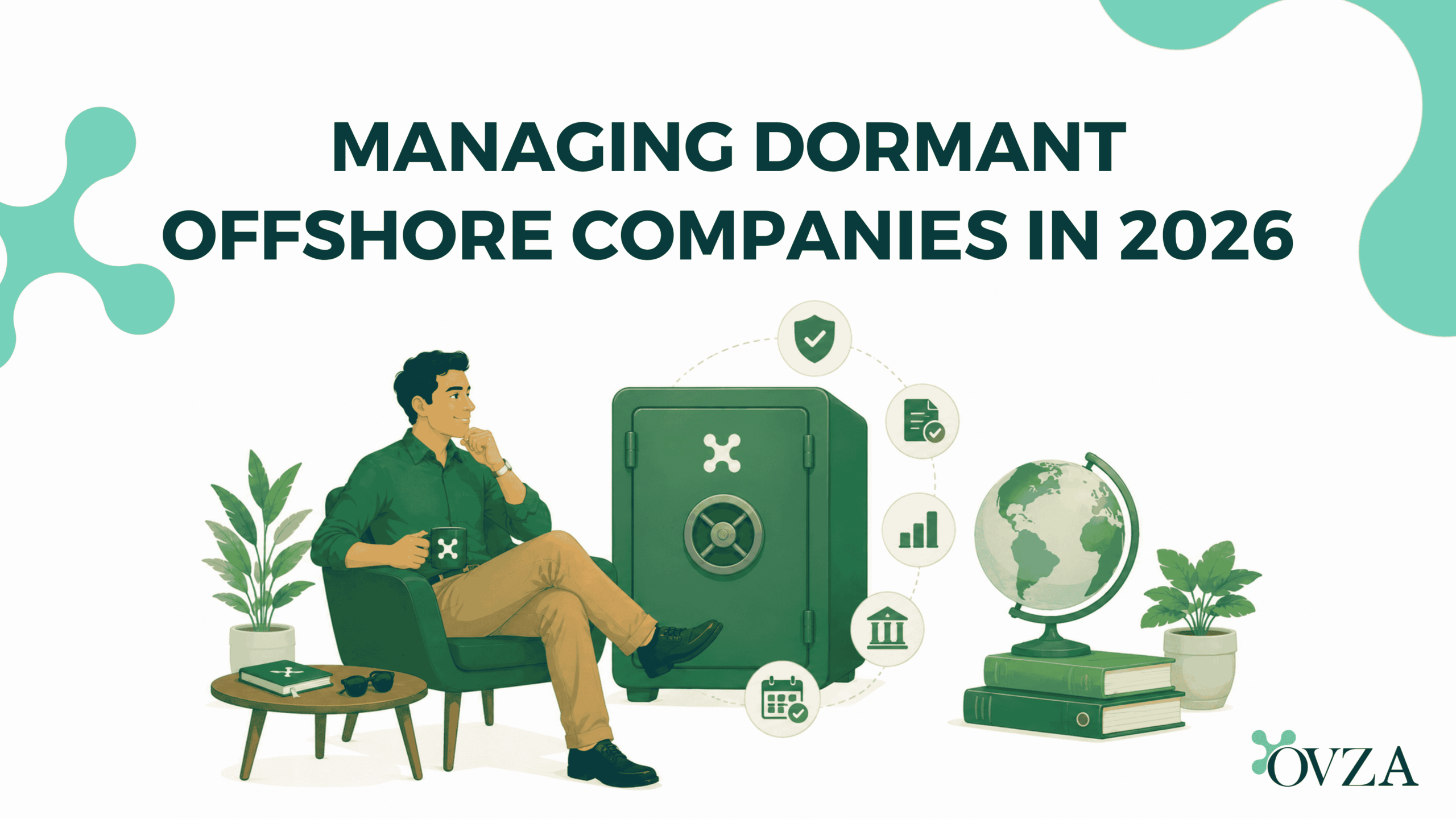
Dormant offshore companies continue to play an important role in international business structuring. These entities are legally incorporated companies that remain inactive for a period of time while remaining fully compliant and available for future business use. For many international entrepreneurs and investors, dormant companies provide flexibility, long-term planning opportunities, and operational readiness for future expansion.
A dormant entity remains a legally recognized corporate structure that continues to require proper maintenance and governance even during periods of inactivity. , it is a registered legal person with continuous administrative obligations. With proper oversight, it serves as a highly efficient tool for long-term operational planning, ensuring that a valuable corporate asset is always ready for seamless market deployment.
Understanding the utility of a dormant company involves looking at its entire lifecycle. Whether an entity is sitting in stasis waiting for a future project or is being held after a major deal has concluded, its long-term viability is defined by a consistent compliance record.
The Strategic Value of “Vintage” Entities
Maintaining a dormant offshore company can offer significant long-term strategic advantages. Many international businesses preserve older entities because established corporate history often creates smoother banking relationships, stronger credibility, and greater operational flexibility. These “seasoned” companies can later be used for future expansion, holding intellectual property, international investments, or launching new subsidiaries without the delays associated with creating a completely new structure.
In the modern international banking and corporate landscape, financial institutions frequently view an established entity with a multi-year history of stability and consistent standing more favorably than a newly incorporated firm. These seasoned entities are highly effective for:
- Cross-border scalability: Rapidly scaling operations across multiple jurisdictions.
- International flexibility: Holding intellectual property or real estate assets securely.
- Asset structuring efficiency: Acting as a ready-made parent structure for emerging corporate subsidiaries.
By preserving such an entity, business owners can efficiently navigate the setup delays associated with fresh incorporations when immediate market opportunities arise. However, the viability of this strategy is strictly contingent upon the company being kept in Good Standing. This necessitates proactive governance, including the timely payment of government renewal fees and the submission of all required, albeit nil, statutory returns to ensure the corporate structure remains fully protected.
The Path to Operational Readiness: Re-activation vs. Re-incorporation
When an entrepreneur or corporate group decides to utilize a company that has been inactive for several years, a strategic choice arises: is it more advantageous to re-activate the existing dormant entity or simply incorporate a new one? The decision involves balancing administrative timelines, historical value, and long-term onboarding efficiency.
Re-activating a company that has lapsed due to administrative silence requires bringing its corporate records completely up to date. Depending on the jurisdiction, this process typically involves a standard restoration framework, settling any outstanding government fees, and filing backdated compliance documents to restore the entity to active status on the corporate registry.
Conversely, starting fresh with a new incorporation offers a completely clean slate. However, a new entity lacks the seasoned profile of a vintage company and requires starting the corporate onboarding process entirely from scratch. Choosing the right path depends heavily on the quality of the company’s historical records. Partnering with a specialized corporate service provider like OVZA ensures that your entity’s history is structured smoothly, minimizing additional compliance reviews during the transition.
| Re-activating a Vintage Entity | Incorporating a New Entity |
| Retains historical longevity and institutional trust. | Starts with a clean historical slate. |
| Requires updating backdated files and standard restoration steps. | Forgoes the immediate benefits of a seasoned “vintage” corporate profile. |
Modern Compliance Standards & Asset Protection
The global shift toward corporate transparency has encouraged more proactive corporate maintenance practices. Frameworks such as the OECD’s Common Reporting Standard (CRS) and updated Economic Substance guidelines now regularly request that even inactive companies complete annual declarations.
While a dormant company is generally exempt from the robust operational substance requirements of an active trading firm, owners are encouraged to submit annual confirmation of its inactive status. Proactive governance is highly recommended to avoid administrative complications. Keeping core corporate details updated such as retaining a valid Registered Office and keeping the Register of Members current ensures the legal integrity of the structure remains perfectly intact.
Furthermore, maintaining active administration prevents assets held by the company (such as bank balances, intellectual property, or real estate) from facing ownership ambiguities with local registries. In 2026, consistent, organized documentation is the key to ensuring that corporate assets remain fully retrievable, legally compliant, and ready for future deployment.
Achieving Smooth Onboarding and Banking Success
Banks increasingly prioritize transparency, documentation, and ongoing compliance when reviewing dormant or re-activated entities for new corporate accounts. Financial institutions do not inherently avoid dormant companies; rather, they request clear, verifiable continuity.
When preparing a dormant or re-activated company for international banking, onboarding success depends on presenting a well-documented corporate history. Because financial institutions look closely at the ultimate beneficial owners, providing updated Know Your Customer (KYC) details and a clear narrative of the company’s inactive years will prevent enhanced due diligence bottlenecks.
By treating a dormant entity with the same administrative care as an active trading structure, you position your business for seamless corporate approvals and long-term banking success.
Conclusion
A dormant offshore company is a sophisticated tool of convenience and strategy, provided it is managed with regular professional oversight. It serves as an excellent placeholder in the global market, offering unmatched agility, international flexibility, and asset protection for future ventures.
The future of international corporate structuring is defined by proactive governance. Business owners who view their dormant entities as valuable components of a broader legal structure worthy of regular check-ins and professional maintenance will find them to be incredibly powerful assets when the time comes to activate them.
At OVZA, we specialize in managing corporate structures with total compliance precision, ensuring your entities remain in perfect standing and ready to support your global growth whenever opportunity strikes.
Disclaimer: The information provided on this website is intended for general reference and educational purposes only. While OVZA makes every effort to ensure accuracy and timeliness, the content should not be considered legal, financial, or tax advice.