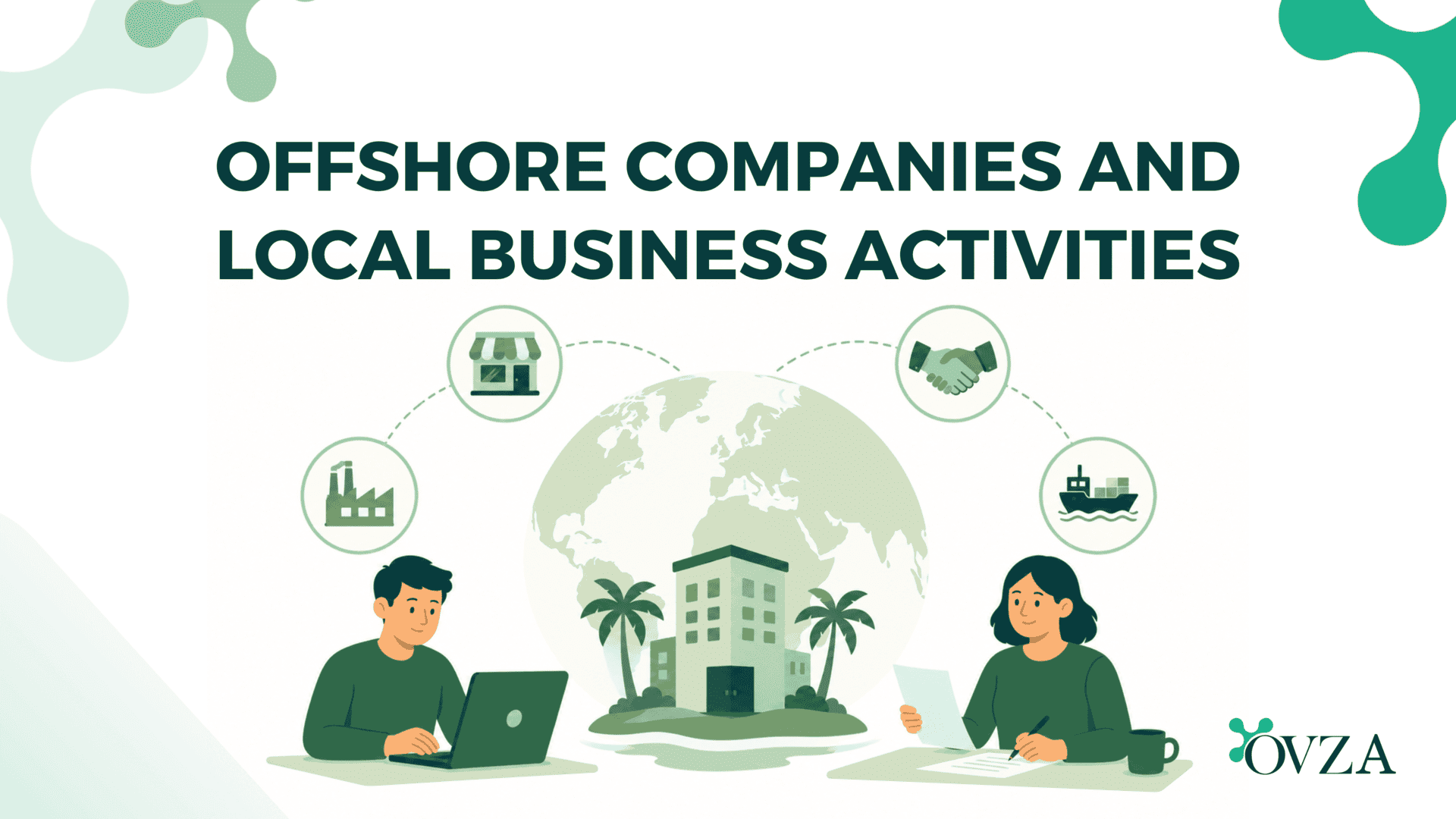
One of the most common misconceptions about offshore companies is that they can operate freely within the country where they are incorporated. In reality, most offshore jurisdictions distinguish between international business activities and local commercial activities.
Understanding this distinction is important for maintaining compliance, preserving the intended benefits of an offshore structure, and avoiding unnecessary legal or tax complications. Before expanding internationally or establishing an offshore company, business owners should understand where their company can legally operate and when additional licensing or local entities may be required.
International Business vs Local Business Activities
Offshore companies, often referred to as International Business Companies (IBCs), are generally established to conduct business outside the jurisdiction where they are incorporated.
Although the specific rules vary between jurisdictions, offshore companies are commonly used for activities such as international consulting, cross-border trading, holding investments, intellectual property ownership, and global e-commerce.
Many offshore jurisdictions restrict these companies from conducting business directly with local residents unless additional licensing or regulatory requirements are met.
For example, a company incorporated in the British Virgin Islands may be able to provide services to clients worldwide while facing restrictions on conducting business within the local BVI market itself.
Why Do These Restrictions Exist?
Many offshore jurisdictions operate under territorial or low-tax systems designed to support international business rather than domestic commerce.
As a result, offshore companies are often expected to generate their income from activities conducted outside the jurisdiction where they are incorporated. If a company begins carrying out significant local business activities, it may become subject to additional licensing requirements, local taxation, or different regulatory obligations depending on the jurisdiction.
Because these rules differ from one country to another, businesses should always confirm the specific requirements before entering a local market.
Typical Activities
| Usually Permitted | May Require Additional Approval or a Local Entity |
| Providing services to overseas clients | Selling products directly to local consumers |
| International consulting | Operating a local retail store |
| Cross-border e-commerce | Providing regulated local financial services |
| Holding investments or intellectual property | Carrying out ongoing domestic commercial activities |
| International trading and invoicing | Hiring staff for local commercial operations where restricted |
Administrative Presence vs Commercial Presence
Having an offshore company does not mean you cannot maintain any presence in the jurisdiction where it is incorporated.
Most offshore jurisdictions allow companies to carry out administrative functions that support the business without treating those activities as local trading.
These administrative activities commonly include maintaining a registered office, appointing a registered agent, working with local accountants or legal advisers, keeping statutory company records, and holding board meetings where required under local regulations.
These functions help demonstrate good corporate governance while remaining separate from commercial trading within the local market.
Understanding Permanent Establishment Risks
Businesses should also consider whether their activities in another country could create what is known as a Permanent Establishment (PE).
A Permanent Establishment may arise when a company has a sufficient physical or operational presence in another country, allowing that country to tax part of the company’s profits.
可能设立常设机构的例子包括在外国司法管辖区维持办事处、雇用员工或开展持续的商业运营。
Why Proper Planning Matters
由于不同国家和税收协定的规则有所不同,国际经营的企业在拓展新市场之前应寻求专业建议。
Proper planning can help businesses:
- maintain compliance with local regulations
- reduce unexpected tax exposure
- support smoother banking relationships
- avoid unnecessary licensing issues
- build scalable international business structures
Whether you’re establishing an offshore company, expanding into new markets, or reviewing your existing structure, understanding where commercial activities can legally take place is an important part of long-term international growth.
结论
Offshore companies are generally designed to support international business rather than local commercial activities within the jurisdiction where they are incorporated. While administrative functions are usually permitted, conducting domestic business may require additional approvals, licensing, or a separate local entity depending on the jurisdiction.
Understanding these distinctions helps businesses remain compliant while making the most of international corporate structures.
在 OVZA, we help entrepreneurs and internationally active businesses establish compliant offshore companies, select suitable jurisdictions, and navigate ongoing corporate and regulatory requirements. Whether you’re launching a new international venture or expanding an existing business, our team provides practical guidance to help you build a structure that supports.