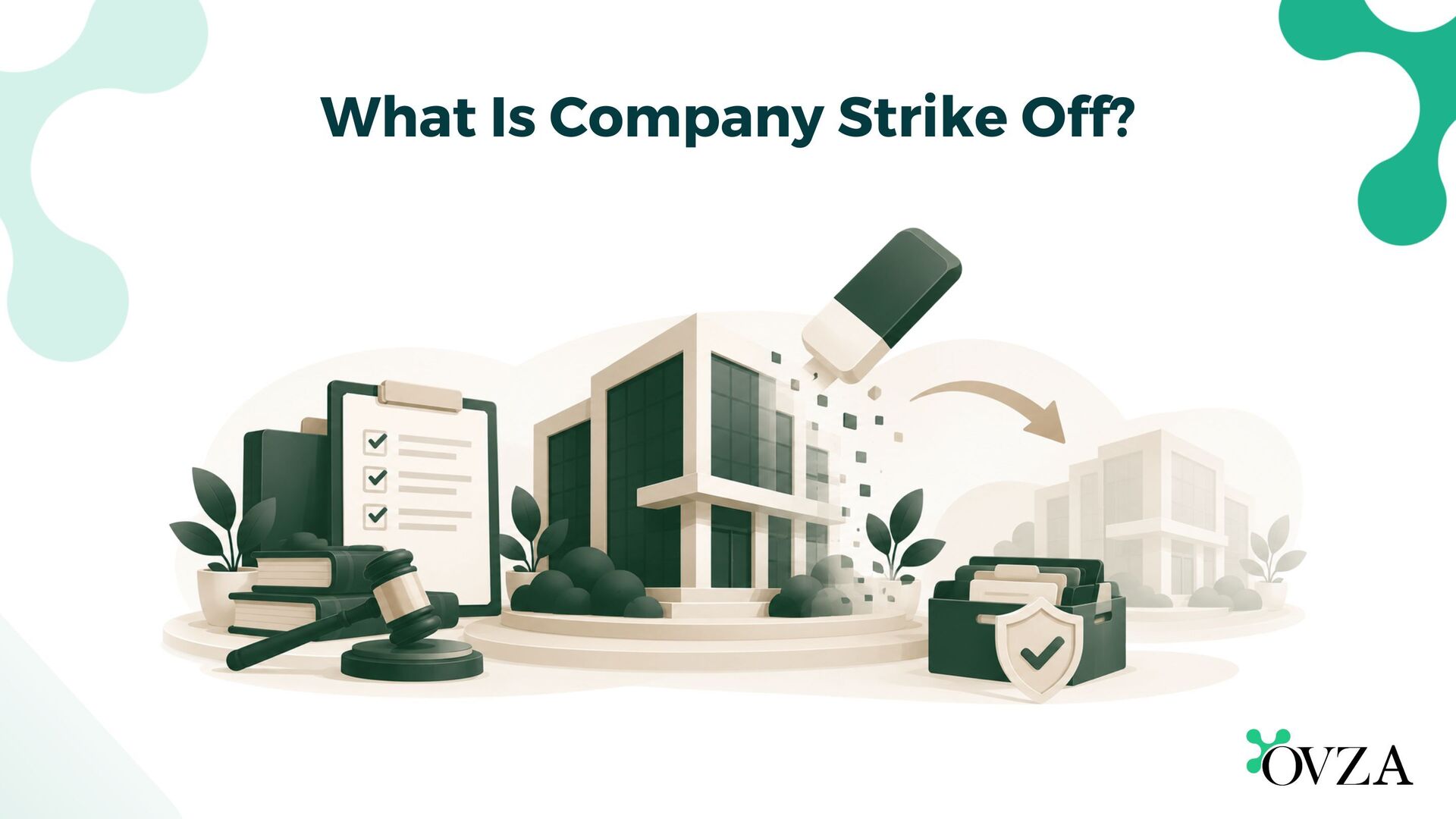
Managing international corporate portfolios requires a clear understanding of the statutory lifecycles governing offshore entities across different global jurisdictions. A company strike off refers to the formal administrative procedure whereby a corporate registry removes an entity’s name from the official register of business companies. This action fundamentally alters the company’s legal status, suspending its authority to conduct business under the law of its host state.
While many investors assume that strike off is equivalent to an intentional corporate closure, it is often initiated administratively by the corporate registrar due to unfulfilled statutory duties. The procedure acts as a regulatory mechanism designed to clear inactive, non-compliant, or dormant entities from the public ledger. Understanding how and why this process occurs helps international business owners protect their commercial assets and maintain active corporate standing.
For family offices, corporate groups, and high-net-worth investors, an unexpected strike off can disrupt international trading, freeze asset holdings, and create unexpected administrative delays. Because cross-border entities frequently hold equity in operating subsidiaries, real estate, or IP portfolios, maintaining an accurate picture of registry standing is essential. Proactive entity management guarantees that corporate structures remain fully operational across all active jurisdictions.
Developing a thorough understanding of company strike off also empowers business owners to plan orderly corporate exits when an entity reaches the end of its commercial lifespan. Rather than allowing a company to lapse into administrative default, investors can choose structured pathways that protect directors and shareholders from ongoing liabilities. Comparing administrative strike off with formal voluntary liquidation reveals the most secure strategy for managing international corporate governance.
Administrative Triggers and Registry Causes
The most common catalyst for an administrative strike off is the non-payment of mandatory government license fees and statutory registry maintenance dues. Offshore corporate registries enforce strict annual renewal schedules, issuing administrative notices when fee deadlines are missed. If an entity fails to settle its outstanding government fees within the designated grace period, the registrar moves the company from active standing to default status before executing a formal strike off.
Beyond fee payments, maintaining a licensed registered agent and registered office address within the jurisdiction of incorporation is a continuous statutory mandate. If a registered agent resigns due to administrative reasons or non-payment, and the company fails to appoint a successor agent within the statutory timeframe, the corporate registry will flag the company. Without a registered office to receive official government notices, the registrar moves swiftly to strike the entity from the register.
Statutory compliance declarations also play a critical role in triggering registry enforcement actions. Modern offshore jurisdictions require companies to submit periodic compliance confirmations, such as economic substance declarations and statutory register updates. Omission of these mandatory filings signals to regulatory authorities that the entity is dormant or non-compliant, prompting automatic registry enforcement procedures that culminate in company strike off.
Prior to finalizing a strike off, corporate registries publish official notices in government gazettes or issue direct warnings to the company’s registered office. These statutory notice periods provide directors and shareholders with a final opportunity to resolve outstanding fees or filing omissions. Understanding these warning signals enables business owners to intervene promptly, correct administrative oversights, and preserve their entity’s active legal standing without operational disruption.
Legal and Operational Effects of Struck Off Status
The immediate consequence of a company strike off is the total suspension of the entity’s legal capacity and corporate signing authority. Once struck off, the company can no longer legally execute commercial agreements, acquire or sell assets, issue valid power of attorney instruments, or participate in judicial proceedings. Any corporate actions attempted by officers while the entity is in struck off status may be deemed void or legally unenforceable.
Financial institutions monitor public corporate registers closely and take immediate action upon learning that a client entity has been struck off. Banks and payment processors freeze associated corporate bank accounts, block incoming and outgoing wire transfers, and suspend active credit lines. Financial counterparties require an official Certificate of Good Standing before restoring account access, making entity reinstatement an urgent priority for active businesses.
Another major operational concern involves corporate property and high-value assets held directly by the struck off entity. Assets held in the name of a struck off company remain legally locked, preventing directors from transferring equity, selling real estate, or licensing intellectual property. In many jurisdictions, if a company remains struck off for an extended period or reaches formal dissolution, its underlying assets risk vesting in the state as ownerless property (bona vacantia).
Crucially, administrative strike off does not extinguish pre-existing legal liabilities or financial obligations accrued by the company, its directors, or its shareholders. Creditors retain the legal right to file claims against the entity, and regulatory bodies can enforce administrative penalties accrued prior to the strike off. Because strike off suspends corporate privileges without providing a legal discharge of liabilities, relying on passive default as a method of company closure carries ongoing structural risks.
Reinstatement Pathways and Voluntary Liquidation Alternatives
When a business owner needs to reactivate a struck off offshore entity, local corporate law provides structured restoration pathways. Depending on the jurisdiction and the duration of the strike off, an entity can be reinstated through an administrative restoration process or a formal application to the local High Court. Reinstatement restores the company’s legal status retrospectively, treating the entity as if it had remained continuously active on the official register.
The restoration workflow requires addressing all underlying administrative defaults that caused the initial strike off. The company must settle all accrued annual government license fees, pay outstanding administrative penalties, and ensure a licensed local registered agent is actively representing the entity. Once the corporate registry approves the restoration dossier, it issues an updated Certificate of Good Standing, allowing the company to unfreeze bank accounts and resume commercial operations.
For enterprises that have reached the end of their operational lifecycle and hold no remaining assets or liabilities, formal voluntary liquidation represents the gold standard for corporate wind-down. Unlike passive administrative strike off, voluntary liquidation is a structured legal process initiated by the company’s directors and shareholders. This controlled winding-up procedure ensures that all corporate affairs are formally concluded under the supervision of a qualified liquidator.
Appointing a qualified liquidator allows the company to settle remaining third-party obligations, distribute residual capital to equity owners, and obtain an official Certificate of Dissolution from the corporate registry. Achieving formal dissolution delivers absolute legal finality, fully discharging directors and shareholders from future claims or legacy liabilities. Choosing voluntary liquidation over passive strike off protects investor reputation and ensures complete compliance across international financial markets.
Comparative Overview of Entity Termination Pathways
Determining whether to restore a struck off entity, allow it to remain inactive, or execute a formal voluntary liquidation depends on the strategic goals of the enterprise. Business owners holding valuable commercial contracts, liquid bank balances, or underlying intellectual property must prioritize immediate restoration to preserve legal title. Leaving assets inside a struck off corporate vehicle exposes the portfolio to unnecessary legal complications and potential state forfeiture.
While allowing an unused entity to slip into administrative strike off might appear cost-effective initially, it creates long-term administrative exposure. Accrued registry penalties continue to accumulate on government ledgers, which can complicate future corporate incorporations or regulatory reviews for the underlying beneficial owners. Furthermore, institutional financial partners increasingly review historical director profiles, favoring investors who maintain clean compliance records across all corporate entities.
Professional corporate advisors typically recommend conducting an annual audit of multi-entity structures to identify redundant or dormant companies early. Where an entity is no longer required for international operations, initiating a formal voluntary liquidation provides clean, permanent closure. Conversely, if an inactive company is slated for future commercial projects, maintaining its annual registry fees and registered agent representation prevents the costly disruptions associated with court restoration procedures.
Reviewing the structural mechanics of each pathway highlights clear differences in cost, operational timeline, asset protection, and legal liability discharge. Comparing these options enables family offices and corporate executives to implement an entity management strategy that aligns with global compliance standards. The matrix below outlines the primary operational vectors across administrative strike off, formal voluntary liquidation, and corporate restoration:
| Governance Vector | Administrative Strike Off | Formal Voluntary Liquidation | Corporate Restoration |
| Primary Mechanism | Removal by Registrar for fee default or agent lapse | Solvency declaration & liquidator appointment | Registry or High Court restoration petition |
| Legal Capacity | Suspended; unable to contract or trade legally | Controlled capacity strictly to wind up corporate affairs | Fully restored retrospectively as if continuous |
| Banking Access | Frozen immediately by financial institutions | Managed by liquidator to distribute remaining funds | Unfrozen upon presenting Certificate of Good Standing |
| Asset Security | Assets locked; risk state forfeiture (bona vacantia) | Orderly, legal distribution of assets to shareholders | Full legal title and control restored to company |
| Liability Discharge | None; pre-existing liabilities and duties persist | Full legal discharge upon issue of Dissolution Certificate | Resolves past defaults and restores full governance |
Conclusion
Understanding company strike off allows international business owners to manage corporate lifecycles proactively and protect multi-jurisdictional assets. Maintaining active registered agent representation, fulfilling annual license fees, and submitting timely compliance declarations guarantees uninterrupted banking access and legal signing authority. Where an offshore entity has served its commercial purpose, executing a formal voluntary liquidation ensures orderly dissolution, protecting directors and investors from lingering legacy liabilities.

Add OVZA to Google Preferred Sources
Make OVZA your preferred source to ensure you can easily discover our latest insights, research, and trusted content directly through Google.

Disclaimer: The information provided on this website is intended for general reference and educational purposes only. While OVZA makes every effort to ensure accuracy and timeliness, the content should not be considered legal, financial, or tax advice.