1. Introduction
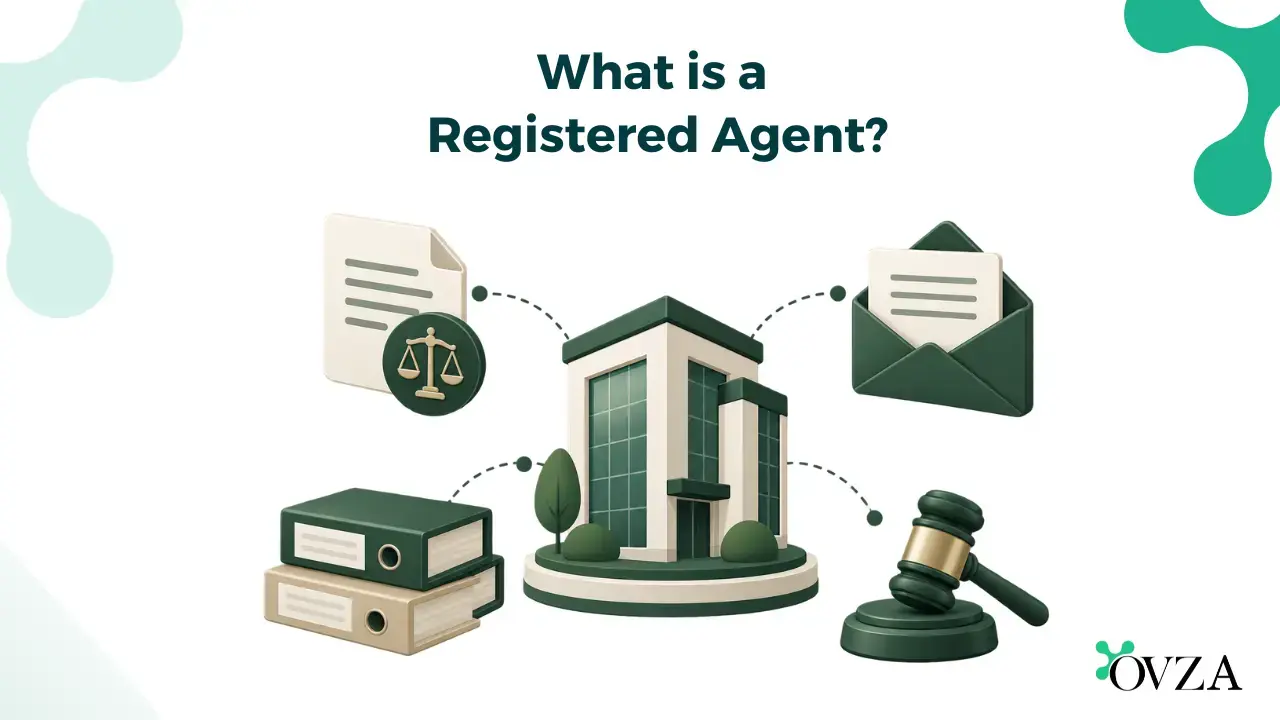
A registered agent is a person or professional corporate service provider appointed to perform specific statutory and administrative functions for a company. The exact role varies between jurisdictions, but it commonly includes maintaining or supporting the company’s registered office, receiving official documents, and facilitating communications with government authorities.
The registered agent should be distinguished from the company’s directors, shareholders, and beneficial owners. While directors are generally responsible for managing the company’s affairs, a registered agent’s role is ordinarily focused on statutory administration and communication. The precise division of responsibilities depends on the legislation and contractual arrangements applicable to the company.
In some international jurisdictions, the appointment of a registered agent is expressly required by company legislation. For example, the British Virgin Islands Business Companies Act provides that a company must have a registered agent at all times and restricts who may provide registered-agent services.
The concept should therefore be understood within its jurisdictional context. An international company considering incorporation should determine whether its chosen jurisdiction requires a registered agent, registered office, local representative, or another form of statutory corporate presence before proceeding with formation.
Legal Purpose
The primary legal purpose of a registered agent is to provide a reliable point of contact between the company and the relevant authorities or other parties entitled to communicate with the company through its registered address or agent. This helps ensure that statutory notices and official correspondence can be received and brought to the company’s attention.
The registered-agent function can be particularly important for companies whose shareholders or directors live outside the jurisdiction of incorporation. Maintaining a local statutory contact can help ensure that important documents are not missed simply because the company’s management operates from another country.
The precise statutory obligations differ between jurisdictions. In some systems, the agent’s responsibilities are closely prescribed by legislation, while in others they may be supplemented by a service agreement between the company and its corporate service provider.
This distinction is important when assessing the legal role of an agent. A registered agent should not automatically be treated as the company’s legal adviser, manager, tax adviser, or fiduciary. The nature and extent of the appointment should be established by reference to the applicable legislation and engagement terms.
Non-Resident Context
Registered agents are particularly relevant to international and non-resident companies because the company’s owners and management may not live in the jurisdiction where the entity is incorporated. A local statutory contact can provide continuity between the company’s overseas management and the jurisdiction’s corporate registry.
This arrangement can make international company administration more practical without transferring management of the company to the registered agent. The owners and directors can continue to conduct legitimate business activities from the locations permitted by applicable law while maintaining the company’s required local corporate presence.
The importance of this function can also be seen in registered-office requirements. For example, UK Companies House requires a company to maintain an appropriate registered office address where documents can reasonably be expected to come to the attention of someone acting on behalf of the company.
For international businesses, selecting a professional corporate service provider can therefore support continuity, timely communication, and proper corporate administration. This is one component of the broader compliance framework that businesses should consider when establishing an offshore company.
2. Key Responsibilities of a Registered Agent
Receiving Service of Process
One of the important functions associated with a registered agent is receiving legal or official documents served on the company through the registered office or agent, where the jurisdiction’s legislation provides for this function.
Service of process is significant because a company may be required to respond to legal proceedings within a prescribed period. A reliable statutory contact helps reduce the risk that important court documents or formal notices will be overlooked because the company’s directors or shareholders are located abroad.
The agent’s role in receiving documents should not be confused with responsibility for defending the company. The registered agent may receive and transmit the document, but decisions concerning litigation, legal representation, settlement, or other substantive responses ordinarily remain matters for the company and its authorized advisers.
The exact procedures governing service vary between jurisdictions. Companies should therefore ensure that their registered-agent arrangements provide clear procedures for identifying, recording, and promptly forwarding documents received on the company’s behalf.
Handling Official Government Correspondence
A registered agent may also receive correspondence, notices, filings, or other communications from the corporate registry and relevant government authorities. This can include reminders relating to annual returns, statutory filings, registered-office requirements, or other corporate obligations, depending on the jurisdiction.
The agent’s involvement can provide an additional administrative layer between the company and the relevant authority. This is particularly useful where the company’s directors and owners are based outside the jurisdiction and may not routinely interact with local government offices.
However, receiving a notice does not necessarily mean that the registered agent is responsible for satisfying the underlying obligation. The company and its directors may remain responsible for ensuring that required filings, fees, tax obligations, and other statutory requirements are completed.
For this reason, businesses should establish clear procedures with their service provider regarding the receipt, escalation, and handling of official correspondence. A professional registered-agent arrangement should complement the company’s compliance system rather than replace management oversight.
Compliance & Ownership Records
Registered agents and other corporate service providers may also have responsibilities relating to corporate and beneficial ownership information, depending on the applicable jurisdiction and regulatory framework. These obligations should be distinguished from the company’s own statutory responsibility to maintain accurate corporate records.
International standards increasingly emphasize transparency concerning the natural persons who ultimately own or control legal entities. FATF Recommendation 24 requires countries to ensure that competent authorities can access adequate, accurate, and up-to-date beneficial ownership information.
FATF standards are international standards rather than a single set of laws directly governing every company worldwide. Each jurisdiction implements these standards through its own legislation, which means that the information maintained by an agent, company, registry, or other designated body can differ between jurisdictions.
For companies operating internationally, maintaining accurate ownership and corporate records is therefore an important part of international compliance. Changes in shareholders, directors, beneficial ownership, or other corporate information should be handled according to the applicable local filing and record-keeping requirements.
3. Limits of Authority and Duty
No Management Authority
A registered agent’s statutory appointment does not ordinarily make the agent responsible for managing the company’s business. Management authority generally rests with the company’s directors or other persons authorized under the company’s constitutional documents and applicable company law.
This distinction is fundamental to understanding the corporate structure. The registered agent may receive documents, maintain a registered office, submit certain administrative filings, or perform other agreed services, while the directors remain responsible for corporate decision-making.
For example, UK Companies House describes directors as legally responsible for running the company and ensuring that accounts and reports are properly prepared. This illustrates the broader distinction between corporate administration and management, although the exact rules differ between jurisdictions.
A registered agent may therefore support the company’s legal and administrative infrastructure without becoming the person who conducts its commercial affairs. Any additional authority granted to an agent should be expressly considered under the applicable law and contractual arrangements.
Administrative vs. Fiduciary Role
The legal relationship between a company and its registered agent depends on the jurisdiction, statutory framework, and contractual terms. It would therefore be inaccurate to characterize every registered agent universally as either a fiduciary or a non-fiduciary service provider.
Many registered-agent functions are administrative in nature. These can include maintaining statutory contact information, receiving documents, supporting filings, and communicating with government authorities. Additional corporate services may be provided under separate contractual arrangements.
A fiduciary relationship, where one exists, can impose different legal duties and should not be assumed merely because a service provider performs administrative functions for a company. The relevant legislation, engagement agreement, and nature of the services must be examined to determine the applicable duties.
This distinction is particularly important for international companies when selecting a corporate service provider. A clear engagement agreement can establish what services the agent provides, what information the company must supply, and which responsibilities remain with the directors and shareholders.
Communication Rules
Effective communication between the company and its registered agent is an important component of corporate governance. The company should establish reliable channels through which the agent can communicate statutory notices, government correspondence, filing requirements, and other matters requiring management attention.
Communication procedures should also identify the individuals authorized to issue instructions on behalf of the company. This can help reduce uncertainty concerning whether an instruction has been properly approved by the company’s directors or other authorized representatives.
The registered agent should not automatically be treated as having authority to make substantive corporate decisions merely because it receives communications on behalf of the company. Its authority should be determined by applicable law, the company’s constitutional documents, and the terms of the engagement.
For international businesses, establishing clear communication procedures from the beginning can make ongoing administration more efficient. It also helps ensure that the separation between corporate management and statutory administration remains properly documented.
4. Governance Best Practices for International Entities
Clear Authorization Channels
International companies can strengthen their governance by establishing clear authorization channels between directors, shareholders, beneficial owners, and their registered agent. Written procedures can identify who may instruct the agent and which matters require formal board approval.
This is particularly useful where directors and shareholders are located in different countries. Clear authorization procedures reduce the risk of conflicting instructions and help demonstrate that corporate decisions have been made by the individuals legally responsible for managing the company.
The registered agent’s role should be documented alongside these procedures. Where the agent is authorized to submit filings, update records, or communicate with authorities, the scope of that authority should be clearly defined.
Good governance does not require unnecessary administrative complexity. Instead, the objective is to create a practical system in which responsibilities are understood, instructions can be verified, and important corporate actions are properly recorded.
Record Maintenance
Maintaining accurate corporate records is another important component of effective international governance. Depending on the jurisdiction, these records may include constitutional documents, registers of members and directors, beneficial ownership information, board resolutions, financial records, and statutory filings.
The exact records required and the person responsible for maintaining them vary between jurisdictions. Companies should therefore follow the requirements of their specific corporate legislation rather than assuming that one record-keeping model applies internationally.
Beneficial ownership transparency has become increasingly important within the global regulatory framework. FATF’s revised Recommendation 24 emphasizes access to accurate and up-to-date beneficial ownership information and encourages jurisdictions to establish effective mechanisms for obtaining that information.
For companies, this reinforces the value of maintaining accurate records throughout the life of the entity. Changes to ownership, directors, addresses, or other corporate information should be reviewed promptly and reported where the applicable law requires notification.
A professional registered agent can support this process by helping maintain the company’s statutory administration and communicating relevant requirements. However, effective governance remains a shared responsibility involving the company, its directors, owners, advisers, and service providers.
Conclusion
A registered agent can provide an important statutory and administrative function for companies operating within jurisdictions that use this corporate framework. By receiving official communications, supporting statutory administration, and maintaining a reliable local point of contact, a professional agent can help international companies manage their ongoing corporate obligations.
The precise role of a registered agent should nevertheless be assessed according to the law of the relevant jurisdiction. Some jurisdictions expressly require a registered agent, while others rely on a registered-office or local-representative model instead. The BVI, for example, expressly requires companies to maintain a registered agent under its Business Companies Act.
For international businesses, the value of a professional registered agent extends beyond simply providing an address. A properly structured relationship can support timely communication, statutory administration, record maintenance, and continuity between a company and the jurisdiction in which it is incorporated.
Choosing an experienced and appropriately regulated corporate service provider can therefore contribute to long-term corporate stability. It allows directors and owners to maintain focus on legitimate commercial activities while ensuring that the company’s statutory administration is handled through an established local framework.
For businesses considering international incorporation, registered-agent arrangements should be evaluated together with the company’s ownership structure, governance requirements, banking needs, and ongoing compliance obligations. OVZA provides offshore company formation and international corporate services designed to help businesses establish and maintain appropriate international structures.

Add OVZA to Google Preferred Sources
Make OVZA your preferred source to ensure you can easily discover our latest insights, research, and trusted content directly through Google.

Disclaimer: The information provided on this website is intended for general reference and educational purposes only. While OVZA makes every effort to ensure accuracy and timeliness, the content should not be considered legal, financial, or tax advice.