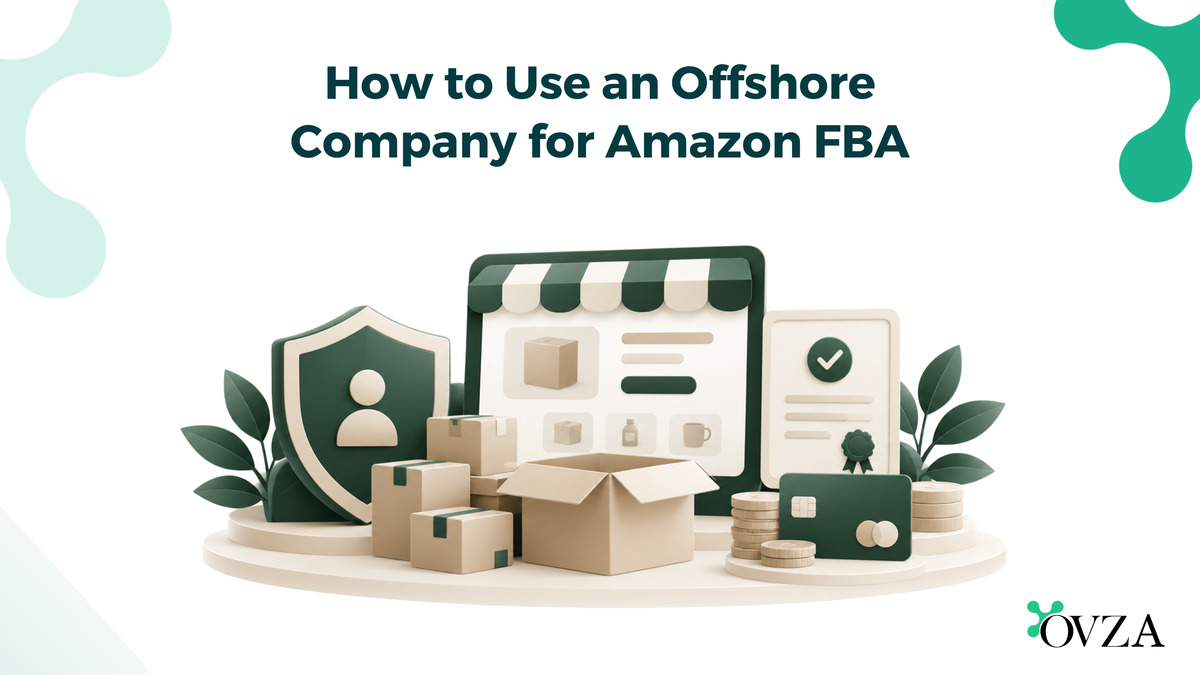
亚马逊物流 (FBA) 已从本地零售模式转型为价值数十亿美元的全球性企业。如今,顶尖的电商企业家很少只在单一国内市场运营;他们同时将消费品牌拓展至美国、加拿大、欧盟、英国、日本和中东等地。随着商业收入跨越多个地域边界,通过国内个体户或本地公司管理库存、跨境支付和供应商合同在行政管理上变得愈发繁琐。
通过离岸公司架构运营亚马逊FBA品牌,可为国际卖家提供灵活且可扩展的公司架构。通过使用在营商环境友好的司法管辖区注册的国际实体,品牌所有者可以集中全球收入、优化供应链融资,并将个人财富与消费品责任隔离开来。此外,离岸公司架构还允许非美国和跨国创始人进入全球顶级消费市场,同时在保持中立、稳定的司法管辖区内拥有完全的法律所有权。
许多企业家错误地认为使用 电子商务离岸公司 离岸架构的唯一目的在于最大限度地减少直接税负。在现代跨境贸易中,离岸架构的真正价值在于其结构韧性、多币种资金管理、品牌估值以及无摩擦的跨境扩张。尽早建立国际公司架构可以避免在引入机构股权合作伙伴、寻求库存债务融资或为最终的机构退出做好准备时进行代价高昂的结构调整。
Navigating the intersection of Amazon’s internal onboarding rules, international banking requirements, and global tax compliance requires careful strategic planning. Marketplaces like Amazon enforce strict identity and verification protocols to maintain platform integrity, requiring every corporate seller to establish legitimate legal standing, verifiable registered addresses, and compliant tax classifications. Understanding the technical mechanics of using an offshore company for Amazon FBA ensures that your store operates smoothly without onboarding freezes, compliance disruptions, or unmanaged tax exposures.
Strategic Advantages: Liability Ring-Fencing, IP Protection, and Treasury Management
A primary operational driver for deploying an offshore company in an Amazon FBA business is the insulation of assets against product liability and commercial claims. E-commerce businesses face inherent commercial hazards, including defective batch claims, intellectual property infringement disputes from aggressive competitors, and third-party supplier defaults. By holding operational assets and inventory within an offshore corporate entity, sellers create a legal partition that separates commercial liabilities from personal wealth and other non-e-commerce investments.
Intellectual property (IP) represents the most valuable commercial asset of a mature Amazon brand. Trademarks registered with national patent and trademark offices unlock access to Amazon Brand Registry, providing defensive tools against counterfeiters, buy-box hijackers, and unauthorized resellers. By housing valuable trademarks, design patents, and proprietary software within a dedicated offshore holding vehicle, brand owners protect their core assets from direct operational lawsuits incurred by the trading arm, preserving enterprise value for long-term licensing or eventual private equity acquisition.
Treasury management is substantially streamlined when operating through an international corporate vehicle. Amazon FBA brands frequently source manufactured inventory from Asia, warehouse goods in North America, and sell to retail consumers across Europe, generating receivables in multiple currencies including USD, EUR, GBP, and JPY. An offshore company can establish multi-currency corporate bank accounts and cross-border payment accounts, enabling the business to collect marketplace proceeds and pay manufacturing suppliers in their local currencies without enduring punitive currency conversion spreads and intermediary transaction fees.
Additionally, using an offshore vehicle significantly enhances exit readiness and mergers and acquisitions (M&A) valuations. E-commerce aggregators and institutional private equity funds prefer acquiring brands housed in clean, cross-border corporate entities. Transferring the equity of an offshore entity is often more administratively streamlined and tax-efficient than executing complex domestic asset purchase agreements across fragmented operating territories. This structural clean line allows founding teams to negotiate institutional exits with clear capitalization tables and minimal transactional friction.
Amazon Seller Central Onboarding and Compliance Verification
Successfully deploying an offshore company on Amazon requires complete compliance with Amazon Seller Central’s rigorous Know Your Customer (KYC) onboarding protocols. Amazon maintains a publicly defined list of accepted countries for seller registration, requiring applicant companies to be validly incorporated within recognized corporate jurisdictions. When registering an offshore entity, the business must provide a certified Certificate of Incorporation, current Memorandum and Articles of Association, and official documentation confirming the company’s active legal standing.
Identity verification for corporate directors and ultimate beneficial owners (UBOs) is strictly enforced under international Anti-Money Laundering (AML) standards. Amazon’s verification systems cross-reference identity documents, certified passport copies, and personal utility bills for all individuals holding a 25% or greater equity interest in the entity. The registered business address of the offshore company must match verifiable documentation, such as an official bank statement or certified utility verification, ensuring that the seller profile passes automated anti-fraud screening.
Corporate banking connectivity is another critical milestone during the onboarding process. Amazon requires an operational deposit method and a valid charge method to verify the seller account and disburse earnings. The offshore company must maintain a verified business bank account or an approved digital multi-currency business account (such as Payoneer, Wise, or registered commercial banking portals) opened under the exact legal name of the offshore company. Name mismatches between the corporate registry documents and the bank account statement represent the single most common cause of seller account suspension during initial setup.
Tax interview verification within Seller Central concludes the onboarding workflow. For companies operating on Amazon.com (the U.S. marketplace), foreign offshore entities must complete the digital Form W-8BEN-E (Certificate of Status of Beneficial Owner for United States Tax Withholding and Reporting). This form establishes that the offshore entity is a foreign corporation exempt from standard 30% U.S. backup withholding on gross sales, confirming that the business is not a U.S. domestic person and setting the foundation for clean international accounting.
International Tax Framework: U.S. Nexus, VAT, and Transfer Pricing
Managing international tax compliance is essential when running an Amazon FBA business through an offshore entity. For sellers utilizing Amazon’s U.S. marketplace, a fundamental distinction exists between state sales tax and federal income tax. Following South Dakota v. Wayfair and the universal rollout of Marketplace Facilitator Legislation, Amazon automatically calculates, collects, and remits state-level sales tax on customer transactions across virtually all U.S. states on behalf of the seller, drastically minimizing the sales tax filing burden for international companies.
At the federal income tax level, non-U.S. offshore companies must evaluate whether their commercial activities trigger a U.S. trade or business (ETBUS) resulting in Effectively Connected Income (ECI), or establish a Permanent Establishment (PE) under applicable tax treaties. Utilizing Amazon’s fulfillment centers as an independent fulfillment provider generally does not create a physical trade or business presence for the offshore seller, provided the company employs no physical staff, maintains no owned real estate, and directs all commercial management from outside the United States. Maintaining this separation ensures the offshore company’s foreign sales remain free from direct domestic federal corporate income tax.
Expanding into European and British marketplaces requires strict adherence to local Value Added Tax (VAT) and Economic Operators Registration and Identification (EORI) systems. When an offshore company stores inventory inside European or UK fulfillment warehouses, the business automatically creates an inventory tax nexus that requires immediate local VAT registration. The offshore company must obtain local VAT numbers in the countries where stock is stored, charge appropriate destination-based VAT via Amazon’s automated tax calculation services, and file periodic VAT returns with regional fiscal authorities.
Finally, brand owners must manage international tax residency and 受控外国公司(CFC)规则 enforced by their home countries. Many developed economies assess tax on foreign company earnings if the company’s “central management and control” is exercised locally, or if passive income triggers domestic anti-deferral regimes. Implementing proper transfer pricing agreements, maintaining legitimate corporate governance through formal board resolutions, and consulting local tax counsel ensures that the offshore structure remains compliant with both international standards and the founder’s domestic tax laws.
Comparative Structural Models for Amazon FBA Sellers
Choosing the right corporate architecture depends on the founder’s country of residence, the primary consumer markets being targeted, and the capital requirements of the e-commerce brand. While a single standalone offshore company may provide a streamlined solution for early-stage international trade, expanding enterprises frequently adopt hybrid structures that combine domestic operational arms with high-tier offshore asset protection vehicles.
Evaluating these structural options allows entrepreneurs to balance initial setup costs, annual administrative compliance, banking access, and long-term asset ring-fencing. Understanding how different corporate combinations function in practice ensures that the e-commerce business remains scalable and prepared for institutional capital injection. The comparative matrix below outlines the primary corporate models used by international Amazon FBA operators:
| Structural Model | Typical Jurisdiction Setup | Primary Operational Advantage | Banking & Onboarding Complexity | Ideal Business Application |
| Standalone Offshore Operating Co. | Cyprus, Hong Kong, UAE, or UK | Direct market access; simplified single-tier corporate management | Moderate; requires verifiable address & local compliance | Mid-sized international sellers targeting global FBA platforms |
| Hybrid US LLC + Offshore Parent | Wyoming/Delaware LLC owned by Cook Islands/Nevis Entity | Total U.S. banking ease paired with foreign corporate asset protection | Low for U.S. market; seamless Amazon.com onboarding | Non-U.S. founders selling primarily on Amazon.com (U.S.) |
| Dual-Tier IP Holding Structure | BVI/Nevis Holding Co. licensing to Operating Subsidiary | Rings-fences brand IP from operational liabilities and supplier disputes | Higher; requires inter-company licensing & transfer pricing | Multi-brand aggregators & high-revenue private label brands |
| Direct Domestic Sole Ownership | Home country domestic entity (e.g., standard UK Ltd or local Corp) | Low initial setup friction; familiar local accounting standards | Lowest; local domestic bank accounts easily established | Small-scale single-market sellers testing initial product-market fit |
结论
通过离岸公司运营亚马逊FBA品牌是一项战略举措,可提供责任保护、优化多币种资金管理并实现全球商业规模化。通过将运营交易风险与核心品牌资产分离,并确保符合亚马逊卖家中心的验证标准,国际卖家可以打造具有机构信誉的高价值消费品牌。妥善的行政规划可确保公司高效跨境运营,避免监管方面的干扰。
持续合规需要与经验丰富的企业服务提供商合作,他们了解跨境公司治理、法定登记管理和国际银行业务要求。实施清晰的公司决议、确保经核实的营业地址并管理法定备案,可确保您的电子商务企业持续不间断地访问全球支付基础设施和市场账户。

将 OVZA 添加到 Google 首选来源
将 OVZA 设置为您的首选信息来源,确保您可以直接通过 Google 轻松发现我们最新的见解、研究和值得信赖的内容。

免责声明:本网站提供的信息仅供一般参考和教育用途。OVZA 尽力确保信息的准确性和及时性,但其内容不应被视为法律、财务或税务建议。