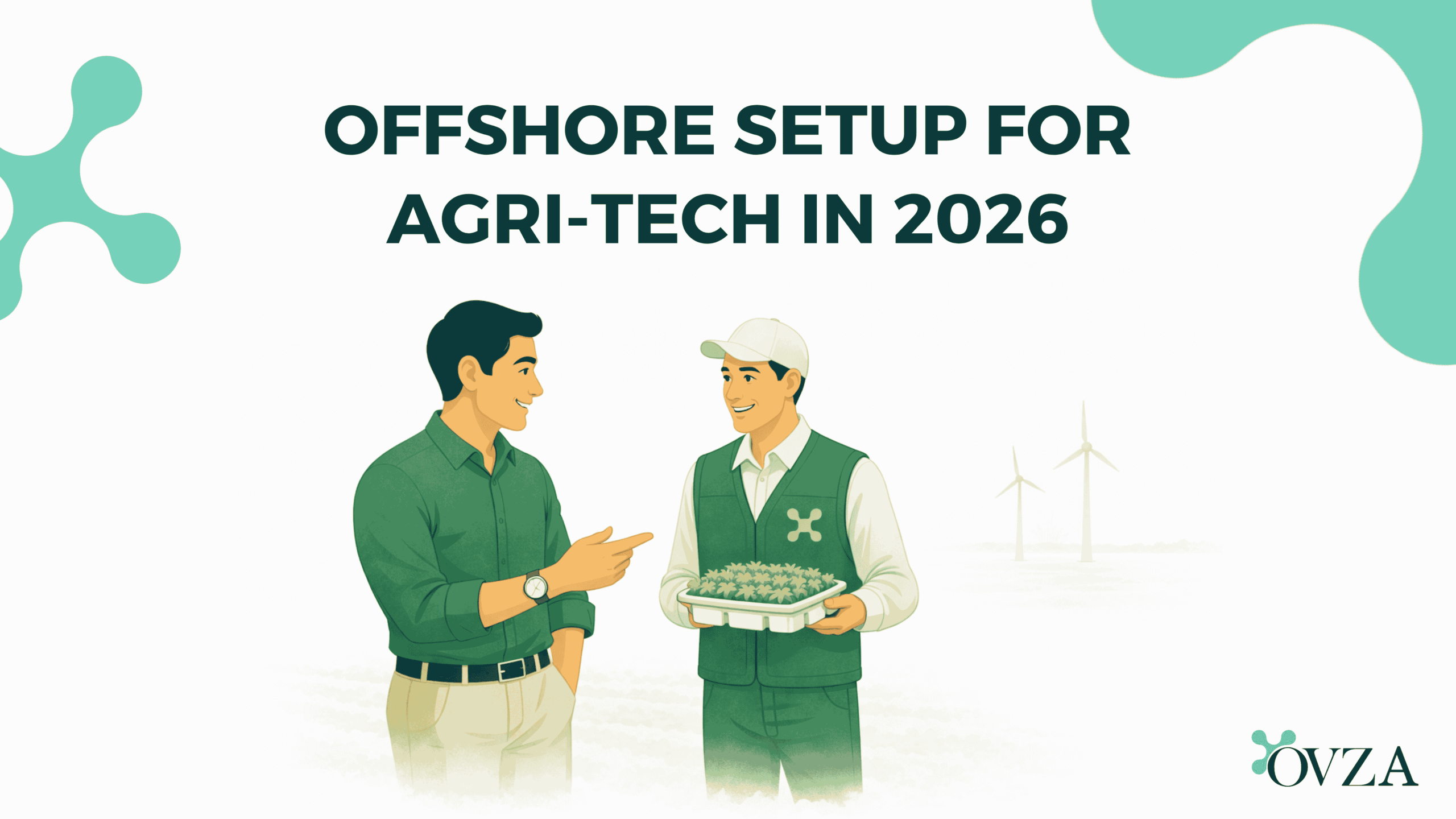
In the first half of 2026, we have seen a massive shift in how agricultural technology is governed. As “Precision Agriculture” moves into the mainstream, firms are no longer just managing soil; they are managing Global Data Networks and Autonomous Fleets. For the modern Agri-Tech founder, a domestic-only setup is a bottleneck. To scale across borders, firms are moving their core operations into Offshore Structures. This isn’t about avoiding the field; it’s about building a “Corporate Command Center” that can handle the complexity of the 2026 global food economy.
1. Centralizing Global Trade and “Ag-Payments”
Agri-Tech firms in 2026 often source drones from Asia, biological inputs from Europe, and manage land in South America. Using a domestic bank for these multi-currency transactions leads to “red-flag” delays and high FX fees.
An offshore entity acts as a neutral trade hub. It allows you to receive payments from international wholesalers and pay global suppliers in stable currencies (USD/EUR) without being throttled by local exchange controls or regional banking bureaucracy.
2. Isolating Physical Hardware Liability
Robotic sprayers and autonomous tractors are high-value assets that carry significant operational risk. In 2026, a single software error in a remote field can lead to a massive domestic liability claim.By holding the titles to your equipment in an Offshore Special Purpose Vehicle (SPV), you legally “ring-fence” your assets. If a local project faces a lawsuit or bankruptcy, your expensive hardware fleet remains legally separate and protected from seizure.
3. Safeguarding Model Weights from Regional Trade Requirements
Holding your Intellectual Property (IP) in a stable offshore jurisdiction ensures it is protected by strong “Statutory Privacy” and IP laws. This prevents your “Digital Brain” from being caught in regional trade wars or forced data-sharing mandates in the countries where you operate.
4. Scaling with “IPO-Ready” Credibility
An offshore professional structure makes your company ready for an acquisition or public listing. By offering a transparent, neutral cap table, this approach builds confidence with international investors. They often prefer this clarity, as it avoids the complexity of local, domestic company networks.
Comparison: Domestic Farming vs. The Offshore Agri-Hub (2026)
To maximize efficiency in 2026, agri-tech firms must distinguish between their field operations and their strategic assets. While local setups are often tethered to regional banking delays and fragmented data laws, an offshore hub centralizes the “Digital Brain” of the farm—protecting hardware, patents, and global revenue from the localized risks of extraction and production.
| Feature | Local Agricultural Setup | The Offshore Agri-Hub |
| Payment Flow | Subject to local FX / Slow | Instant (Global Multi-Currency) |
| Asset Security | Hardware at risk of local liens | Shielded via Offshore SPV |
| IP Protection | Vulnerable to regional laws | Sovereign IP Vault |
| Investor Access | Limited to domestic lenders | Global Institutional Capital |
| Logistics | Fragmented contracts | Centralized Sourcing Hub |
Conclusion
The 2026 Agri-Tech race is won by those who can move capital and data as fast as they move grain. By moving your operations into a strategic offshore structure, you gain the “Structural Agility” needed to lead the global food transition while keeping your core assets secure.
Disclaimer: The information provided on this website is intended for general reference and educational purposes only. While OVZA makes every effort to ensure accuracy and timeliness, the content should not be considered legal, financial, or tax advice.